Quintana Roo Travel Guide 2026: Caribbean Mexico's Most Visited State
Quintana Roo is where most of the world meets Mexico for the first time. Over 20 million visitors annually arrive in this Caribbean state — drawn by turquoise water, white sand, Mayan ruins above blue sea, sinkholes of ancient underground rivers, whale sharks congregating near a sand-spit island, and coral reef systems among the largest in the Western Hemisphere.
It’s also Mexico’s most polarizing destination. Cancun’s Hotel Zone is one of the most intensely developed tourism corridors in the world. Tulum is expensive, increasingly crowded, and subject to a sargassum problem that travel influencers rarely photograph. And yet: Bacalar’s seven-color lake is extraordinary. Cozumel’s diving is world-class. The cenotes are unlike anything else on earth. Holbox in the right season is genuinely magical.
This guide makes sense of all of it. See dedicated guides for Cancun, Tulum, Playa del Carmen, Bacalar, and the Riviera Maya.
Why Quintana Roo Gets 20 Million Visitors
The numbers need context: 20 million is more than all other Mexican states combined receive in international tourists. This is not an accident of marketing.
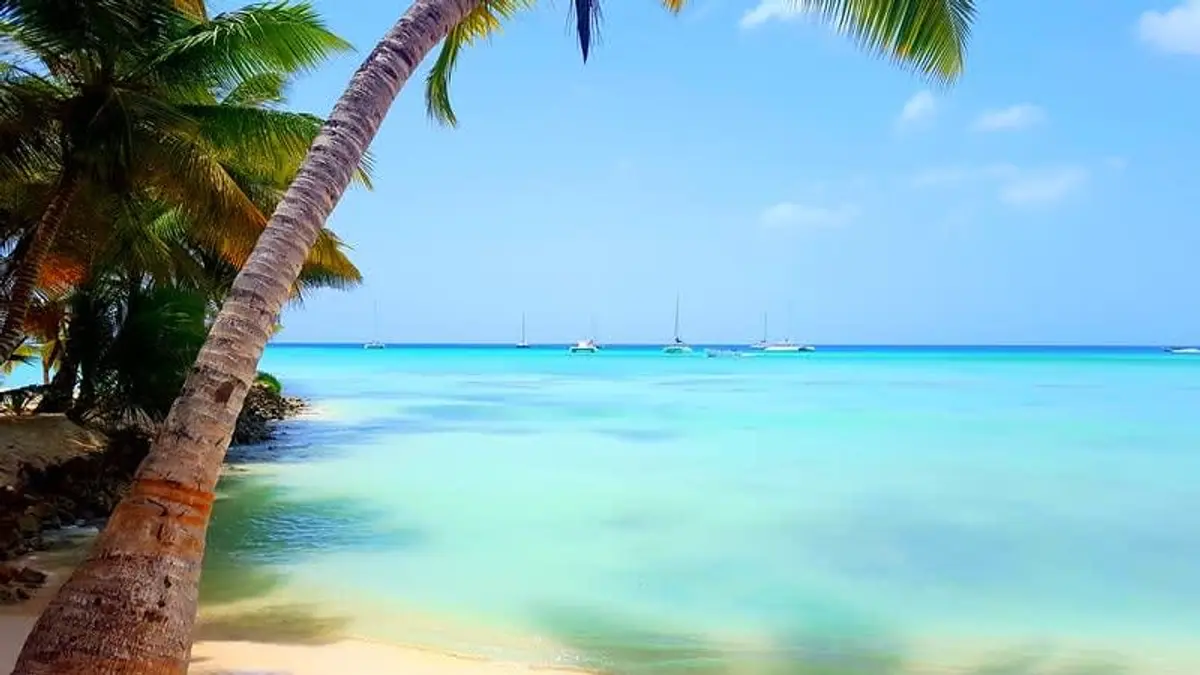
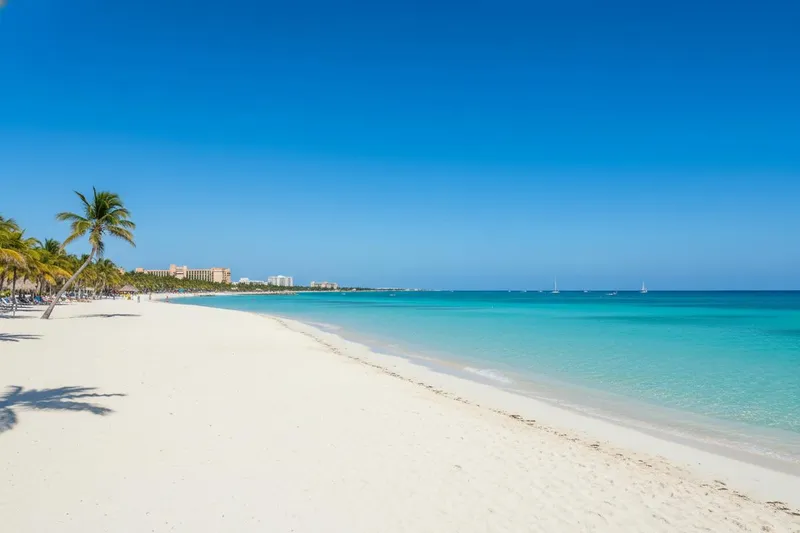
The Caribbean coast between Cancun and Tulum has some of the most photogenic beaches in the Americas — water so clear it photographs as three distinct shades of blue-green, sand from pulverized coral limestone that stays cool underfoot, and temperatures that stay warm enough to swim year-round (26-30°C).
The Mesoamerican Barrier Reef — second largest in the world after Australia’s Great Barrier Reef — runs the length of the coast. Cozumel sits on one of the richest sections: the Palancar Reef complex. Visibility of 30+ meters is standard. The marine life includes sea turtles, eagle rays, whale sharks seasonally, and coral formations that took centuries to grow.
The cenote system — thousands of flooded limestone sinkholes connected by underground rivers — is the largest in the world. The Sistema Sac Actun near Tulum is the longest known underwater cave system on earth (346 km explored). Swimming or diving in these is a specific experience that doesn’t exist anywhere else.
The Mayan ruins at Tulum (coastal cliffs above the sea), Coba (pyramid still climbable, jungle setting), Ek Balam (less-visited but comparable to Chichen Itza in structure), and the day-trip distance to Chichen Itza create an archaeological layer that pure beach destinations lack.
The Truth About Quintana Roo
Before itineraries: a realistic assessment, because Quintana Roo generates more disappointed first-timers than any other Mexican destination.
Sargassum is real. Brown seaweed has been accumulating on QRoo beaches in increasing volumes since 2015, driven by warming Atlantic surface temperatures. It peaks May-October. The smell is hydrogen sulfide (rotten egg) when it decomposes. Hotels clear it daily, but large accumulations return within hours in bad periods. The worst-affected zones are the central Riviera Maya. Holbox (island in the north) and Bacalar (inland lake) are not affected.
Tulum is expensive. The media narrative of Tulum as a “budget alternative to Cancun” is about a decade out of date. Tulum’s beach hotel zone (Zona Hotelera) has some of the highest accommodation prices in Mexico — 3,000-8,000 MXN per night for mid-range places, far more for the boutique eco-luxury options. The town (Tulum Pueblo) is more affordable but a 15-minute drive from the beach.
Cancun Hotel Zone is a bubble. The 23-kilometer Hotel Strip is genuinely Mexico in name only — Applebee’s, Señor Frog’s, and all-inclusive resorts designed for guests who never need to leave the property. This is fine if it’s what you want. It’s not “experiencing Mexico.”
What makes it worth it:
- The water is extraordinarily beautiful
- The cenotes are unique on earth
- Cozumel diving is world-class
- Bacalar is legitimately one of Mexico’s most beautiful places
- Playa del Carmen has real character and walkability
- The ruins context (Tulum, Coba, Chichen Itza day trip) is irreplaceable
Three Zones of Quintana Roo
Northern QRoo: Cancun, Isla Mujeres & Holbox
Cancun is two cities: the Hotel Zone (Zona Hotelera) on a 23km barrier island of high-rises, resorts, and nightclubs, and Downtown Cancun (El Centro) — a real Mexican city where workers live, local restaurants serve affordable food, and the tourist infrastructure is minimal. Most visitors never see El Centro.
For the full Cancun breakdown: Cancun travel guide.
Isla Mujeres is a 7km island 30 minutes by ferry from Cancun. It earns its reputation: a genuine small island with golf-cart transportation, a north beach (Playa Norte) considered one of the Caribbean’s most beautiful, and a fraction of Cancun’s crowds. Day trips from Cancun are easy; staying overnight removes the ferry anxiety and lets you experience the island when day-trippers are gone.
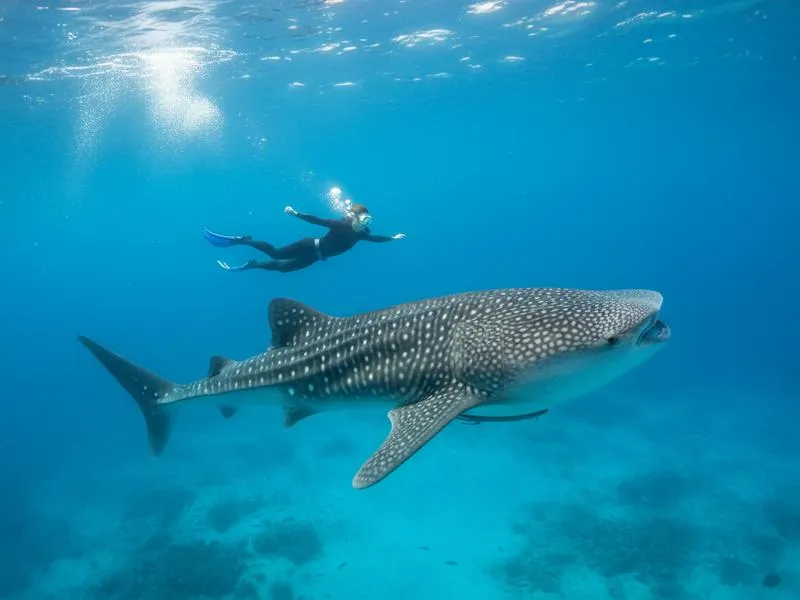
Holbox (pronounced Hol-BOSH) is a sand-spit island north of the Yucatan Peninsula, accessible by ferry from Chiquila. No paved roads, golf carts and bikes only. The water is technically the Gulf of Mexico, not Caribbean — meaning it’s shallower and sometimes murkier, but no sargassum. The reason to come: whale shark season (June-September), when the world’s largest fish congregate in the shallow waters around Holbox in the world’s most accessible concentration. Tours leave from the village docks.
Riviera Maya: Playa del Carmen, Akumal & Cozumel
The Riviera Maya runs from Cancun south to Tulum — roughly 130 kilometers of developed Caribbean coast. It’s more expensive and more densely touristed than most visitors expect, but it contains the state’s most established traveler infrastructure.
Playa del Carmen (PDC) is the region’s most walkable city — 5th Avenue (Quinta Avenida) is a pedestrian strip of restaurants, boutiques, and bars running parallel to the beach. It has a real town feel that Cancun Hotel Zone lacks. The ferry to Cozumel departs from PDC’s pier. Full coverage: Playa del Carmen guide.
Akumal is a small bay community famous for snorkeling with sea turtles — they graze on the seagrass in the protected bay in large numbers. The turtle experience here is extremely reliable and doesn’t require a boat. Note: entry to Akumal Bay now requires paying a small conservation fee and snorkel rental.
Cozumel is the diving destination. The island sits directly on the Palancar Reef section of the Mesoamerican Barrier — the combination of current-driven visibility, coral wall formations, and marine life makes it one of the top 5 dive destinations in the world. Day trips from PDC (ferry 45 minutes) for snorkeling work; for actual diving, stay on the island.
Puerto Morelos sits between Cancun and PDC and is the Riviera Maya’s best-kept open secret: a small fishing town with a protected reef directly offshore (accessible by snorkel, no boats needed), lower prices than PDC, and a relaxed pace incompatible with the region’s general hustle. Riviera Maya guide covers all zones in depth.
Southern QRoo: Tulum, Bacalar & the Frontier
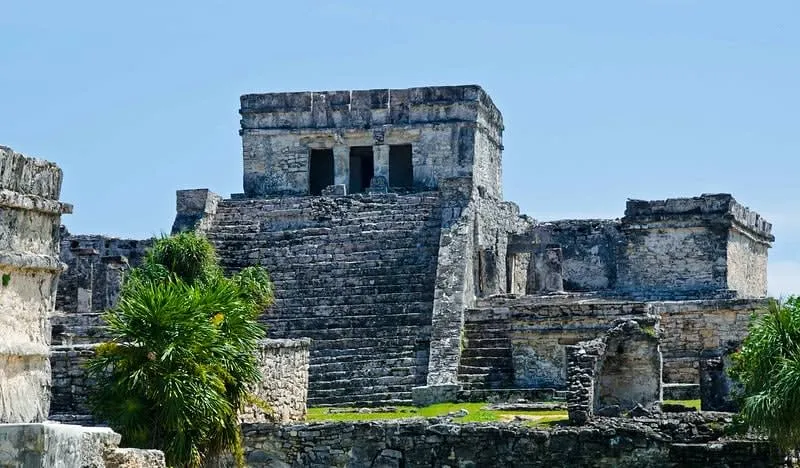
Tulum has the most Instagrammed ruins in Mexico — the Castillo pyramid on coastal cliffs above Caribbean blue — and the most expensive beach hotel zone in the state. The town (Tulum Pueblo) and the beach zone (Tulum Zona Hotelera) are 3 kilometers apart and function as different destinations. The cenotes (Dos Ojos, Gran Cenote, Cenote Calavera) are Tulum’s most compelling reason to visit. Full coverage: Tulum travel guide.
Bacalar is the state’s best-kept open secret — rapidly becoming less secret, but still dramatically less crowded and expensive than the Riviera Maya. The Laguna de Bacalar is a long, narrow lake fed by cenote springs, which creates bands of color ranging from near-black deep water to shallow turquoise at the edges — the “Lake of Seven Colors” description is accurate. Zip-line into the lagoon, kayak to unmarked cenotes, eat at lakeside comedores for 100-150 MXN. Full coverage: Bacalar travel guide.
Mahahual is a small Caribbean town on the Costa Maya — 3 hours south of Tulum — that receives cruise ship day visitors on weekdays but is nearly empty otherwise. The reef here is pristine and barely touched. The main street becomes a tourist market on cruise ship days; on other days it reverts to a quiet fishing village with excellent fresh seafood.
Xcalak at the tip of the Yucatan Peninsula is for divers who need world-class reef without another person in the water. The Banco Chinchorro — a 50km-long coral atoll — is accessible from here and is one of Mexico’s greatest reef systems. No tourist infrastructure to speak of.
Sargassum by Zone
| Zone | Sargassum Risk | Season |
|---|---|---|
| Holbox | None (Gulf side) | — |
| Cancun Hotel Zone north | Low-Medium | May-Oct |
| Isla Mujeres | Low | May-Oct |
| Puerto Morelos | Medium | May-Oct |
| Playa del Carmen | Medium-High | May-Oct |
| Tulum beach | High | May-Oct |
| Cozumel west side | Low (protected) | May-Oct |
| Bacalar | None (lake) | — |
| Mahahual | Low-Medium | May-Oct |
Always check fresh traveler reports during May-October. The sargassum situation changes week to week and the seasonal predictions are approximate.
Ruins Comparison
| Site | Access | Crowds | Highlight | Climbable |
|---|---|---|---|---|
| Tulum ruins | In-town, easy | Very high | Coastal cliffs | No |
| Chichen Itza | 2.5hr from Cancun | Extremely high | El Castillo pyramid | No (banned 2006) |
| Coba | Near Tulum | High | Jungle pyramid | No (banned 2020) |
| Ek Balam | Near Valladolid | Low | Acropolis sculpture | Yes |
| Muyil | Near Tulum | Very low | Lagoon connection | No |
Recommendation: If you can only do one ruin, Chichen Itza (UNESCO, extraordinary scale) requires advance booking and an early start to beat the crowds. If you want the climbing experience and don’t mind the drive, Ek Balam is the answer — nearly empty by Chichen Itza standards with an equally impressive Acropolis.
Cenotes by Region
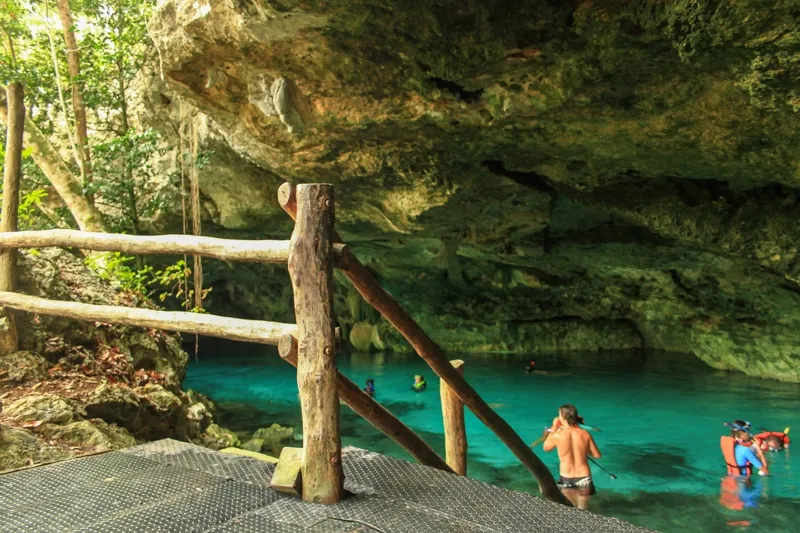
Near Tulum: Dos Ojos (cave system, diving/snorkeling), Gran Cenote (semi-open, popular), Cenote Calavera (skull cenote, jumping), Aktun Ha (Car Wash cenote, dark water, lily pads)
Near Playa del Carmen: Hidden Worlds (two distinct cenotes, guided tours), Aktun Chen (cenote + cave tour combo)
Near Valladolid: Cenote Zaci (in town, public access), Cenote Suytun (dramatic light shaft)
Near Bacalar: Cenote Azul (open, turquoise, excellent swimming, less crowded)
Near Cancun/Riviera Maya: Cenote Ik Kil (beautiful but extremely crowded, near Chichen Itza), Xenotes (four-cenote Xcaret park experience)
Tip: Entrance fees range from 50-200 MXN for public cenotes to 800-1,500 MXN for park-operated ones. Arrive at opening time to avoid crowds. Biodegradable sunscreen only — or no sunscreen and rinse before entering.
Wildlife Calendar
| Month | Wildlife Experience |
|---|---|
| Jan-Mar | Sea turtle nesting begins, whale watching near Isla Mujeres |
| Apr-May | Whale sharks start arriving near Holbox |
| Jun-Sep | Peak whale shark season near Holbox/Isla Mujeres |
| Jul-Nov | Sea turtle nesting peak on Riviera Maya beaches |
| Nov-Mar | Humpback whales offshore |
| Year-round | Sea turtles snorkeling in Akumal |
Getting Around Quintana Roo
Maya Train (Tren Maya): The new train connects Cancun, Playa del Carmen, Tulum, and south to Bacalar/Chetumal. First-class tickets Cancun-Tulum run 350-550 MXN and take about 1.5 hours. The train station in Tulum is 4km from the town center and 12km from the beach zone — factor in taxi transfers. Bacalar station is 3km from town.
ADO buses: The luxury bus network covers the main corridor reliably. Cancun-Playa del Carmen runs every 15-30 minutes (100-130 MXN, 1 hour). Cancun-Tulum takes 2-2.5 hours (250-300 MXN).
Car rental: Gives full freedom especially for cenotes, Coba, and Mahahual. No Uber in Tulum or PDC — taxis are the alternative but prices require negotiation. Rent from Cancun airport; return same location for best rates.
Taxis: Everywhere but expensive relative to Mexican standards. Always agree on price before getting in.
Important: Uber operates in Cancun Hotel Zone and Airport but is blocked in Tulum, PDC, and Cozumel.
Budget Guide by Zone
| Zone | Budget Range | Notes |
|---|---|---|
| Cancun Hotel Zone | 3,500-8,000+ MXN/night | All-inclusive pricing; food included |
| Cancun El Centro | 600-1,500 MXN/night | Local restaurants under 200 MXN/meal |
| Riviera Maya | 1,500-4,000 MXN/night | Wide range by location |
| Tulum beach zone | 3,000-10,000+ MXN/night | Most expensive; Pueblo more affordable |
| Bacalar | 400-2,000 MXN/night | Best value for Caribbean experience |
| Holbox | 1,200-3,000 MXN/night | Limited budget options on island |
| Cozumel | 1,000-2,500 MXN/night | Good mid-range diving hotels |
Travel insurance: travel insurance should include diving-related medical treatment if that activity matters for your trip, water sports, and medical emergencies in Mexico.
Best Time to Visit Quintana Roo
November–April (Dry Season): The standard recommendation for good reason — low humidity, consistent sunshine, calm seas, no sargassum (or minimal). Water temperatures 26-28°C. This is peak season; book accommodation months in advance for Christmas-New Year and Semana Santa.
June–September (Whale Shark Season + Sargassum): The whale shark aggregation near Holbox is the most compelling reason to visit in summer. But: sargassum is at its worst, humidity is high, and hurricane risk exists August-October (though direct hits on QRoo are relatively rare).
May: Shoulder month — fewer tourists than winter, whale sharks beginning, sargassum starting but often manageable. One of the better underrated months.
Hurricane note: QRoo is in the hurricane belt. Major direct hits (2005’s Wilma, 2020’s Delta) cause significant disruption. Travel insurance that covers weather evacuation is worth having.
Frequently Asked Questions
What is Quintana Roo known for?
Quintana Roo is Mexico’s Caribbean state — Cancun, the Riviera Maya, Tulum, Bacalar, Cozumel, and the cenote system. It receives over 20 million tourists annually. Key draws: turquoise Caribbean beaches, the Mesoamerican Barrier Reef, thousands of cenotes, Mayan ruins at Tulum and Coba, whale sharks near Holbox, and sea turtles year-round.
What is the sargassum situation in Quintana Roo?
Sargassum arrives annually, typically peaking May-October. Severity varies by year and location. Northern QRoo is less affected than the central Riviera Maya. Tulum and Playa del Carmen can have significant accumulations. Bacalar (inland lake) and Holbox (Gulf side) have zero sargassum. Always check recent traveler reports before beach-specific trips in summer months.
Is there Uber in Tulum and Playa del Carmen?
No — Uber is blocked in both cities due to local taxi union pressure. In Cancun Hotel Zone, Uber operates. In Tulum, PDC, and Cozumel, use taxis (agree on price before entering) or the Maya Train for inter-city travel.
What are the best cenotes in Quintana Roo?
Top options: Dos Ojos (cave diving/snorkeling near Tulum), Gran Cenote (hanging roots, semi-open), Cenote Azul (Bacalar, open and uncrowded), Ik Kil (near Chichen Itza, very crowded but beautiful), and hundreds of smaller unmarked ones accessible with a local guide. Use biodegradable sunscreen or none at all — regular sunscreen damages the ecosystem.
How much does a trip to Quintana Roo cost?
Varies dramatically: Cancun all-inclusive from 3,500 MXN per person per night; Playa del Carmen mid-range hotels from 1,500 MXN; Tulum beach hotels from 3,000 MXN (most expensive zone); Bacalar guesthouses from 400-800 MXN. Local taquerías across the region serve meals for 80-150 MXN. Bacalar is by far the best value for Caribbean water access.