Semana Santa Puebla 2026: Official Dates, Cathedral Schedule & Cholula
Semana Santa in Puebla in 2026 runs from Palm Sunday, March 29, to Easter Sunday, April 5. The best plan for most travelers is to base yourself in Puebla’s historic center, use March 29, April 2, and April 3 for the main cathedral events, and add a morning in Cholula for the pyramid, hilltop church, and Holy Week atmosphere.
Puebla is one of the strongest first-timer Semana Santa bases in Mexico because it gives you a real cathedral program, easier logistics than Taxco or Oaxaca, and nearby side trips like Cholula and Huejotzingo without the same crush-level crowds.
Puebla is the capital of Puebla state, located 130km southeast of Mexico City at 2,162m altitude. The city has 3.2 million people and holds Mexico’s first UNESCO World Heritage designation (1987). Its historic center has 70+ colonial churches, more per square kilometer than anywhere else in the Americas.
Semana Santa Puebla in 30 Seconds
| Question | Short answer |
|---|---|
| When is Semana Santa in Puebla 2026? | March 29 to April 5, 2026. |
| Best days to be there? | Palm Sunday, Holy Thursday, and Good Friday. |
| Main cathedral events? | Palm procession, Holy Thursday foot-washing and Cena del Señor, Good Friday Vía Crucis, Seven Last Words, and evening pésame. |
| Best side trip? | Cholula, because you get the pyramid, hilltop sanctuary, and easy half-day logistics from Puebla. |
| Is there Ley Seca? | Usually the main practical restriction is Good Friday, April 3. Confirm locally at your hotel or municipality before buying alcohol. |
| Worth it for first-timers? | Yes, especially if you want Holy Week atmosphere without the extreme intensity of Taxco or Iztapalapa. |
Why Puebla for Semana Santa
Puebla’s Holy Week sits in a different register than Taxco or Iztapalapa. There are no flagellants dragging chains, no UNESCO-recognized passion plays with 2 million spectators. What Puebla offers instead:
- An intact colonial urban stage. The Zócalo, the Cathedral (1649), and the surrounding streets provide a 17th-century backdrop for processions that few Mexican cities can match.
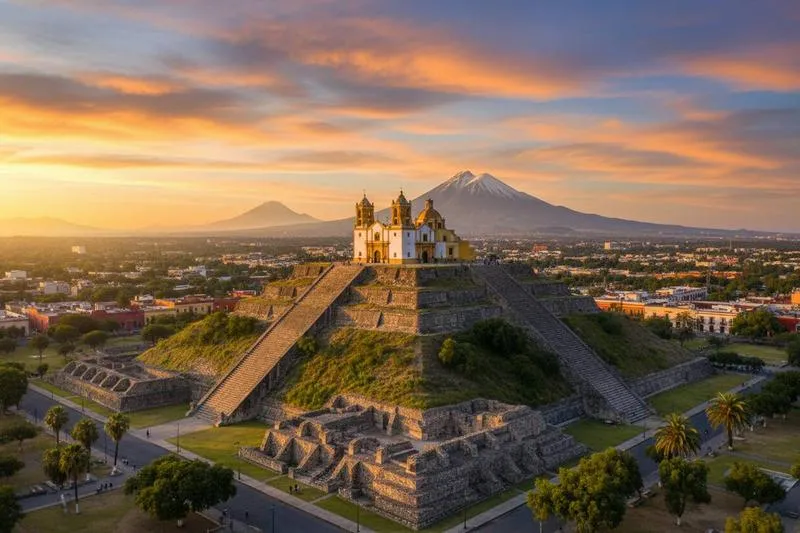
- Cholula + the pyramid. The world’s largest pyramid by volume, with a Spanish church literally built on top, holds special Holy Week masses with pilgrims arriving from across the state. This is unique to Cholula — nowhere else on earth has this combination.
- Huejotzingo’s Franciscan monastery. One of Mexico’s oldest Franciscan convents (completed 1570) runs its own passion play, smaller and more intimate than Iztapalapa but with an extraordinary colonial setting.
- Food tradition. Capirotada, romeritos, and Good Friday seafood are serious in Puebla — not afterthoughts.
- Proximity. Two hours from CDMX means day-trippers from the capital flood in, but you can arrive mid-week before the rush.
The Cholula Experience
Cholula, 15 minutes west of Puebla’s centro, is the spiritual anchor of the region’s Holy Week.
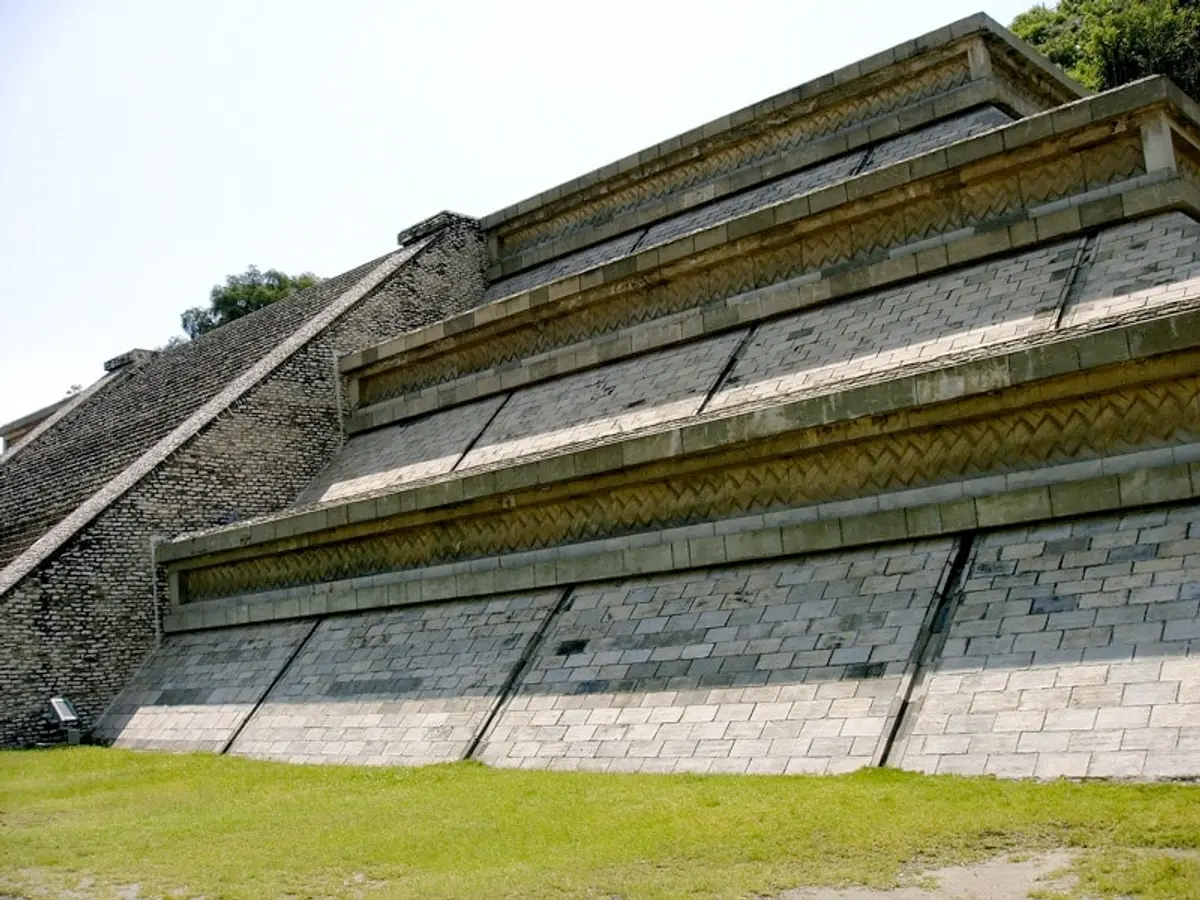
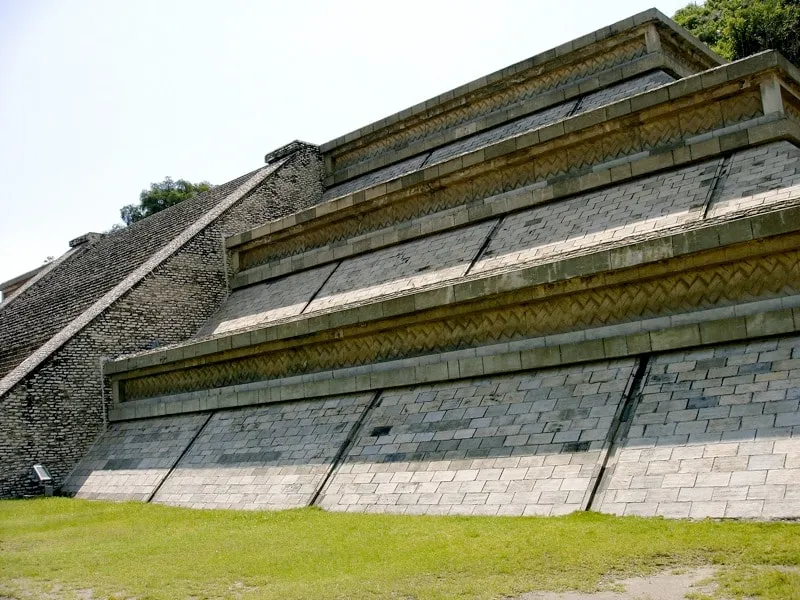
The Great Pyramid (Tlachihualtepetl) At 55m tall and covering 160,000 square meters of base, the Cholula pyramid is the world’s largest pyramid by volume — larger than Giza. Spanish colonial missionaries built the Sanctuary of Nuestra Señora de los Remedios directly on its summit in 1594. During Holy Week, this becomes the site of outdoor masses with the view of Popocatépetl volcano in the background on clear days.
The 6km of tunnels beneath the pyramid (excavated from 1930s) are open to visitors. Entry to the archaeological zone: 85 MXN ($4.50 USD). The Capilla Real adjacent to the main plaza has 49 domes — the most of any church in Mexico.
Semana Santa at Cholula:
- Palm Sunday: Procession of palms through the 43 churches and chapels on the hill
- Good Friday: Vía Crucis up the pyramid stairs to the sanctuary (early morning, before crowds)
- Holy Saturday: Quema de Judas in the main plaza
- Easter Sunday: Outdoor mass at the pyramid summit (arrive 7 AM for a spot)
Logistics: ADO buses from Puebla’s CAPU terminal run to Cholula every 20 minutes (12 MXN, 15 min). Colectivos from Calle 6 Norte cost 8 MXN. The archaeological zone opens at 9 AM; go early during Semana Santa as lines form quickly.
Semana Santa 2026 Schedule: Puebla City
| Date | Event | Time | Where |
|---|---|---|---|
| Palm Sunday (Mar 29) | Procession of palms + main morning cathedral service | 9:30 AM | Catedral de Puebla |
| Holy Monday (Mar 30) | Jornada penitencial / all-day confessions | 8 AM to 8 PM | Catedral de Puebla |
| Holy Tuesday (Mar 31) | Misa Crismal | 11 AM | Catedral de Puebla |
| Holy Thursday (Apr 2) | Lavatorio de pies | 12 PM | Catedral de Puebla |
| Holy Thursday (Apr 2) | Institución de la Eucaristía / Cena del Señor | 7 PM | Catedral de Puebla |
| Good Friday (Apr 3) | Vía Crucis | 10 AM | Catedral de Puebla |
| Good Friday (Apr 3) | Siete Palabras | 12 PM | Catedral de Puebla |
| Good Friday (Apr 3) | Santos Oficios | 5 PM | Catedral de Puebla |
| Good Friday (Apr 3) | Pésame a la Virgen | 6 PM | Catedral de Puebla |
| Holy Saturday (Apr 4) | Vigilia Pascual | 11 PM | Catedral de Puebla |
| Easter Sunday (Apr 5) | Resurrection masses through the day | From 10 AM | Catedral de Puebla |
These are the clearest officially published cathedral timings I found for 2026. Puebla also has neighborhood-level programming in churches like La Concordia, La Soledad, and Sagrado Corazón, but if you’re visiting from out of town, the cathedral calendar is the easiest anchor for planning.
Ley Seca, Puebla: In practice, travelers should plan around Good Friday, April 3, 2026 as the most likely dry-law restriction day. Enforcement can vary by municipality and venue, so confirm locally after check-in instead of assuming the whole week is dry.
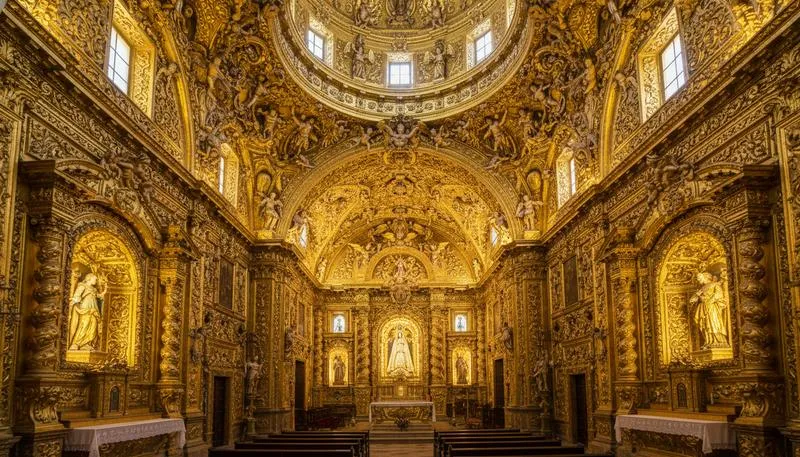
The Capilla del Rosario: Puebla’s Most Spectacular Interior
Inside the Templo de Santo Domingo (free entry), the Capilla del Rosario (1690) is the finest example of Mexican baroque in existence. Eight kilograms of gold leaf cover every surface. The Virgin of the Rosary wears a crown worth more than most countries’ annual art budgets.
During Semana Santa, the chapel holds special masses with standing-room only attendance. Go before 9 AM or after 4 PM to see it without extreme crowds.
Hours: 9 AM–2 PM, 4 PM–8 PM. Free entry. On Calle 4 Poniente, one block from the Zócalo.
Huejotzingo: The Franciscan Alternative
Huejotzingo (40 minutes north of Puebla, 35 MXN colectivo from Capu) holds one of the oldest Franciscan convents in the Americas — completed in 1570, a decade before Taxco’s Santa Prisca was even begun.
The Ex-Convento de San Miguel Arcángel hosts a passion play during Holy Week that draws residents from across the valley. The setting — open atrium, four posa chapels at the corners, Toltec-influenced stone carvings — is arrestingly beautiful and far less crowded than anything in Puebla city or Cholula.
Huejotzingo is also famous for its Carnaval (held pre-Lent), but the Holy Week tradition here is overlooked by most tour guides. It’s the right choice if you want a genuine, uncommercialized experience.
Getting there: Colectivos from Puebla’s CAPU terminal to Huejotzingo run throughout the day. 40 minutes, 35 MXN.
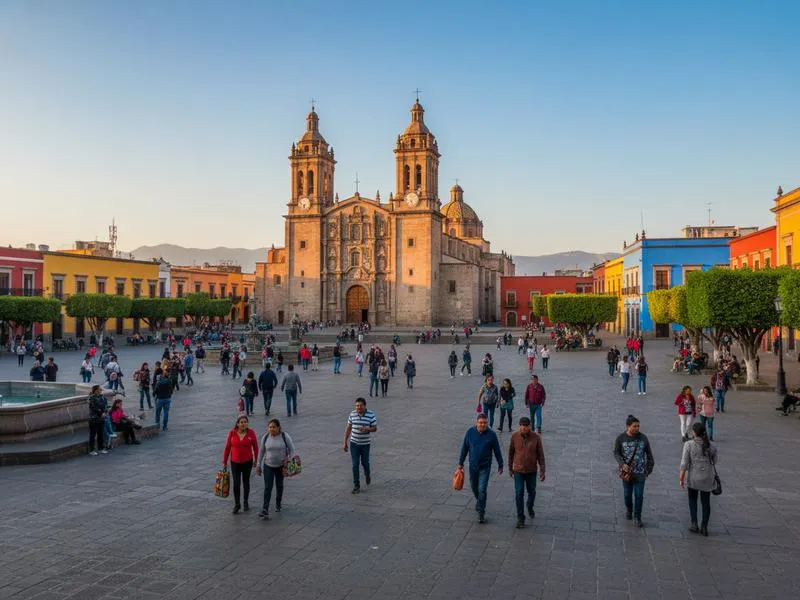
The Zócalo and Cathedral
Puebla’s main plaza (formally the Plaza de la Democracia) is surrounded by the Cathedral Metropolitana (begun 1575, completed 1649), the Palacio Municipal, and colonial arcades. The Cathedral’s towers are the tallest in Mexico at 69m.
During Semana Santa:
- The Cathedral’s west facade is illuminated at night from Palm Sunday through Easter
- Palm Sunday mass fills the Cathedral to its 2,500-person capacity (standing room from 3 PM)
- Holy Thursday Lavatorio ceremony reenacts the washing of feet in the Cathedral courtyard
- Good Friday Pésame (condolence) ceremony brings the entire city to the Zócalo
The Zócalo itself is a living gathering point throughout the week — food stalls, craft vendors, families, and pilgrims from surrounding towns mix under the jacaranda trees (which are still in bloom in late March).
Barrio de Analco: Old Puebla’s Hidden Processions
Most tourists miss Analco, Puebla’s oldest neighborhood — it predates the colonial Spanish grid and was originally an indigenous barrio. During Semana Santa, Analco holds its own processions that feel more authentically Poblano than the Zócalo events.
Where it is: 10-minute walk east of the Zócalo, across the river on Avenida 18 Oriente.
The Iglesia del Santo Ángel Custodio (1743) in Analco runs a palm procession on Palm Sunday that starts at 6 AM — before the crowds arrive.
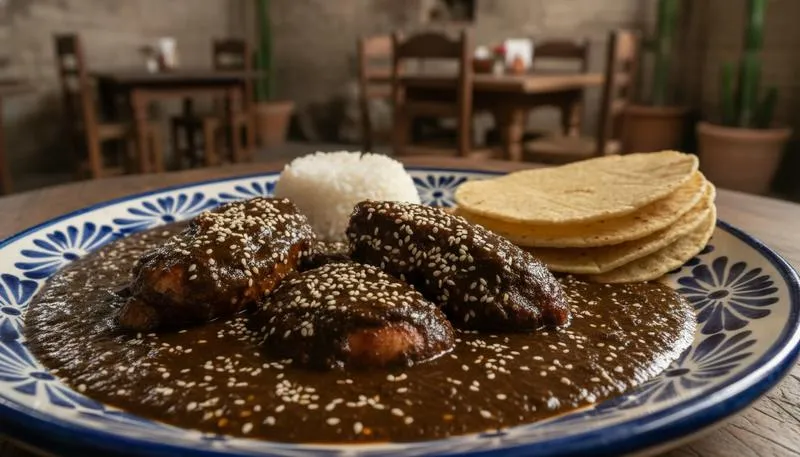
Holy Week Food Guide: What to Eat
Puebla has specific Semana Santa culinary traditions:
| Dish | What It Is | When/Where |
|---|---|---|
| Capirotada | Bread pudding with piloncillo, raisins, cheese, cinnamon | Good Friday and Holy Saturday — Mercado Hidalgo |
| Romeritos en mole | Wild greens (similar to rosemary) in mole negro | Good Friday, traditional family dish |
| Torta de bacalao | Salt cod on cemita roll with chipotle | Good Friday — most restaurants |
| Pescado en adobo | Fish marinated in dried chile paste | Thursday/Friday — fondas near markets |
| Cemita poblana | Sesame-seed roll with papalo, avocado, meat | Any day — Mercado El Carmen |
| Mole poblano | Puebla’s 36-ingredient chile-chocolate sauce | Every day — El Mural de los Poblanos |
Best markets during Semana Santa:
- Mercado Hidalgo (Calle 6 Norte y 18 Poniente) — capirotada and traditional sweets
- Mercado El Carmen — cemitas, tlayudas, fresh produce
- Calle Cinco de Mayo — street tamales and atole in the mornings
Ley Seca note for travelers: The day to plan around is Good Friday, April 3. If drinks matter to your trip, buy anything you need before Friday and confirm current hotel or restaurant policy once you arrive.
Where to Stay
Puebla’s historic center has good hotel options at multiple price points. Book early — Holy Week rates run 40–70% above normal.
| Option | Location | Rate (Normal) | Rate (Semana Santa) |
|---|---|---|---|
| Budget | Cholula (15 min by colectivo) | $25–40/night | $40–65/night |
| Mid-range | Barrio de los Artistas | $60–90/night | $100–150/night |
| Colonial boutique | Zócalo area | $100–150/night | $180–280/night |
| Alternative base | Tlaxcala (30 min by ADO) | $40–70/night | $60–100/night |
Last-minute tip: If Puebla’s historic center is sold out, Tlaxcala is 30 minutes by bus (30 MXN, ADO), has its own excellent Holy Week traditions, and has far more hotel inventory. It’s a legitimate alternative that most travelers overlook.
Getting to Puebla
From Mexico City:
- ADO bus: TAPO terminal every 15 min, 2 hours, 180–280 MXN. Book return tickets before you travel.
- Driving: MEX-150D via Cholula, 2–2.5 hours (heavy traffic Holy Saturday and Easter Sunday).
- Uber from CDMX: Possible but expensive (600–900 MXN), not recommended for Holy Week traffic.
Arrive mid-week (Monday–Wednesday) to see processions before the Palm Sunday/Easter weekend surge. If you’re day-tripping from CDMX, Thursday is the last calm day — book return tickets for Thursday evening or face crowded ADO stations.
The CAPU terminal (Centro de Autobuses de Puebla) is 15 minutes from the Zócalo by Uber (50–80 MXN) or city bus (6 MXN, colectivos along Blvd. Norte).
Puebla vs Other Semana Santa Destinations
| Puebla | Taxco | Oaxaca | CDMX (Iztapalapa) | |
|---|---|---|---|---|
| Religious intensity | Medium | Very high | High | Extreme (2M people) |
| Colonial setting | Excellent | Excellent | Good | No |
| Ley Seca | Good Friday only | Thu–Sat | Friday only | None |
| Crowds | Manageable | Very crowded | Very crowded | Overwhelming |
| Food tradition | Strong | Good | Excellent | Average |
| Unique draw | Cholula pyramid | Flagellants | Alfombras | Iztapalapa Passion Play |
| From CDMX | 2 hrs | 3 hrs | 6 hrs (fly or overnight bus) | 30 min (Metro) |
Best for first-timers: Puebla. The combination of city + Cholula + easy transport from CDMX makes it the most complete Semana Santa experience without the logistical complexity of Taxco or Oaxaca.
Practical Information
Altitude: 2,162m (7,100 ft). If arriving from sea level, give yourself a day to acclimatize. Drink extra water, avoid alcohol the first 24 hours.
Weather in late March: Daytime 18–24°C, evenings 8–12°C. Bring a light jacket for evening processions. Dry season, so rain is unlikely — but afternoon clouds are common.
Getting around: Uber works in Puebla (unlike Tulum, Oaxaca, or San Cristóbal). Rides around the historic center cost 40–80 MXN. City buses (6 MXN) cover most major routes but can be confusing with luggage.
ATMs: Use Citibanamex or BBVA inside shopping centers or banks. Avoid standalone ATMs on quiet streets, especially at night.
Nearby day trips that work during Semana Santa:
- Tlaxcala (30 min, 30 MXN ADO) — its own Semana Santa events, much less crowded
- Cholula (15 min, 12 MXN colectivo) — essential, see above
- Cacaxtla ruins (45 min, 80 MXN from Tlaxcala) — Maya murals, almost no one goes during Holy Week
- Atlixco flower fair — Holy Week brings special flower market to this colonial town 40 min south
Biggest First-Timer Mistakes
- Using the wrong 2026 dates. Semana Santa in Puebla runs March 29 to April 5, 2026, not the late-March window many old pages still show.
- Trying to do cathedral events and Cholula at the same hour. Use Puebla city for the main liturgical moments, then do Cholula early on a separate morning.
- Assuming every bar will be open on Good Friday. Plan conservatively around April 3.
- Leaving your return to CDMX for the last minute. Holy Week bus demand spikes hard on Friday through Sunday.
- Skipping the wider Puebla trip. Pair this page with Puebla Travel Guide, Things to Do in Puebla, Cholula Pyramid Guide, and What to Eat in Puebla.
Semana Santa 2026 in Puebla runs from March 29 to April 5. For the wider national picture, see Semana Santa in Mexico.