Things to Do in Puebla 2026: 30 Best Activities, Food & Day Trips
Puebla (population ~1.7 million) is the capital of Puebla state in central Mexico, at 2,135 meters elevation — 135 km southeast of Mexico City, a UNESCO World Heritage city since 1987 and home to one of the most intact colonial centers in Latin America.
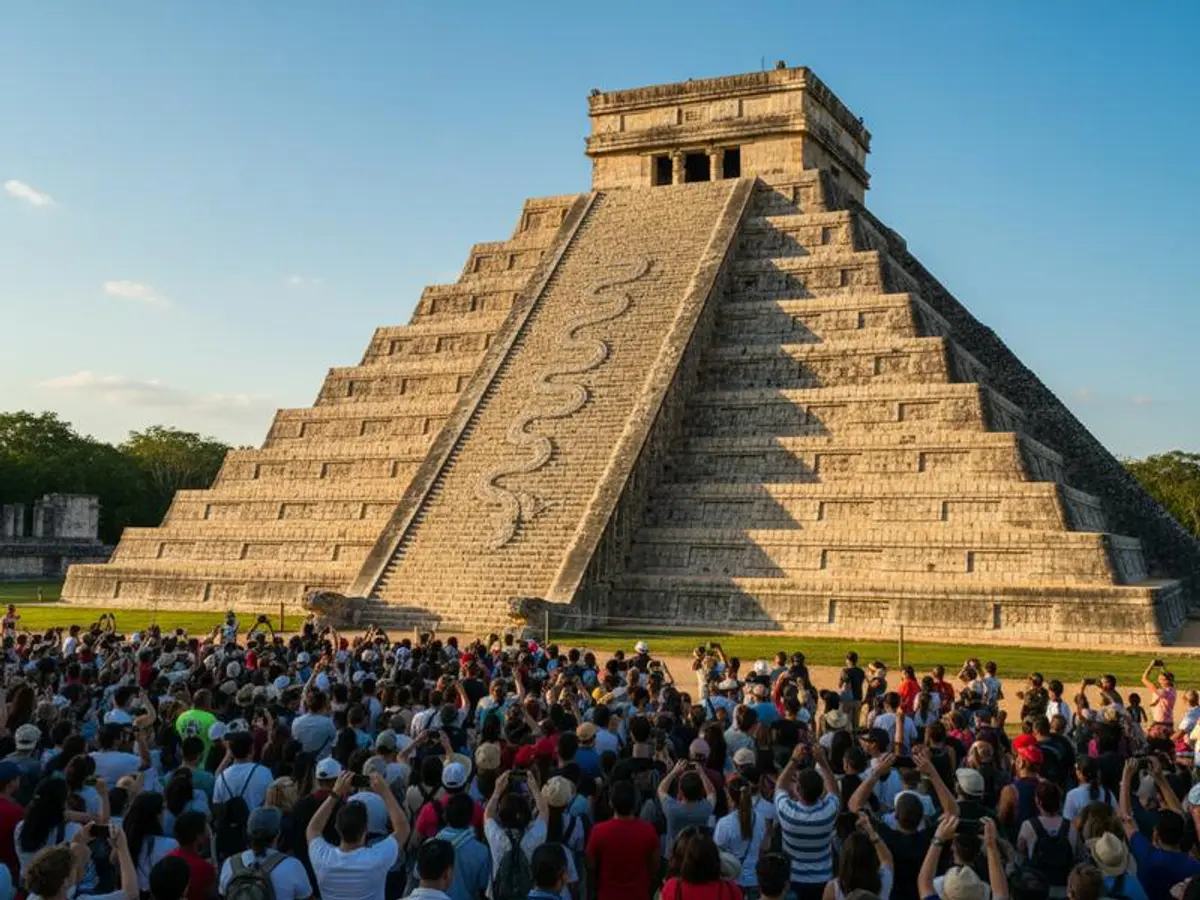
Two hours from Mexico City, Puebla punches well above its weight: a pyramid that rivals Egypt’s, a library that predates Harvard, a kitchen that gave the world mole, and baroque churches so ornate they inspired the term “ultra-baroque.” Most travelers visit as a day trip from CDMX. That’s a mistake. Stay two nights minimum.
This guide covers 30 things to do in Puebla, organized by category: historic sites, churches, museums, food and markets, neighborhoods, day trips, and festivals. Real costs, what to skip, and angles most travel guides miss.
For planning context: Puebla Travel Guide 2026 | Day Trips from Mexico City | Mexico City Travel Guide | Colonial Mexico Travel Guide
Quick Activity Overview
| Activity | Category | Cost | Time Needed |
|---|---|---|---|
| Cholula Pyramid | Archaeology | 100 MXN | Half day |
| Capilla del Rosario | Church | Free | 45 min |
| Biblioteca Palafoxiana | Museum | 65 MXN | 1 hr |
| Forts of Loreto & Guadalupe | History | 65 MXN | 2 hrs |
| Amparo Museum | Museum | 65 MXN (free Sun) | 2 hrs |
| Zócalo & Historic Center | Walking | Free | 2–3 hrs |
| Barrio de los Sapos | Market/Neighborhood | Free | 2 hrs |
| Barrio del Artista | Art | Free | 1 hr |
| Talavera workshop tour | Craft | Free–150 MXN | 1 hr |
| Pasillo de Humo (food) | Food | 80–150 MXN | 1 hr |
| Cemita poblana | Food | 60–80 MXN | 30 min |
| Chiles en nogada (late Jul–Sep) | Food | 250–450 MXN | 1 hr |
| Mercado de Artesanías | Shopping | Free | 1 hr |
| Cholula day trip | Day Trip | 100 MXN + entry | Full day |
| Tonantzintla + Acatepec | Day Trip | Free | 3–4 hrs |
Historic Sites & Architecture
1. Cholula Pyramid ⭐
The single most important thing to do in Puebla — though it technically sits in the adjacent city of Cholula, 15 km west.
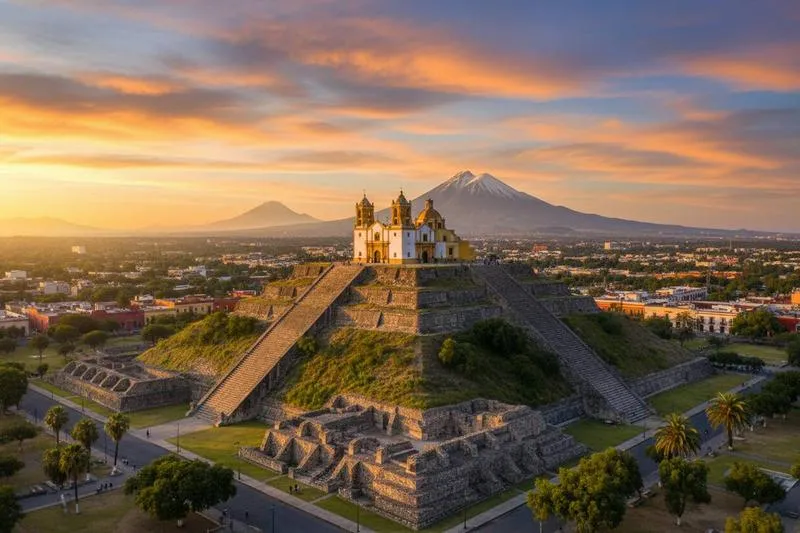
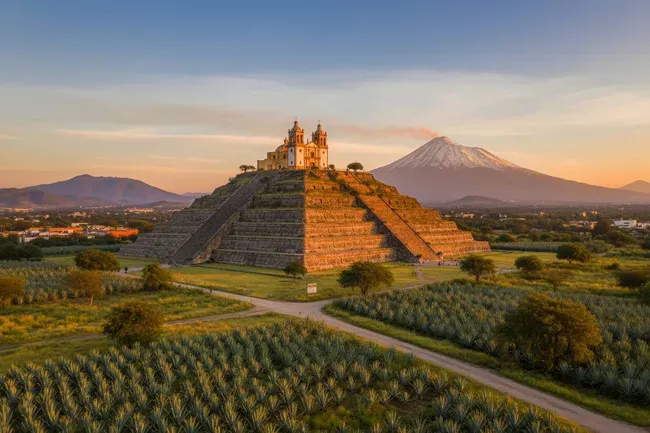
The Great Pyramid of Cholula (Tlachihualtepetl, “made-by-hand mountain”) is the largest pyramid on earth by volume: 4.45 million cubic meters, compared to Giza’s 2.5 million. From the outside it looks like a hill with a colonial church on top. That’s exactly what the Spanish intended — they built the Iglesia de Nuestra Señora de los Remedios on the summit in 1594, either not realizing or specifically choosing to desecrate the pyramid beneath.
What makes Cholula unique vs. other Mexico ruins: You can walk 8 km of tunnels through the pyramid’s interior — excavated by archaeologists in the 1930s. The tunnels reveal layer after layer of construction (the pyramid was built over four phases, each civilization entombing the previous), and you exit to see the church above you from directly below. No other pyramid in Mexico offers this.
Key details:
- Entry: 100 MXN (~$5 USD) for the archaeological zone and tunnels
- Church entry: free (separate ticket, climb the stairs on the outside)
- Best time: 9–11 AM on weekdays before tour groups arrive from Puebla
- Combine with: Zona Arqueológica map shows murals including the remarkable Mural de los Bebedores (drinkers mural, 57 meters long, depicting a pulque party)
See the full Cholula Pyramid guide for detailed visit planning.
2. Zócalo (Main Square) & Historic Center
Puebla’s Zócalo is considered one of the finest main squares in Mexico — large enough to impress, intimate enough to navigate without feeling lost.
The Puebla Cathedral on the south side took 74 years to build (1575–1649). Its towers — at 69 meters — are the third tallest in Mexico. The interior houses an 18th-century baroque organ with 4,440 pipes and a gilded altar by Manuel Tolsá. Entry is free; go early morning when light enters the nave from the east.
The Palacio Municipal (city hall) on the west side has a rooftop terrace with clear-day views of Popocatépetl and Iztaccíhuatl — two of the highest volcanoes in North America. Ask the guards for rooftop access (not always advertised).
Portal Hidalgo and Portal de Morelos line the north and west — the covered arcades have been serving coffee and antojitos since colonial times.
3. Capilla del Rosario ⭐ (Don’t Miss)
Inside the Santo Domingo Church, five blocks north of the Zócalo, sits a chapel that stops people cold.
The Capilla del Rosario (Rosary Chapel) was completed in 1690 after 40 years of construction. Its interior is covered — ceiling, walls, arches, every surface — with carved plaster reliefs, gilded with more than 8 kg of gold leaf, interspersed with tiles, mirrors, and paintings. It’s been called the “Sistine Chapel of the Americas” and the “eighth wonder of the world.” Both are hyperbole, but understandable.
Entry is free. It sits within the church, which itself is impressive — the carved marble font, the churrigueresque retablo. The chapel is in the left transept. Spend 30–45 minutes here minimum.
Practical note: The chapel is still an active place of worship. Dress modestly (shoulders + knees covered). Photography is permitted.
4. Biblioteca Palafoxiana
The oldest public library in the Americas, founded in 1646 by Bishop Juan de Palafox y Mendoza and still housing most of its original collection.
45,000 volumes — including 5,334 from the 16th century — line original baroque cedar shelving reaching to painted ceilings. The collection includes manuscripts, incunabula (books printed before 1501), and the Biblia Regia, a multilingual Bible published in 1568. UNESCO designated it a Memory of the World site in 2005.
Entry: 65 MXN. Located at 5 Oriente 5, in the Casa de Cultura building. Worth 45–60 minutes.
5. Forts of Loreto and Guadalupe (Cinco de Mayo)
The most historically misunderstood attraction in Puebla — and one of the most satisfying once you understand the story.
On May 5, 1862, 4,000 Mexican troops under General Ignacio Zaragoza defeated 6,000 French imperial soldiers at these two forts on the hills north of Puebla’s center. The French were considered the best military force in the world at the time. Mexico’s victory — however temporary (the French took Puebla a year later) — became a symbol of resistance.
What most people miss: Cinco de Mayo is a Mexican regional holiday, not a national holiday. It’s celebrated more in Puebla than anywhere else in Mexico, and almost not at all elsewhere — the idea that it’s a major Mexican holiday is a US invention.
The complex houses the Regional Museum and Non-Intervention Museum with military artifacts. Entry: 65 MXN. Go on May 5 for the reenactment if your dates allow — 4,000+ participants in period dress. Full details: Cinco de Mayo in Mexico.
Museums
6. Amparo Museum ⭐
Puebla’s best museum, and one of the finest pre-Hispanic and colonial art collections in Mexico outside the capital.
The Museo Amparo holds 16,000 pieces across two joined colonial buildings: pre-Hispanic artifacts organized by civilizations (Olmec, Teotihuacan, Maya, Zapotec, Mixtec, Aztec), colonial art (1521–1821), and contemporary Mexican art. The pre-Hispanic collection’s curation is exceptional — each piece has clear cultural context, not just “item from [region].”
Entry: 65 MXN (free on Sundays). The rooftop café has views of the cathedral towers and Popocatépetl on clear days. Easily 2–3 hours.
7. Museo de Arte Popular (MAP) Poblano
Dedicated to Puebla state’s craft traditions — Talavera, onyx, textiles, rebozos, retablos. Smaller than the Amparo but useful for understanding what you’ll see in workshops and markets.
Entry: 35 MXN. Located at 14 Poniente 1306, next to the Barrio del Artista.
8. Museo de la Revolución (Casa de los Hermanos Serdán)
In 1910, the Serdán family — hiding arms in this house — were discovered by police and fought back. The resulting shootout killed Aquiles Serdán and wounded his family, sparking the Mexican Revolution one day before the planned uprising. Bullet holes still pock the walls.
Entry: 25 MXN. Small but significant — one of those places that makes history physical.
Food & Markets
9. Mole Poblano ⭐
This is the reason to come to Puebla even if you skip everything else.
Mole poblano — dark, complex, smoky-sweet — contains up to 30 ingredients: multiple dried chiles (mulato, ancho, pasilla, chipotle), chocolate, plantain, peanuts, sesame, raisins, cinnamon, cloves, tomatoes, tomatillos, and charred tortilla for thickness. It’s traditionally served over turkey (guajolote en mole), though chicken is more common in restaurants.
The most cited origin story places it at the Convent of Santa Catalina de Siena in Puebla, in the 17th century, when nuns prepared an elaborate dish for the visiting archbishop. Whether true or not, Puebla has the deepest mole culture in Mexico.
Where to eat it:
- El Mural de los Poblanos — Mid-range, historic setting, mole made fresh daily. 2 Sur 506. ~250 MXN/plate.
- Fonda La Mexicana — Budget, Mercado El Carmen, 80–120 MXN, no frills, authentic.
- Casareyna (splurge) — Inside a colonial hotel, refined mole with regional wine pairing. ~500 MXN.
10. Chiles en Nogada (Late July–September)
The most beautiful dish in Mexican cuisine, and the one most tourists get wrong by ordering it out of season.
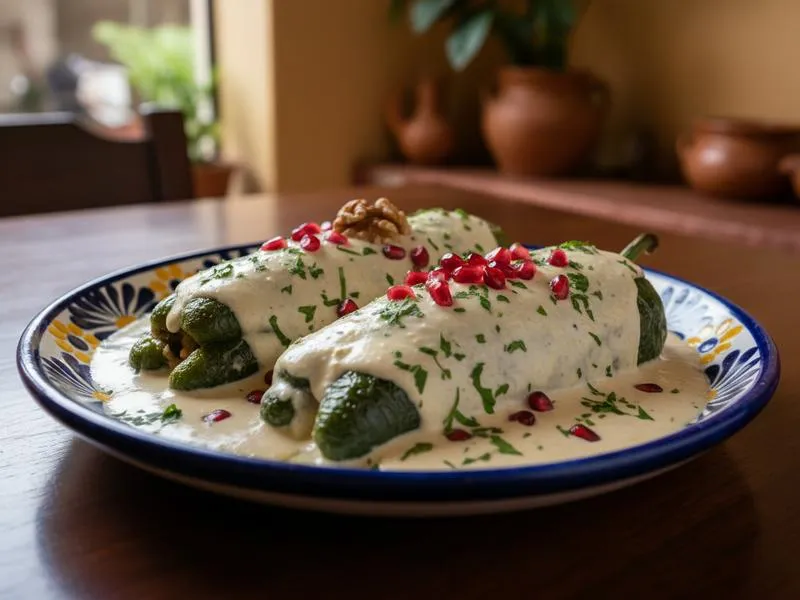
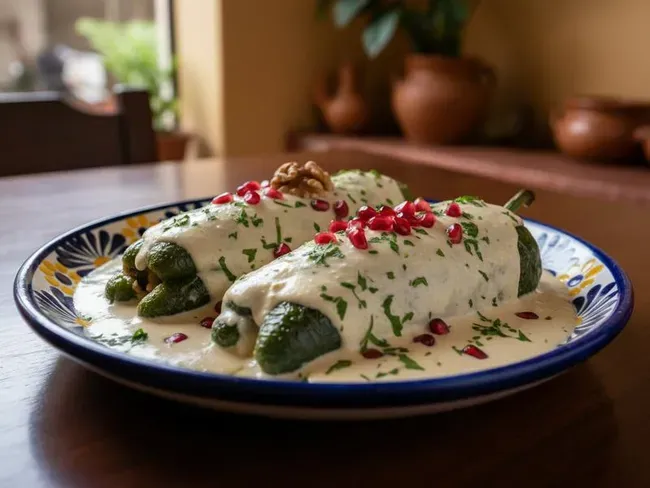
Chiles en nogada: a poblano chile stuffed with picadillo (ground meat, dried fruits, almonds, cinnamon, cloves), covered in a sauce of fresh walnuts blended with cream cheese, and garnished with pomegranate seeds and flat-leaf parsley. The red, white, and green represent the Mexican flag.
The traditional season usually runs from late July through September, when Puebla’s fresh walnuts, pomegranates, poblano chiles, pears, and apples come together. August and early September are the most reliable weeks. Restaurant dates vary, so confirm before building a trip around one plate; the chiles en nogada season guide explains the planning window in detail.
Restaurants to check during the season:
- La Tonalá: The classic institutional spot, always packed, ~350 MXN
- El Mural de los Poblanos: ~420 MXN, more refined plating
- Casareyna: ~500 MXN, exceptional walnut sauce
11. Cemita Poblana
Puebla’s answer to the sandwich, and nothing like a torta.
A cemita uses a sesame-studded brioche-style bun (the cemita roll) and contains milanesa (breaded beef or chicken), avocado, chipotle chiles, Oaxaca string cheese (quesillo), and papalo — a herb found almost nowhere else in Mexico with a flavor between arugula and cilantro, sharper than either.
You will find cemitas from street stands at 60–80 MXN. Mercado El Carmen (18 Poniente near 5 de Mayo) has the best concentration. Don’t accept a cemita without papalo — that’s the whole point.
12. Chalupas
Puebla’s street food staple — small, thick tortillas topped with salsa verde or salsa roja, pulled pork or chicken, and chopped onion. Sold from women cooking at charcoal griddles in the street.
The best chalupas are at La Chalupería on 16 de Septiembre, and from the vendors who set up around the Zócalo from 7–10 AM and again from 6–9 PM. 8–15 MXN each.
13. Pasillo de Humo (Mercado El Carmen)
The Pasillo de Humo (“Smoky Hallway”) is a section of Mercado El Carmen where women cook over charcoal in a permanent haze of smoke and chile aroma. It’s not curated or Instagram-optimized — it’s where locals eat.
Go for: tlayudas, enfrijoladas, mole negro, chilaquiles with fresh salsa. Budget 80–120 MXN for a full meal. Open from around 8 AM, closes by 3 PM.
14. Dulces de Puebla (Pueblan Sweets)
Puebla has one of Mexico’s strongest confectionery traditions, dating to the colonial convents that produced sweets as income. The main types:
- Camotes: sweet potato candy rolled in sugar, available in classic orange or piña/lime flavors. The most famous Puebla souvenir — you’ll smell the shops from the street.
- Macarrones: almond paste candy, dense and rich
- Borrachitos: “little drunks” — fruit-flavored gelatin squares soaked in anisette
- Tortitas de Santa Clara: cookies filled with pumpkin seed paste, around 10 MXN each
Calle 6 Oriente (between 2 Sur and 4 Sur) is the dulces street — a dozen shops, all competing. Try before you buy.
Neighborhoods & Walking
15. Barrio de los Sapos ⭐
The most atmospheric neighborhood in Puebla for evening wandering — and the best Sunday morning antique market.
Barrio de los Sapos (“Neighborhood of the Toads,” named for stone frog figures on an old fountain) spans the area between Callejón de los Sapos and 3 Sur, roughly 5 blocks southeast of the Zócalo. During the week it’s bars and restaurants. On Sunday mornings it transforms: antique dealers line the streets selling 19th-century furniture, religious art, pottery, coins, vintage maps, and accumulated history of Puebla families.
Not everything is cheap — some pieces are genuinely valuable and priced accordingly. Browse without pressure. The stands set up around 9 AM and break down by 2 PM.
16. Barrio del Artista
One block north of the Amparo Museum, on 8 Norte between 2 Oriente and 4 Oriente, a small pedestrian square surrounded by working artist studios and galleries.
The artists paint outside when weather allows — easels set up in the square, paintings displayed for sale. The work ranges from tourist-grade landscapes to genuinely excellent portraiture and abstract work. Even if you’re not buying, it’s a pleasant 30-minute wander with good light for photography.
17. Barrio de Analco
Puebla’s oldest neighborhood — founded before the Spanish arrived, when indigenous Tlaxcalan warriors allied with the Spanish built their own separate settlement east of the colonial center.
The Church of San Francisco here (the second church built in Puebla, 1535) contains the mummified body of Sebastián de Aparicio, a Mexican blessed by the Catholic Church, in a glass coffin in a side chapel. Unusual, historically significant, rarely visited by tourists.
Crafts & Shopping
18. Talavera Workshop Tour ⭐
Puebla’s Talavera is the only Mexican craft to hold UNESCO Intangible Cultural Heritage status (jointly with Dolores Hidalgo Talavera from Guanajuato).
Authentic Talavera must be made within a defined geographic area (primarily Puebla and parts of Tlaxcala), using local clay, tin-enamel glaze, and natural mineral pigments. The distinctive blue-and-white palette derives from cobalt. The technique arrived with Spanish colonists who brought Moorish tile-making traditions from Talavera de la Reina, Spain.
Workshop tours worth visiting:
- Uriarte Talavera (4 Poniente 911) — The oldest active Talavera workshop in Mexico (1824). Free 30-min factory tours showing the full process from clay preparation to kiln firing. Shop attached with authentic certified pieces from 200 MXN.
- Talavera de la Reina (11 Norte 2019, Cholula) — Larger workshop, also offers tours.
Warning: Many “Talavera” pieces sold on the street and in markets are mass-produced ceramics with no connection to the authentic craft. Certified Talavera has an official seal from the Regulatory Council. Prices for certified pieces reflect actual labor (starting at 200 MXN for small items).
19. Mercado de Artesanías (El Parián)
The largest artisan market in Puebla — a covered colonial building at 6 Norte between 2 and 4 Oriente, one block from the Zócalo.
Hundreds of stalls sell onyx (Puebla is Mexico’s main onyx-producing state), Talavera (mix of certified and uncertified — ask to see the seal), rebozos, colonial-style furniture, and regional textiles. Bargaining is expected and enjoyable — start at 60% of the asking price.
Day Trips from Puebla
20. Cholula
Covered in detail above (activity #1) — worth a full-day trip including:
- Great Pyramid tunnels and archaeological zone (morning)
- Lunch in the Cholula Zócalo area — pozole and tlayudas in the fondas
- Capilla de la Tercera Orden and ex-convent complex
- Afternoon in San Andrés Cholula’s craft market
Cholula has a younger energy than Puebla — university town, lively bar scene at night if you stay for the evening. See the Cholula Pyramid guide for timing and logistics.
21. Tonantzintla and Acatepec ⭐ (Hidden Gems)
Two 16th-century churches that are among the most extraordinary in Mexico — and almost nobody from outside Mexico knows they exist.
Santa María Tonantzintla: Built on a site sacred to the Nahua goddess Tonantzin (another name for the mother earth deity), the church’s interior was decorated by indigenous artisans who incorporated their own iconography alongside Catholic imagery. Corn cobs, cacao pods, maguey plants, and local faces of saints and angels cover every surface in polychrome stucco relief. It’s indigenous-baroque synthesis that looks unlike anything else in Mexico.
San Francisco Acatepec: 2 km further, a facade covered entirely in Talavera tiles — blue, white, and gold geometrics framing the entrance and twin towers. The contrast with colonial stone churches elsewhere in Mexico is jarring and wonderful.
Both are free to enter. Combine as a half-day trip from Puebla: take a combi from the market at 11 Poniente for 12–15 MXN each way. The journey takes 30–40 minutes.
22. Atlixco (Flower Market)
37 km southwest of Puebla, Atlixco is famous for its massive weekly flower market (held Thursdays at the main market) and the Balcón del Mundo viewpoint — a hillside garden with views of Popocatépetl that, on clear mornings, makes you understand why the Aztecs considered volcanoes divine.
Bus from Puebla CAPU: 45 min, 35 MXN. See the Atlixco Puebla guide for full detail.
23. Cuetzalan
The most dramatic day trip — though at 3 hours each way, many travelers stay overnight.
Cuetzalan sits in the Sierra Norte cloud forest, at 1,090 meters altitude, in an area of 18th-century coffee and vanilla plantations, pre-Hispanic ruins (Yohualichan), and some of the most theatrical waterfalls in Mexico (Las Brisas, La Gloria, Atepolihui). The Sunday market in the main plaza is one of the most authentic indigenous markets in Mexico — Nahua Totonac vendors arrive before dawn to sell produce, textiles, and medicinal plants.
See the Cuetzalan Puebla guide for full logistics. Plan for an overnight.
24. Tehuacán
130 km southeast — known primarily as the source of Mexico’s famous mineral water (Tehuacán springs supply much of the national bottled water market) and the site of Coxcatlan Cave, where archaeologists found the earliest domesticated maize in the Americas (5,000 BCE). The Zapotitlán Salinas biosphere reserve nearby has dramatic cactus landscapes unlike anything else in the Puebla region.
Full guide: Tehuacán Puebla.
25. Huaquechula (Day of the Dead — October/November)
Known by few tourists, essential for anyone visiting Puebla in late October or early November.
Huaquechula is a small town 50 km south of Puebla that builds the most elaborate Day of the Dead altars in Mexico — multi-story constructions filling entire rooms, often depicting the deceased in life-size figures surrounded by marigolds, photographs, food offerings, and personal belongings. Families open their homes to visitors during Día de Muertos. Nothing is charged, but bringing offerings (flowers, candles) is appreciated.
Festivals & Events
26. Cinco de Mayo Celebration (May 5)
The actual Batalla del 5 de Mayo commemoration in Puebla is nothing like the US version.
At the Forts of Loreto and Guadalupe, thousands of re-enactors recreate the battle with period dress, artillery fire, and cavalry. The city holds parades, outdoor concerts, and food fairs throughout the day. Feria de Puebla (the state fair) runs for two weeks around Cinco de Mayo with regional food, rides, and cultural performances.
Book accommodation in Puebla 4–6 weeks ahead for May 5 weekend.
27. Feria de Puebla (April–May)
Mexico’s oldest fair, running for over 400 years. A 3-week event around Cinco de Mayo with carnival rides, regional food from all 217 municipalities of Puebla state, craft exhibitions, concerts, and bullfights (legally regulated).
28. Chiles en Nogada Season (Late July–September)
Puebla’s chiles en nogada calendar is a season, not one continuous citywide festival. Restaurants, traditional cooks, and producing towns announce their own meals and short events as fresh walnuts, pomegranates, and local orchard fruit arrive. In 2026, the state launched the season in July, San Pedro Cholula held a four-day Puebla en Nogada festival, and Tochimilco announced service from July 24 to September 20. Check current municipal and restaurant dates before planning around a specific event.
Free Things to Do in Puebla
| Activity | Why It’s Worth It |
|---|---|
| Walking the Zócalo | Best people-watching in the city; free concerts on Sunday evenings |
| Capilla del Rosario | One of the most stunning interiors in Mexico — free entry |
| Barrio del Artista | Live painting, gallery browsing, no obligation |
| Barrio de los Sapos (weekday) | Wandering the callejones and historic streets |
| Hueyapan viewpoint (Cholula) | Best rooftop views of both the pyramid and the volcano |
| Mercado 5 de Mayo (Saturday morning) | Neighborhood market, real local life, free to browse |
| Fort Guadalupe grounds | Exterior walkable for free; pay 65 MXN for the museum |
| Zócalo evening events (weekend) | Free concerts, folk dance performances, especially Sunday |
Practical Information
Getting There
| From | Option | Time | Cost |
|---|---|---|---|
| Mexico City (TAPO) | ADO bus | 2 hrs | 240–280 MXN |
| CDMX Airport (T1/T2) | Estrella Roja | 2.5 hrs | 270–320 MXN |
| Oaxaca | ADO bus | 5–6 hrs | 500–600 MXN |
| Mexico City (car) | Highway 150D | 2 hrs | ~200 MXN tolls |
Getting Around
The Historic Center is compact — most things on this list are within a 20-minute walk of the Zócalo. For Cholula (15 km), take combis from Av. 11 Poniente (25 MXN) or Uber (~70 MXN). For Tonantzintla/Acatepec, combis from the same corridor. Uber and DiDi work well in Puebla city. Avoid hailing street taxis — use apps.
Where to Eat in Puebla
| Restaurant | Style | Price | Must Order |
|---|---|---|---|
| El Mural de los Poblanos | Colonial setting, mid-range | 200–450 MXN/plate | Mole, seasonal chiles en nogada |
| La Tonalá | Traditional Poblana | 150–350 MXN | Chiles en nogada, mole negro |
| Casareyna | Upscale colonial hotel | 400–600 MXN | Full mole tasting menu |
| Fonda La Mexicana (Mercado El Carmen) | Market stall | 80–120 MXN | Mole over chicken, pozole |
| La Chalupería | Street food institution | 40–80 MXN | Chalupas with salsa roja |
| Barra Poblana | Modern Pueblan | 200–350 MXN | Tostadas, regional craft mezcal |
Budget Guide
| Style | Daily Budget | What You Get |
|---|---|---|
| Budget | $30–55 USD | Hostel or budget hotel, market food, combis everywhere |
| Mid-range | $55–120 USD | Hotel in historic center, restaurant mole, Uber for longer trips |
| Comfort | $120–200 USD | Boutique hotel, full chiles en nogada dinner, guided Cholula tour |
Best Time to Visit
- March–May: Dry season, Cinco de Mayo events (May 5), comfortable temperatures ~22°C, jacarandas in March
- Late July–September: Chiles en nogada season; August and early September are the most reliable weeks
- December: Christmas posadas, street food culture, manageable crowds
- January–February: Low season, best hotel prices, cool (8–12°C at night)
Avoid Easter week (Semana Santa) unless you enjoy crowds — Puebla is a major domestic destination for Holy Week.
How Many Days Do You Need?
Day trip from CDMX: Possible — Zócalo, Capilla del Rosario, cemita, return. But you’ll miss Cholula and spend too much time in transit.
1 night / 2 days: Comfortable minimum. Day 1: Historic Center (cathedral, Biblioteca, Forts). Day 2: Cholula + Tonantzintla + Acatepec, then Barrio de los Sapos at night.
2 nights / 3 days: Ideal. Add the Amparo Museum, proper market meals, Barrio del Artista, and a Talavera workshop tour.
3+ nights: Consider a day in Atlixco or Cuetzalan, or using Puebla as a base between Mexico City and Oaxaca (ADO runs direct buses, 5–6 hours).
Related Guides
- What to Eat in Puebla 2026 — Mole poblano, seasonal chiles en nogada, cemitas, tacos árabes, chalupas, and where locals eat
- Mexico City to Puebla 2026 — Bus (2 hrs from TAPO), driving via Cholula libre highway, day trip vs overnight breakdown
- Puebla Travel Guide 2026 — Full city overview, neighborhoods, and practical planning
- Best Time to Visit Puebla 2026 — Chiles en nogada season, Cinco de Mayo, Semana Santa, and month-by-month weather
- Puebla Chiles en Nogada Weekend — A practical two-night food itinerary built around one reserved lunch
- Semana Santa in Puebla 2026 — Cholula pyramid masses, Huejotzingo, full Holy Week schedule, Ley Seca rules
- Day Trips from Puebla 2026 — 12 best excursions: Cholula, Cuetzalán, Cacaxtla, Popo & more
- Cholula Pyramid Guide — Everything for the Cholula visit
- Cuetzalan Puebla Guide — Cloud forest, waterfalls, indigenous market
- Day Trips from Mexico City — Puebla as CDMX day trip or extension
- Mexico City Travel Guide — If combining cities
- Colonial Mexico Travel Guide — Puebla in the broader colonial circuit
- Mexico Itinerary: 10 Days — Puebla’s place in multi-city routes
- Is Mexico Safe? 2026 — Safety context
- Mexico Travel Tips — Practical first-timer tips
- Mexico Packing List — What to bring