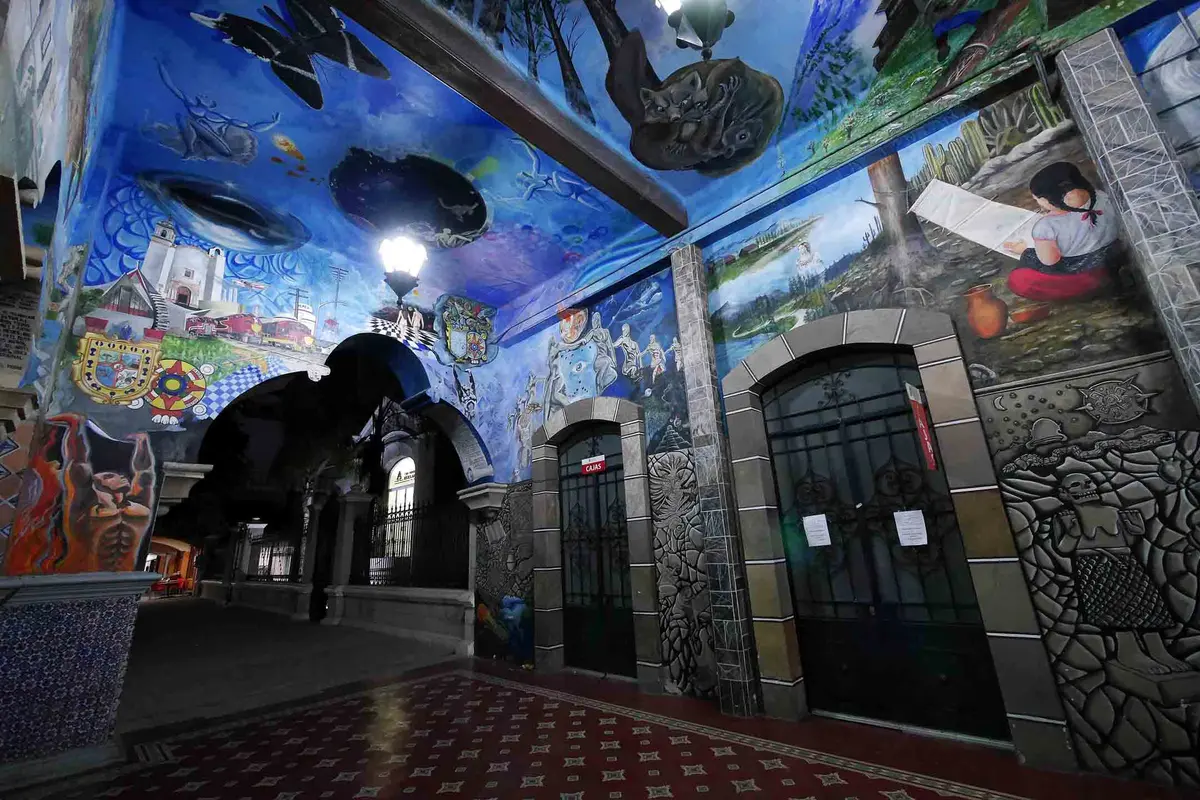
18 Best Things to Do in Tehuacán, Puebla in 2026 + Food, Day Trips & Hotels
If you’re searching for the best things to do in Tehuacán, Puebla, start with the UNESCO-listed Tehuacán-Cuicatlán Biosphere Reserve, Tehuacán Viejo, the old mineral springs, downtown’s cathedral-and-market core, and regional dishes like mole de caderas. Tehuacán is worth visiting if you want nature, archaeology, food, and a real-city Mexico stop without tourist crowds.
It’s also one of the smartest stops on the route between Puebla City and Oaxaca City. Two hours from Puebla. Three and a half hours from Oaxaca. Most travelers drive past it without stopping, but even one full day here delivers more substance than a lot of better-known cities.
If you only have limited time, prioritize the biosphere reserve, Tehuacán Viejo, the springs, downtown, and the local food scene. If you’re building a broader Puebla itinerary, pair this guide with our Puebla state guide, things to do in Puebla, and best time to visit Puebla.
Best Things to Do in Tehuacán for First-Time Visitors
If you want the short list, these are the highest-payoff stops for most travelers:
- Best overall: Tehuacán-Cuicatlán Biosphere Reserve
- Best history stop: Tehuacán Viejo
- Best easy downtown stop: Parque Juárez and the cathedral
- Best food experience: Mercado 16 de Marzo
- Best with kids: Parque Aventura
- Best day trip add-on: Zapotitlán Salinas
That mix is what generic listicles usually miss. Tehuacán is not just a checklist city, it’s a Puebla-to-Oaxaca stopover with UNESCO nature, deep corn history, mineral-water culture, and unusually strong local food.
Tehuacan at a Glance
- Best things to do: biosphere reserve, Tehuacan Viejo, Coxcatlan Cave, mineral springs, downtown plazas, and food markets
- Best for: road trippers, food travelers, archaeology fans, cactus landscapes, and offbeat Puebla itineraries
- Skip if: you only want beaches, nightlife, or polished resort infrastructure
- Ideal stay: 1 day if you’re passing through, 2 days if you want the reserve plus museums and food
- Best season: October to November for mole de caderas, November to April for dry hiking weather
Quick Facts: Tehuacan
| State | Puebla (southeastern corner) |
| Population | ~300,000 |
| Elevation | 1,676m (5,500 ft) |
| Climate | Semi-arid, mild year-round |
| UNESCO status | Tehuacan-Cuicatlan Biosphere Reserve (2018) |
| Signature dish | Mole de caderas (October–November only) |
| Best for | History, food, nature, Puebla–Oaxaca stopover |
| How long | 1–2 days recommended |
Getting to Tehuacan
| From | Transport | Duration | Cost |
|---|---|---|---|
| Mexico City (TAPO) | ADO bus | 4 hours | 300–500 MXN |
| Puebla | ADO bus | 2 hours | 100–250 MXN |
| Oaxaca City | ADO / AU | 3.5 hours | 250–400 MXN |
| Veracruz | ADO | 4 hours | 300–450 MXN |
| Mexico City (drive) | Car via Hwy 150D | 3.5 hours | ~200 MXN tolls |
The ADO terminal (Av. Independencia Pte 137, Centro) is central. Uber and DiDi work in Tehuacan. Compare car rental rates if you’re driving the Puebla–Oaxaca corridor.
18 Best Things to Do in Tehuacan
1. Tehuacan-Cuicatlan Biosphere Reserve (UNESCO)
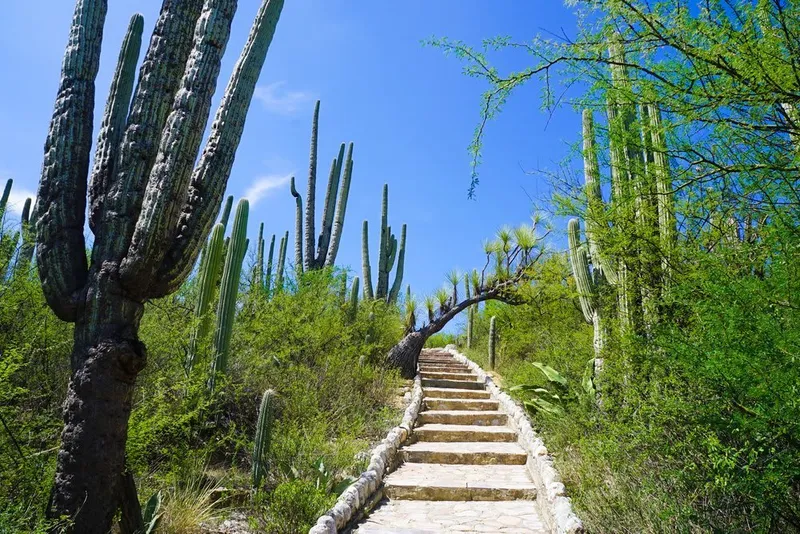
This is the crown jewel of the region — one of the most underrated natural attractions in all of Mexico. The Biosphere Reserve earned UNESCO World Heritage status in 2018 and contains the densest concentration of columnar cacti on the planet, with over 2,500 plant species, many found nowhere else on Earth.
Towering cardón cacti reach 15 meters high. The landscape looks alien — rust-colored giants in a sea of arid mountains. Best access is through the Helia Bravo Hollis Botanical Garden (see below) or via guided hike from Zapotitlán Salinas (45 min south).
Book biosphere reserve tours on Viator
2. Helia Bravo Hollis Botanical Garden
Named after Mexico’s pioneering cactus botanist, this garden is the easiest way for most travelers to experience the reserve without committing to a full backcountry hike. Walking among cacti hundreds of years old is genuinely humbling, and it helps explain why this valley matters globally for biodiversity, not just locally for scenery.
Look for the white-haired Cephalocereus columna-trajani and massive Neobuxbaumia tetetzo columns. If you’re heading onward to Oaxaca, this is one of the easiest high-payoff stops to fit into a half-day.
- Entry: 50 MXN (~$3 USD)
- Hours: 9 AM – 5 PM daily
- Getting there: 30-minute drive south toward Zapotitlán Salinas
3. Peñafiel and Garci-Crespo Mineral Springs
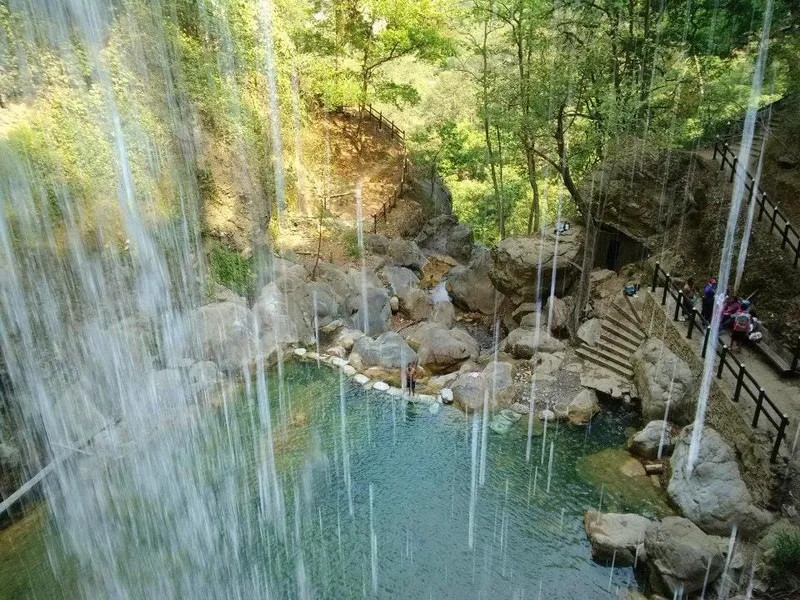
Most Mexicans don’t know this: Peñafiel mineral water originated right here. Tehuacan’s springs have been documented since 1445, when indigenous peoples believed the water had curative properties.
The Garci-Crespo Springs complex includes a museum of Tehuacan’s water industry, a Desiderio Hernández Xochitiotzin mural of city history, and the original springs where water still emerges from the earth.
- Entry: 40 MXN (~$2 USD)
- Hours: Tuesday–Sunday, 10 AM – 5 PM
4. Coxcatlan Cave — Where Corn Was Born
In the 1960s, archaeologist Richard MacNeish discovered approximately 10,000 corn cobs inside this cave — the oldest domesticated maize in the Americas, dating to roughly 5000 BC. Without this valley, there may be no tortillas, no tamales, no Mesoamerican civilization.
In 2025, INAH confirmed cave paintings at the site are over 10,000 years old — among the oldest in Mesoamerica.
Getting there: 30 km south, arrange a taxi or guided tour (400–800 MXN round trip). Local guides add essential context.
5. Tehuacan Viejo Archaeological Zone (Ndachijan)
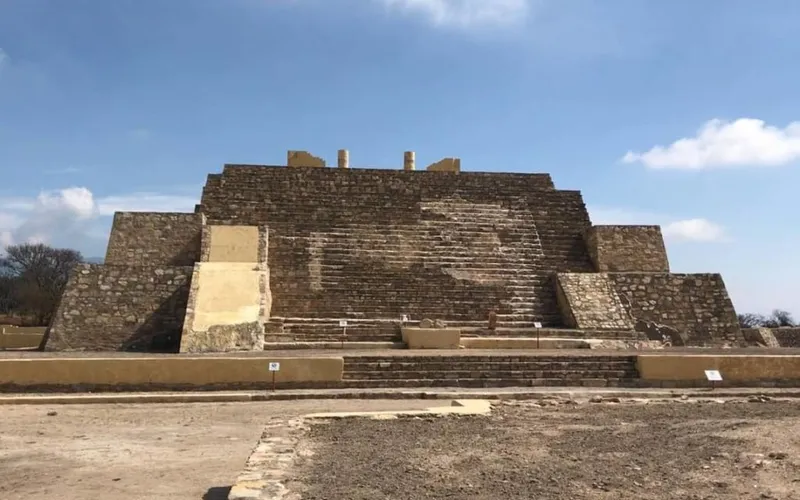
Also called Ndachijan in Popoloca, this archaeological site was the most important pre-Hispanic city in the Tehuacan Valley — and is still actively being excavated. You may see archaeologists working when you visit.
The highlight: a temple where human skulls set with stucco were found embedded in lateral walls — offerings to Mictlantecuhtli, god of the underworld. The site museum displays 80+ artifacts from Popoloca civilization.
Unlike Monte Albán or Cholula, you’ll likely have it almost to yourself.
- Entry: 75 MXN (~$4 USD)
- Hours: 9 AM – 5 PM, closed Mondays
- Getting there: Route 23 “San Isidro” bus from downtown
6. Cathedral of the Immaculate Conception
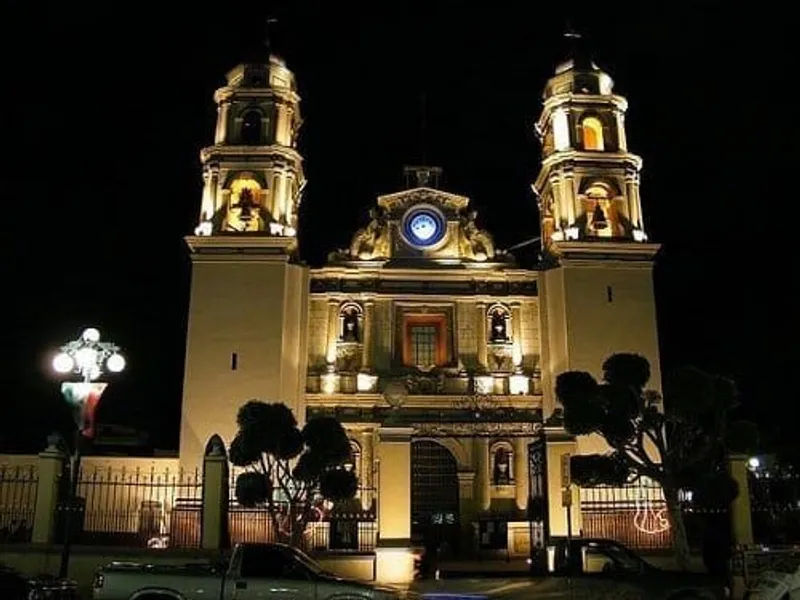
Built between 1724 and 1728 over a cave that served as a refuge during religious persecution, the cathedral blends neo-classic and baroque styles. Inside: gold leaf ceilings, colonial-era codices, and Renaissance-style arrangements of green quetzal feathers.
Best visited in morning when light pours through the windows. Free entry.
7. Parque Juarez (Main Plaza)
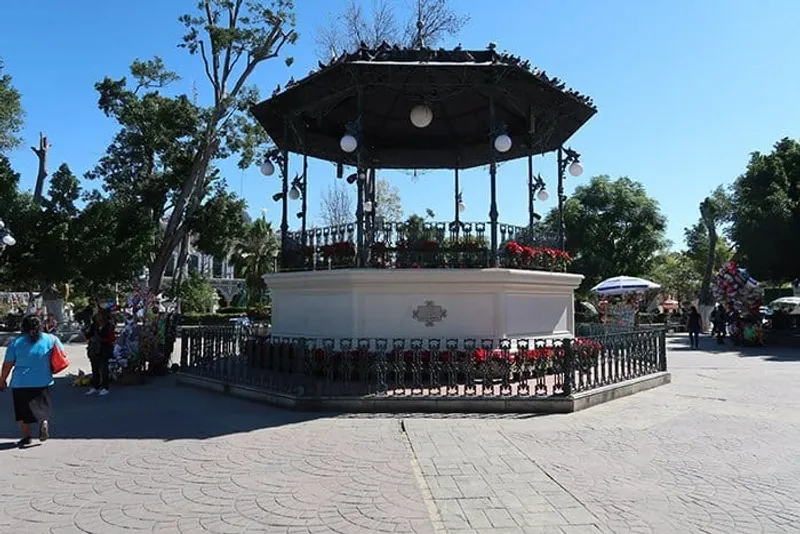
Tehuacan’s main plaza — sculpted topiary gardens, radiating walkways, shade trees. The central kiosk hosts live music on Thursday evenings and Sunday afternoons. Come Sunday afternoon when families fill the plaza and vendors sell memelas, elotes, and fresh juice from every corner.
This is small-city Mexico at its most genuine.
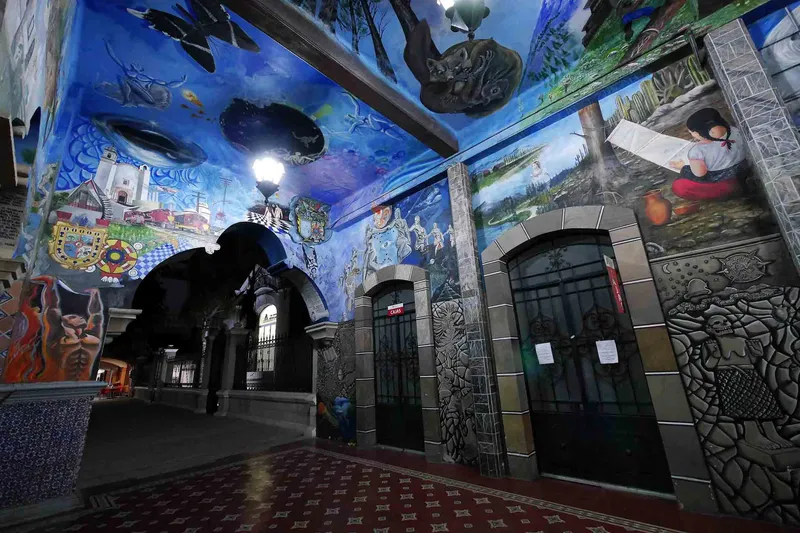
8. Municipal Palace and Its Murals
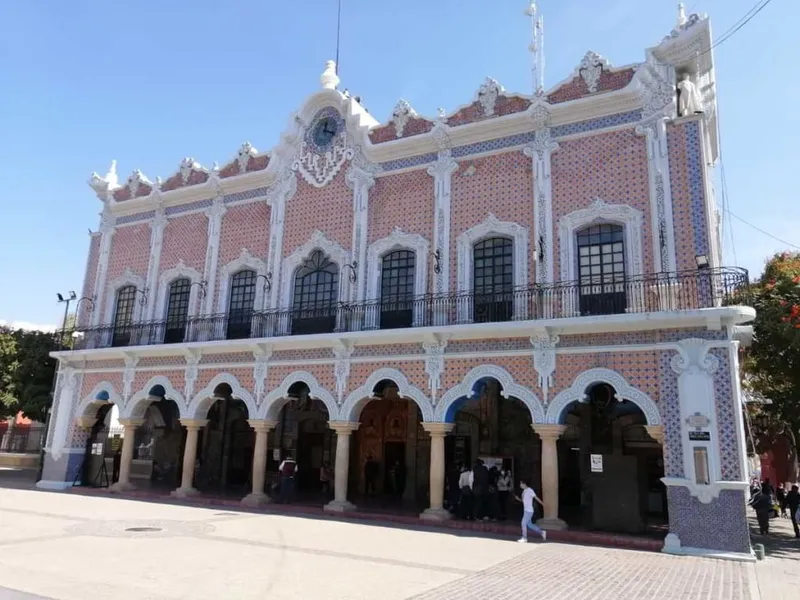
The Municipal Palace was Tehuacan’s first two-story building — nicknamed “La Casa de los Altos” (The Tall House). Inside, seek out the mural “Tehuacan and Its Five Regions” by brothers Turillo, Luis, and Santiago Carpinteyro.
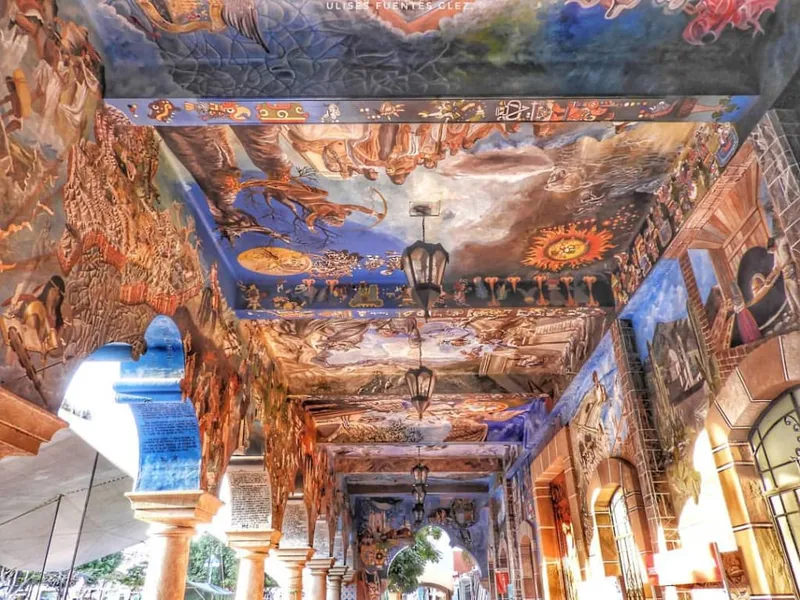
Free entry. Open during business hours on weekdays.
9. Tehuacan Valley Museum (Museo del Valle)
Housed in the beautifully restored Ex-Convento del Carmen (18th-century convent), this is the place to understand Tehuacan’s global importance. The main exhibit traces corn domestication from wild teosinte grass to modern maize — and you’ll see the oldest corn cob found in Mexico. Pre-Hispanic ceramics, Popoloca stone tools, and warrior shields.
If you visit one museum in Tehuacan, make it this one.
- Entry: 40 MXN (~$2 USD)
- Hours: Tuesday–Sunday, 10 AM – 5 PM
10. Museum of Evolution
Takes a broader scientific approach — from the Big Bang through dinosaurs and fossils to modern civilization. Surprisingly well-done for a small-city museum with interactive exhibits. Also houses the Museum of Mineralogy with meteorites, moonstones, and minerals from the Balsas Valley.
- Entry: 42 MXN (~$2 USD)
- Hours: Tuesday–Sunday, 10 AM – 6 PM
11. San Lorenzo Thermal Pools
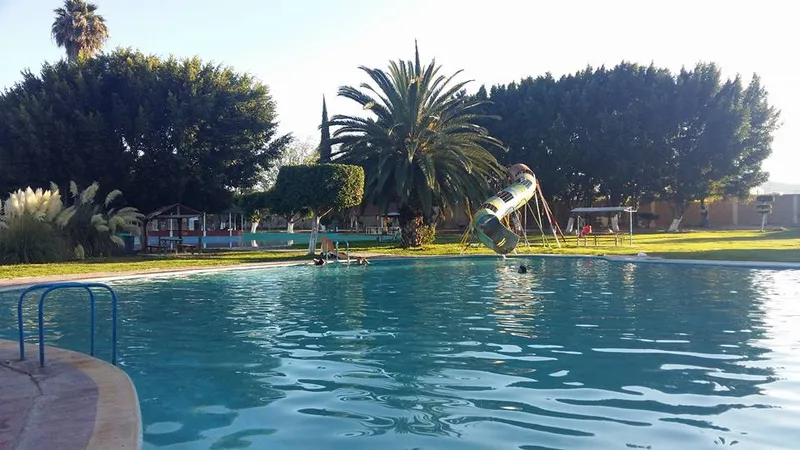
Tehuacan’s mineral water tradition extends to its thermal pools. San Lorenzo, 2 km from the center, has three pools fed by natural mineral water: an Olympic-sized pool, two recreational pools with slides, and picnic areas.
The mineral-rich water has been considered therapeutic since pre-Hispanic times. Whether or not that’s true, floating in warm mineral water surrounded by Puebla countryside is undeniably good.
- Entry: 60–100 MXN (~$3–$5 USD)
- Hours: 8 AM – 5 PM daily
For more thermal experiences across Mexico, see our hot springs in Mexico guide.
12. Parque Aventura
Family-friendly: splash pools, a fishing lagoon with rentable boats, sports courts, bike rentals, and camping. Not a world-class attraction but solid for a half-day with kids. Well-maintained, affordable food.
- Entry: 50–100 MXN
- Hours: 8 AM – 6 PM
13. Temple of El Calvario
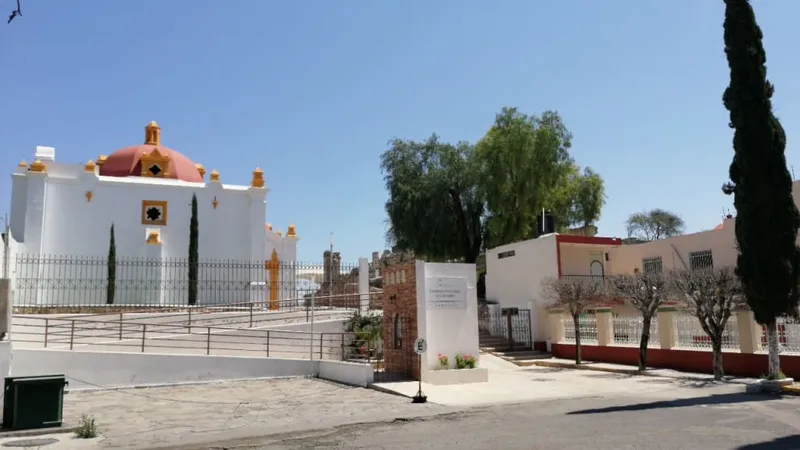
Built in 1759 by Joaquín del Moral after the people of Tehuacan refused to contribute — so he funded it himself, making El Calvario legally private property. One of the few privately-owned churches in Mexico.
Three chapels built with limestone quarry and adobe. The surrounding hilltop offers nice views of the city — 15-minute walk uphill from the center.
14. Mercado 16 de Marzo
No Tehuacan visit is complete without its central market. A sprawling labyrinth of vendors selling: mole paste and dried chiles (cuicateco, costeño, serrano), memelas and tlacoyos cooked on comals, goat meat and barbacoa (especially in October–November), local cheeses, herbs, and Mixteca crafts.
The food stalls inside serve some of the cheapest, best food in the city.
- Hours: 8 AM – 9 PM daily
- Budget: Full meal 40–80 MXN (~$2–$4 USD)
15. Ex-Convent of San Francisco
One of Tehuacan’s oldest colonial buildings, dating from the early colonial period when Franciscan friars established a mission here. The architecture combines indigenous and Spanish colonial elements — a common feature in Puebla state. Occasionally hosts cultural events; the exterior and courtyard are worth a quick visit.
16. Parque Ecológico
A quieter alternative to the main plaza — centered around a beautiful old fountain, surrounded by bakeries, coffee shops, and ice cream parlors. The upscale counterpart to Parque Juarez. Five blocks north of the main plaza. Perfect for an evening stroll.
17. Club de Animalitos Zoo
Small zoo with birds, lions, cougars, crocodiles, snakes, llamas, and monkeys. Not a must-do for adults but kids enjoy it for an hour.
- Hours: 8 AM – 7 PM daily
- Entry: 20 MXN (~$1 USD)
18. Day Trip to Zapotitlán Salinas
About 45 minutes south, this small town sits at the biosphere reserve’s heart and offers: pre-Hispanic salt flats still harvested today, the best hiking trails in the reserve, community-run ecotourism with indigenous guides, and astronomical observation (remote location = incredible dark skies).
Combines perfectly with the Helia Bravo Botanical Garden for a full day.
- Getting there: Colectivos from Tehuacan’s market area (40–60 MXN)
- Guided hikes: 200–400 MXN per person
One-Day Tehuacan Itinerary
If you’re stopping between Puebla and Oaxaca, this is the highest-value way to spend a day in Tehuacan:
- Morning: Start with the Tehuacan Valley Museum or Museum of Evolution
- Late morning to early afternoon: Drive to the Helia Bravo Hollis Botanical Garden or broader biosphere reserve
- Lunch: Return to town for mole, cemitas, memelas, or barbacoa de chivo
- Afternoon: Visit Tehuacan Viejo or the Garci-Crespo springs
- Evening: Walk the cathedral, plaza, and central food stalls before continuing your trip or staying overnight
That mix gives you the three things Tehuacan does best: deep history, unusual desert landscapes, and food you won’t get in beach-heavy itineraries.
What to Eat in Tehuacan
Mole de Caderas (October–November Only) ⭐
This is THE dish that defines Tehuacan. Declared Intangible Cultural Heritage of Puebla in 2023, mole de caderas has a 300-year-old tradition tied to the annual matanza (slaughter) of goats that graze on wild oregano and cazahuate in the Oaxaca–Puebla mountains.
Goat hips and backbone (caderas) simmer in a complex sauce of three chiles (cuicateco, costeño, serrano), ejote ancho, red guaje seeds, and tomatillo. The result is a deep, smoky, slightly tangy mole unlike anything else in Mexico.
During season (mid-October to late November), practically every restaurant in Tehuacan serves it. Cost: 150–300 MXN ($8–$15 USD) per plate. The entire animal is used: spine and hips for the mole, bones for tesmole and guasmole soups, organs for asadura, skin for chicharrón de chivo.
Year-Round Must-Try Dishes
| Dish | Description | Price (USD) |
|---|---|---|
| Tesmole | Herb-based goat broth with chiles — everyday cousin of mole de caderas | $3–$5 |
| Barbacoa de chivo | Pit-roasted goat wrapped in maguey leaves | $4–$7 |
| Cemitas tehuacanas | Puebla’s iconic sandwich: milanesa, cheese, avocado, chipotle | $2–$4 |
| Memelas | Thick corn tortillas with salsa, cheese, and beans | $1–$2 |
| Tamales de mole | Corn masa with mole and chicken, wrapped in banana leaf | $1–$2 |
| Goat chicharrón | Crispy fried goat skin — a Tehuacan specialty | $2–$3 |
| Muéganos de Tehuacan | Sweet layered pastry candy associated with the city, great for gifts and bus snacks | $1–$3 |
| Agua mineral de Tehuacan | Mineral water from the original Peñafiel springs | Free–$1 |
If you want context before ordering dessert, here’s our explainer on what muéganos are.
Best Time to Visit Tehuacan
| Season | Months | Weather | Why Visit |
|---|---|---|---|
| Mole de Caderas Season ⭐ | Oct–Nov | 20–28°C | THE reason — mole de caderas + Day of the Dead |
| Dry Season | Nov–Apr | 15–30°C | Best for biosphere, hiking, ruins |
| Hot Season | Apr–May | 25–35°C | Hottest months — start early, rest midday |
| Rainy Season | Jun–Sep | 20–30°C | Afternoon showers, lush green landscape |
Best value: Any time outside October–November. Hotels and restaurants are cheaper and less crowded; the biosphere reserve and ruins are just as good year-round.
Budget Guide
| Travel Style | Daily Cost | Includes |
|---|---|---|
| Budget | $20–$35 USD (400–700 MXN) | Budget hotel, market food, walking + colectivos |
| Mid-range | $50–$80 USD (1,000–1,600 MXN) | 3-star hotel, restaurants, Uber, 1 paid attraction |
| Comfortable | $80–$120 USD (1,600–2,400 MXN) | Nice hotel, restaurants, guided tours, taxis |
Tehuacan is one of the most affordable cities in Puebla state — significantly cheaper than Puebla city or tourist towns like Cuetzalan.
Where to Stay
| Category | Price/Night | Notes |
|---|---|---|
| Budget | $15–$25 USD | Basic, central options |
| Mid-range | $30–$50 USD | Modern, good location |
| Upscale | $50–$80 USD | Colonial character, garden courtyard |
Most hotels are clustered around the historic center. Two nights is the sweet spot — enough to cover the main attractions, eat well, and take a day trip to the biosphere reserve.
Day Trips from Tehuacan
- Cuetzalan (3 hrs) — Magical Town with waterfalls, caves, and indigenous Totonac culture
- Cholula (2.5 hrs) — The Great Pyramid (largest base on Earth) with a church on top
- Puebla City (2 hrs) — Things to do in Puebla, mole poblano, Talavera ceramics
- Zapotitlán Salinas (45 min) — Biosphere reserve trails, pre-Hispanic salt flats, dark skies
- Sierra Negra (1.5 hrs) — Large Millimeter Telescope at 4,600m altitude
- Oaxaca City (3.5 hrs) — Day trips from Oaxaca, mezcal, seven moles
Puebla to Oaxaca Road Trip Stopover
Tehuacan is the natural halfway point on one of Mexico’s best drives. The full Puebla to Oaxaca route through Highway 150D and 135 passes directly through Tehuacan — no detour required.
Suggested 2-night stopover:
- Day 1: Arrive from Puebla, afternoon at Parque Juarez and cathedral, dinner at Mercado 16 de Marzo
- Day 2: Morning biosphere reserve + botanical garden, afternoon thermal pools + ruins
- Day 3: Coxcatlan Cave (morning) + depart for Oaxaca (3.5 hrs)
Safety
Puebla is a Level 2 advisory state — same rating as France and Germany. Tehuacan’s tourist areas are safe and well-lit.
- Use Uber or DiDi instead of street taxis
- Keep valuables out of sight in the market
- Historic center is busy until late evening
- Complete Mexico safety guide
A Brief History of Tehuacan
- ~7000 BC: Humans begin domesticating teosinte (wild corn) in the Tehuacan Valley
- ~5000 BC: Coxcatlan Cave evidence — 10,000 corn cobs, oldest in the Americas
- Pre-Hispanic era: Popoloca civilization builds Ndachijan (Tehuacan Viejo)
- 1445: Indigenous documentation of curative mineral springs
- 1522: Spanish conquest — Gonzalo de Sandoval founds colonial settlement
- Colonial era: Tehuacan becomes a spa town for wealthy Mexicans seeking mineral water cures
- Late 1800s: Peñafiel mineral water brand launches
- 1960s: MacNeish discovers oldest domesticated corn at Coxcatlan Cave
- 2018: UNESCO World Heritage status for Tehuacan-Cuicatlan Biosphere Reserve
- 2023: Mole de caderas declared Intangible Cultural Heritage of Puebla
- 2025: INAH confirms 10,000-year-old cave paintings near Tehuacan
How Many Days Do You Need?
- 1 day: Downtown (cathedral, plaza, museums, market) + food experience
- 2 days (recommended): Add biosphere reserve/garden + ruins + thermal pools
- 3 days: Add Coxcatlan Cave + Zapotitlán Salinas + deeper food exploration
- October–November: Add at least 1 extra day for the mole de caderas festival
Tehuacan doesn’t appear on most Mexico travel itineraries — and that’s exactly its charm. You can stand in the cave where corn was born, float in the mineral springs that launched a famous water brand, walk through a forest of ancient cacti that exist nowhere else on Earth, and eat a dish so tied to its land that it can only be prepared two months a year.
If you’re driving between Mexico City and Oaxaca, Tehuacan deserves more than a gas stop. Give it two days, come hungry.
For more off-the-beaten-path Puebla destinations, see our guides to Chignahuapan, Huauchinango, and Xicotepec. Planning your first Mexico trip? Start with our Mexico travel cost guide and Mexico travel tips.
Explore Puebla tours and day trips on Viator
travel insurance