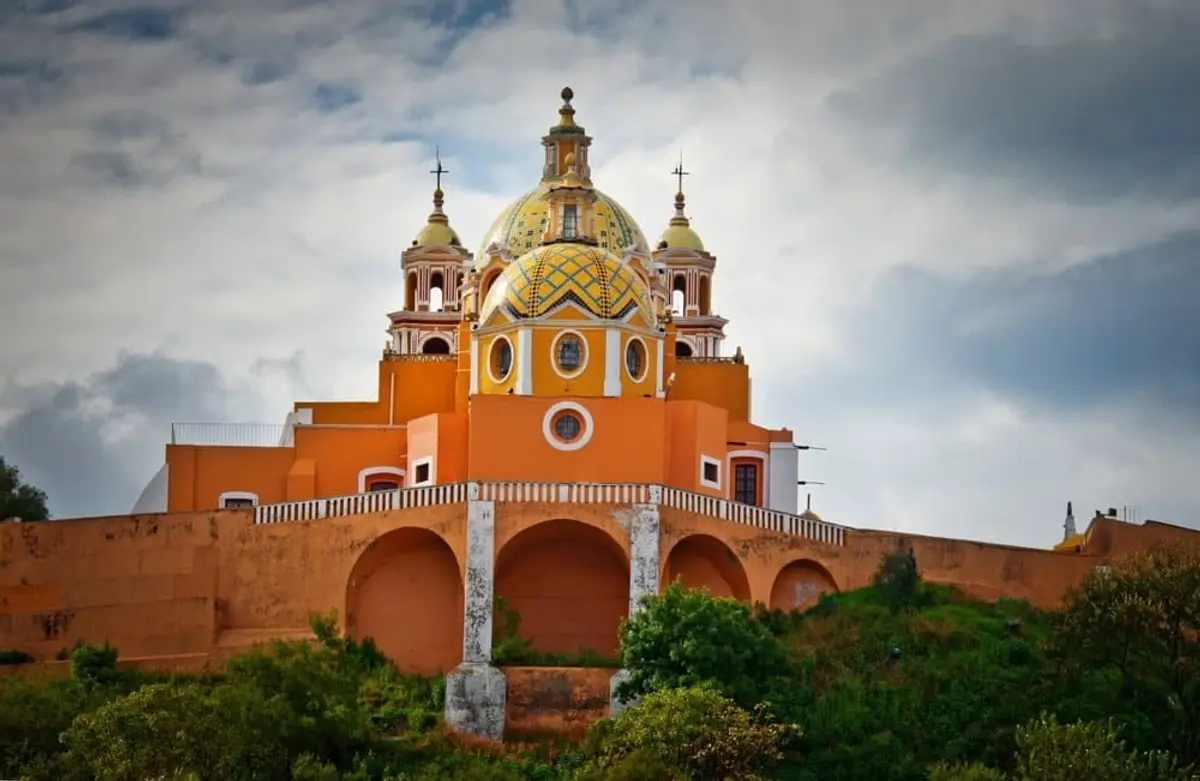
Day Trips from Puebla 2026: 12 Best Excursions Ranked
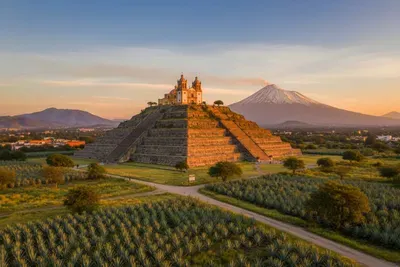
Puebla is a UNESCO city sandwiched between two volcanoes and sitting 2 hours from Mexico City, which makes it both a destination and an ideal base for central Mexico. Within a 3-hour radius you’ll find the world’s largest pyramid by volume, the best-preserved Maya-style murals in central Mexico, an active volcano you can drive up to, colonial city after colonial city, and cloud-forest villages where coffee grows in the mist.
The problem: most visitors spend all their time on Puebla’s 5th Avenue or inside its cathedral and leave without seeing any of it. This guide covers the 12 best day trips from Puebla, ranked by distance and difficulty — from a 20-minute colectivo ride to a rewarding full-day drive.
At a Glance: All 12 Day Trips from Puebla
| Destination | Distance | Drive | By Bus | Best For |
|---|---|---|---|---|
| Cholula | 12 km | 20 min | 30 min | Pyramids, colonial town |
| Tonantzintla & Acatepec | 15 km | 25 min | 35 min | Baroque churches |
| Atlixco | 45 km | 50 min | 1 hr | Flowers, colonial charm |
| Tlaxcala + Cacaxtla | 30–60 km | 45–60 min | 1 hr | History, murals |
| Popocatépetl (Paso de Cortés) | 70 km | 1.5 hrs | 2 hrs | Volcano views |
| Huamantla | 110 km | 1.5 hrs | 2 hrs | Colonial town, tapestry festival |
| Grutas de Cacahuamilpa | 120 km | 2 hrs | 2.5 hrs | Mexico’s largest caves |
| Tehuacán | 120 km | 1.5 hrs | 2 hrs | Mineral water, pre-Hispanic corn |
| Xalapa | 160 km | 2.5 hrs | 2.5 hrs | Olmec heads, coffee culture |
| Cuetzalán | 175 km | 3 hrs | 3 hrs | Cloud forest, waterfalls, coffee |
| Mexico City | 135 km | 2 hrs | 2 hrs | Everything |
| Oaxaca | 345 km | 4.5 hrs | 5 hrs | Long but possible by car |
1. Cholula (12 km — 20 minutes)
Cholula is not a day trip from Puebla — it’s more of an afternoon errand. At 12 km from Puebla’s zócalo, colectivos run every few minutes from the corner of 6 Poniente and 13 Norte (20–30 MXN, 30 minutes). The journey is so short that most people who spend two or more days in Puebla simply include Cholula as a morning excursion.
What makes Cholula worth it: The Great Pyramid of Cholula is the largest pyramid on Earth by volume — bigger than the Great Pyramid of Giza in Egypt. The Spanish built a colonial church directly on top of it in the 1500s, creating one of the most surreal and striking images in Mexico. Below ground, you can walk through 8 km of tunnels the archaeologists dug through the pyramid to understand its structure. You can walk up the sides to the church for panoramic views of Popocatépetl — on a clear day, the volcano fills the sky.
What to skip: Cholula’s famous “365 churches” is a myth. The city has around 50–60 churches — still impressive, but nowhere near 365. The story dates to Spanish colonial propaganda about replacing one church for every pyramid. Don’t visit expecting to count them.
Combine with: Tonantzintla and Acatepec (15 minutes from Cholula — see below) turn a Cholula morning into a full-day baroque church circuit.
Entry fee: Pyramid site 95 MXN ($5 USD). Church free.
2. Tonantzintla & Acatepec (15–20 km — 25 minutes)
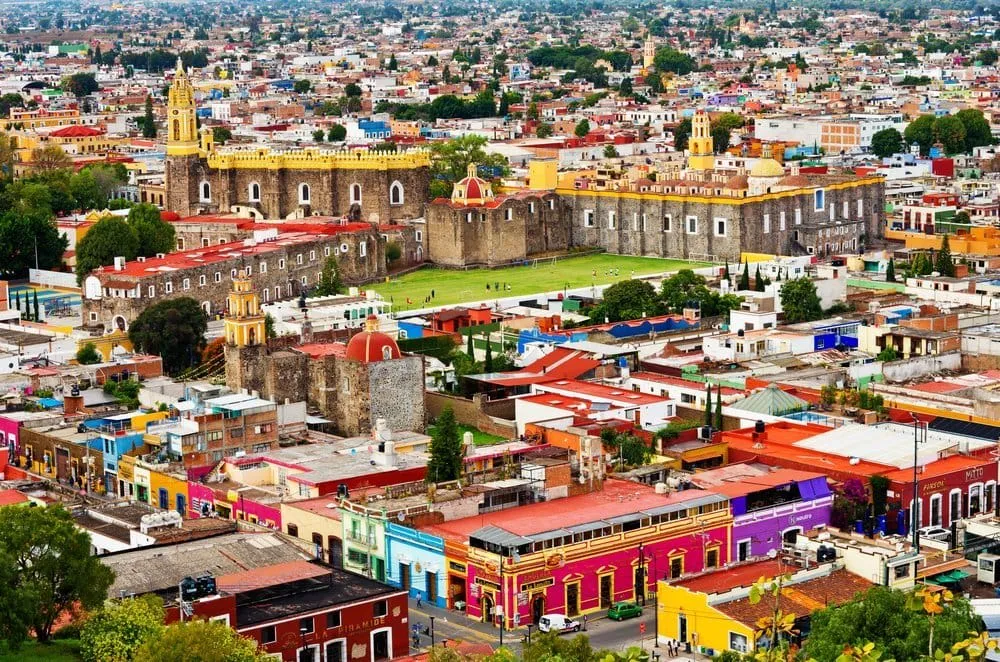
These two villages just outside Cholula have churches so ornate they look like someone gave a master artisan unlimited gold, paint, and ceramic tile and said “go.” The church of Santa María Tonantzintla has an interior covered floor-to-ceiling in polychrome stucco figures — angels, saints, corn, chiles, tropical fruit — all made by indigenous Nahua artisans who reimagined Christian iconography in their own aesthetic. Acatepec’s church of San Francisco is built entirely in Talavera tile and is one of the most photographed facades in Puebla state.
Neither church requires more than 30–45 minutes. Combined, they’re a 2-hour excursion from Puebla. Colectivos from Cholula run to Tonantzintla and Acatepec for 10–15 MXN.
Entry: Both churches are free. Small voluntary donation appreciated.
3. Atlixco (45 km — 50 minutes)
Atlixco is Puebla’s “City of Eternal Spring” — a small colonial town in a warm valley where the altitude drops enough that tropical and temperate flowers grow together. The city is famous for its annual Quinto Sol festival (September), when thousands of flower sculptures and mosaics fill the streets. The rest of the year, Atlixco is quiet but genuinely pretty: a 16th-century ex-convent, tree-lined streets, and several spas and eco-parks on the edge of town.
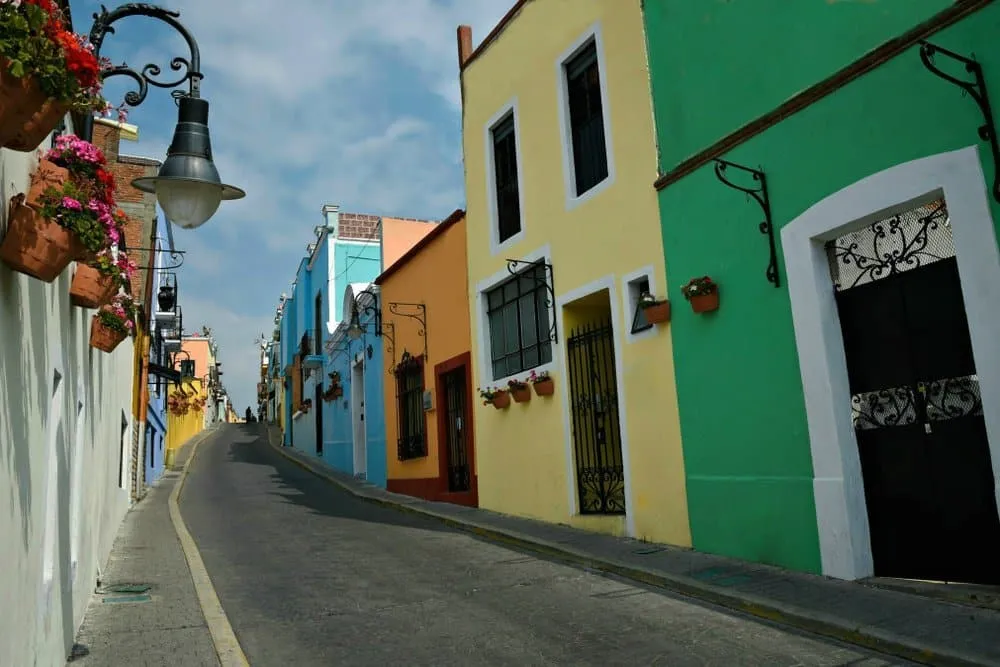
What to do: Walk the historic center (30 minutes), visit the market for regional treats (pipián, mole negro, local cheeses), and spend the afternoon at one of the eco-parks — Parque Extremo has zip-lines, rappelling, and a trout farm where you catch and eat your lunch.
Getting there: Frequent colectivos from Puebla’s CAPU terminal (50 minutes, ~60 MXN). Hourly direct buses also available.
Best time: September for the flower festival; March–May for warmest weather and fewest crowds.
4. Tlaxcala + Cacaxtla (30–60 km — 45–60 minutes)
Tlaxcala is Mexico’s smallest state capital and, to its quiet pride, an often-overlooked colonial gem. The city was the Tlaxcalteca people’s base — the same group that allied with Hernán Cortés against the Aztecs, a fact that still generates complex feelings in Mexico. The historic center has a pleasant zócalo, the oldest bullring in the Americas (1521), and the Santuario de Ocotlán — a dramatic white baroque church on a hilltop that can be seen from miles away.
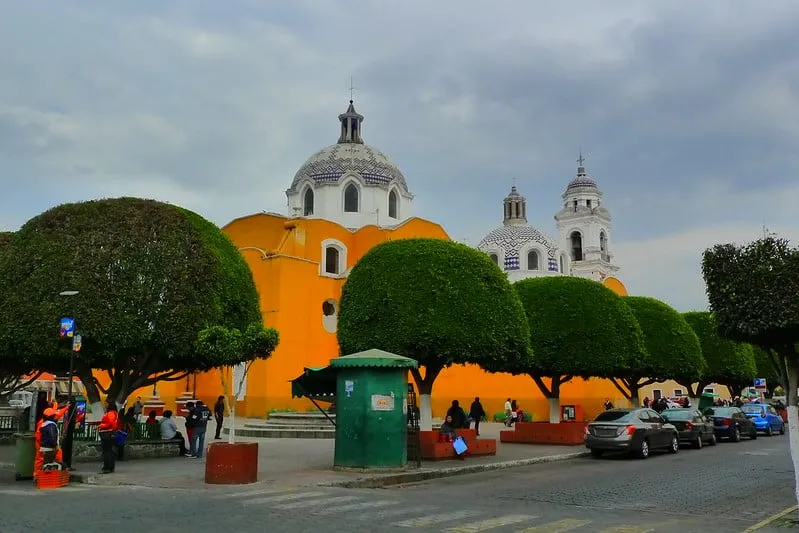
Cacaxtla (15 km further, near San Martín Texmelucan) is where this day trip earns its full-day status. The site protects some of the best-preserved pre-Hispanic murals in Mexico — painted in vivid blue, red, and black in a distinctly Maya style, despite being 1,000 km from the Maya heartland. Dating from 700–900 AD, the murals show battle scenes, merchants, and jaguar warriors in extraordinary detail. The nearby hilltop site of Xochitécatl (1.5 km from Cacaxtla) adds circular pyramids and sweeping valley views.
Entry: Tlaxcala free. Cacaxtla + Xochitécatl: 95 MXN ($5 USD) combined.
Getting there: Buses from Puebla CAPU to Tlaxcala city run every 20 minutes (45 minutes, 40–50 MXN). From Tlaxcala, catch a combi toward Nativitas to reach Cacaxtla (20 minutes). Or rent a car and combine all three sites in one loop.
5. Paso de Cortés — Popocatépetl Views (70 km — 1.5 hours)
You can’t climb Popocatépetl (not since 1994), but you can drive to 3,600 meters between Popocatépetl and Iztaccíhuatl at Paso de Cortés — close enough to see steam and ash rising from the crater and feel genuinely small. This is the route Hernán Cortés and his army used in 1519 to cross from the Gulf Coast to Tenochtitlán, with the two volcanoes flanking them on either side.
What to expect: The road climbs through pine forest. Views of Popo are spectacular from the pass on a clear day. There’s a small visitors center, hiking trails on Iztaccíhuatl (whose summit IS accessible with proper equipment), and occasional vendors selling elote and fruit at the roadside. Cold temperatures even in summer — bring a layer.
Safety: Check CENAPRED’s daily volcanic alert (cenapred.unam.mx) before going. Yellow Phase 2 (the usual state) is fine. Yellow Phase 3 and above means the road may be closed. Don’t attempt the drive in fog — the road is narrow.
Getting there: Rental car strongly recommended. From Puebla, take Highway 190D south toward Cholula, then follow signs to Huejotzingo and San Nicolás de los Ranchos. Public transport involves multiple connections and leaves little time at the pass.
6. Huamantla, Tlaxcala (110 km — 1.5 hours)
Huamantla is a colonial Tlaxcalan city known for two things: the most spectacular flower carpet (tapete de flores) festival in Mexico, and a running of the bulls that draws comparison to Pamplona’s San Fermín. During the Huamantla Festival (mid-August), volunteers create intricate tapestries made entirely from flower petals, sawdust, and colored salt — covering entire city blocks. A live bull is then released to run through the decorated streets at dawn.
Outside of August, Huamantla is a quiet market town worth visiting for the Museo Nacional del Títere (National Puppet Museum — genuinely interesting), the 17th-century Sanctuary of the Virgin of Charity, and the surrounding mountain scenery of La Malinche volcano (4,461m — accessible for trekking from the nearby national park).
Getting there: Buses from Puebla CAPU to Huamantla run hourly (1.5 hours, ~80 MXN).
7. Grutas de Cacahuamilpa (120 km — 2 hours)
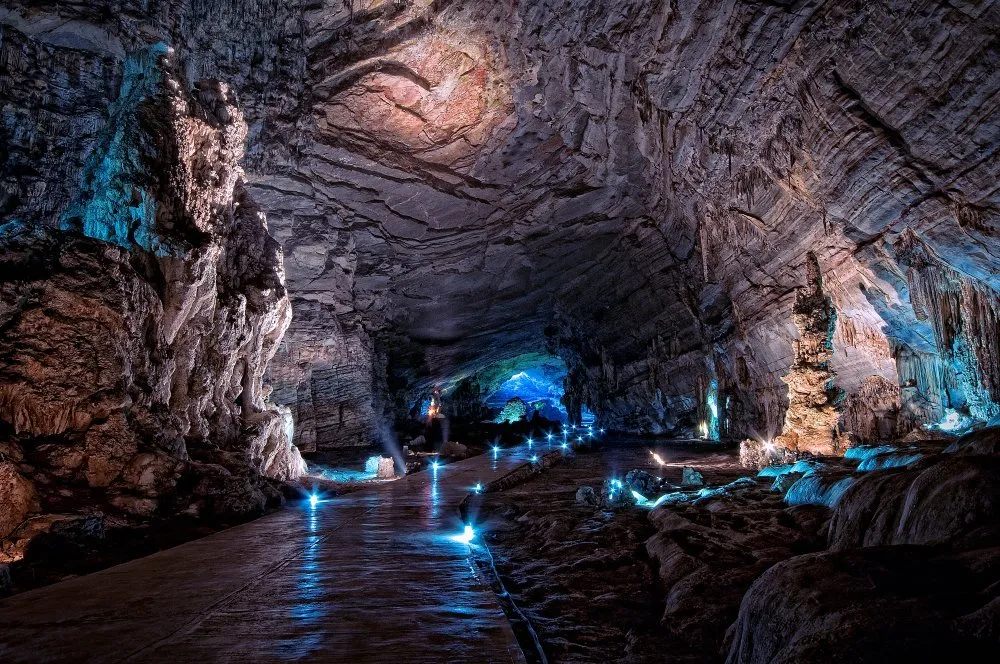
The Cacahuamilpa Caverns in Guerrero state are the largest cave system open to visitors in Mexico and among the largest in the world. The main tunnel stretches 2 km with 19 chambers, some rising 80 meters high — each filled with stalactite and stalagmite formations that took millions of years to form.
What to expect: Mandatory guided tours run every 30 minutes (90 minutes, 95 MXN). The guide illuminates each chamber dramatically and tells the formation names in that endearing Mexican park-ranger tradition of finding animals, faces, and famous people in rock formations. The exit leads to a short trail into the canyon where two rivers — the San Jerónimo and the Chontacoatlán — emerge from underground.
Planning note: Cacahuamilpa is closer to Taxco (32 km) than to Puebla. Many visitors combine it with a Taxco day trip for silver shopping and the spectacular hillside colonial town.
Getting there: From Puebla, take ADO to Iguala (2.5 hours) then a taxi to the caves (30 minutes, ~200 MXN). Or rent a car and combine with Taxco — the drive via autopista 95D is straightforward.
8. Tehuacán (120 km — 1.5 hours)
Tehuacán is best known as Mexico’s mineral water capital — the Peñafiel and Garci-Crespo spring brands have been bottled here since the early 1900s. But the area has a more significant claim to history: the Coxcatlán Cave (50 km further at Tehuacán-Cuicatlán UNESCO Biosphere Reserve) produced some of the earliest evidence of cultivated maize in the world, dating back 7,000 years. The origins of corn, Mexico’s most important crop, were discovered in Tehuacán’s valleys.
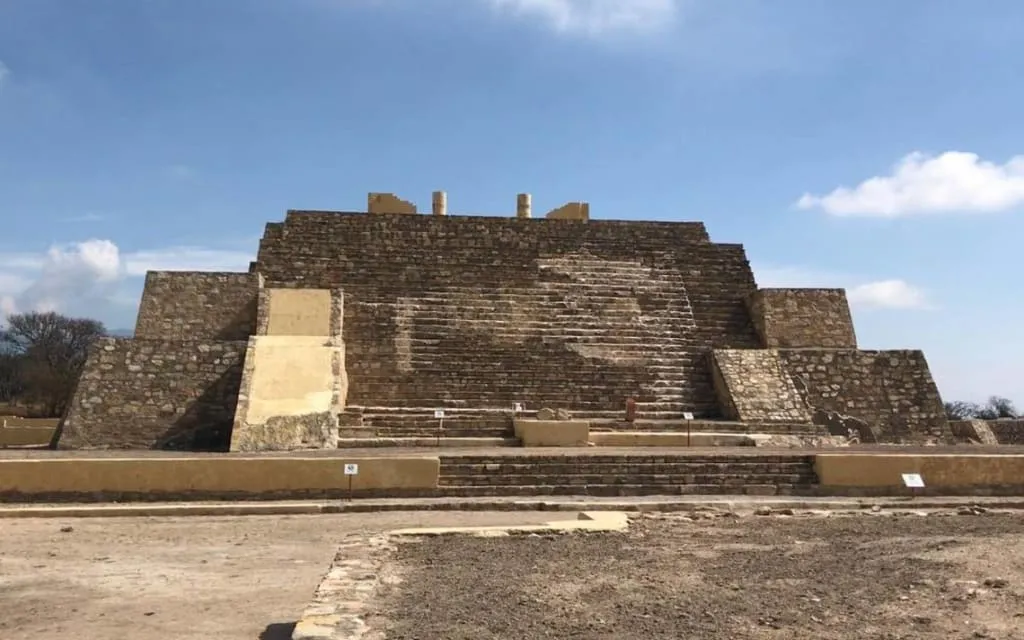
What to do in Tehuacán: Walk the colonial center (Mercado 16 de Marzo for local food), visit the Museo del Valle de Tehuacán for the prehistory, and try mole de caderas — a regional dish made with the fat rendered from goat shoulders, only available September–November during the matanza (slaughter season). The nearby Zapotitlán Salinas reserve has a surreal cactus forest that looks like something from another planet.
Getting there: ADO buses from Puebla CAPU run frequently (1.5 hours, 100–120 MXN). Multiple departures daily.
9. Xalapa / Jalapa (160 km — 2.5 hours)
Xalapa is the capital of Veracruz state — a university city of 500,000 in the cloud forest, consistently foggy (locals call it xalapeño weather), and home to one of Mexico’s most important archaeology museums.
The Museo de Antropología de Xalapa houses the world’s largest collection of Olmec colossal heads — 14 of the 17 known heads are here, some standing 3 meters tall and weighing 25 tons. These are the most compelling pre-Hispanic artifacts in Mexico outside of the CDMX Anthropology Museum, and Xalapa’s collection is far less crowded.
Beyond the museum: Xalapa has a lively coffee culture (Veracruz state grows some of Mexico’s best beans), a colonial center that’s more lived-in than touristy, and the ecological park of Macuiltépetl (a small volcanic hill with cloud-forest trails inside the city). Jalcomulco, 30 km east, is one of Mexico’s top river-rafting destinations.
Getting there: ADO from Puebla CAPU runs directly to Xalapa (2.5 hours, 200–250 MXN). Frequent departures throughout the day.
10. Cuetzalán (175 km — 3 hours)
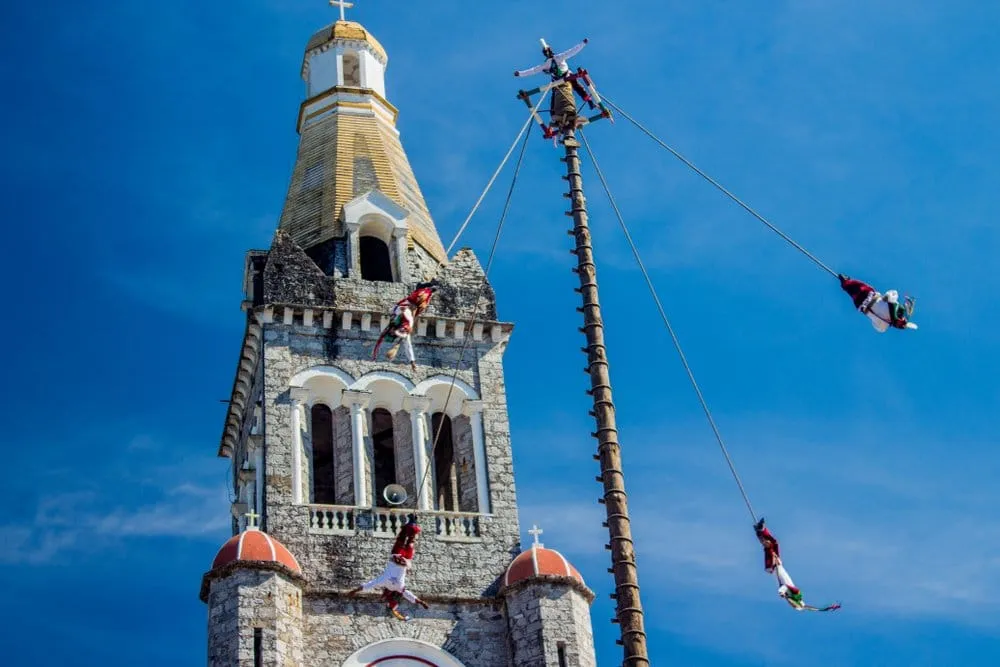
Cuetzalán is the crown jewel of Puebla’s Sierra Norte — a Pueblo Mágico in the cloud forest where coffee, vanilla, and pepper grow together, waterfalls cascade through jungle, and the Totonac Voladores (Flying Men) perform their UNESCO-protected ceremony on weekend mornings.
What makes Cuetzalán special:
- Waterfalls: Las Brisas and La Gloria are 30–45 minutes on foot from town. The Atepolihui cave system (with underground river) is 4 km away and requires a local guide.
- Sunday market: Indigenous Nahua and Totonac vendors fill the streets with quiotes (century plant stalks), regional textiles (quexquémetl), cloud-forest mushrooms, and pipián verde made with local ingredients.
- Coffee: The Tosepan cooperative has been producing organic coffee here since 1980. Tours of coffee processing are available by arrangement.
- Voladores: The ceremony is performed at the main kiosk on weekend mornings. Four men climb a 30-meter pole and spin down on ropes — each completing 13 revolutions for 52 total, representing the Totonac calendar cycle.
Planning note: Cuetzalán is 3 hours from Puebla in good conditions. Roads through the Sierra Norte are winding and can be closed after heavy rain. It’s best experienced as an overnight stay — but it works as a long day trip if you leave Puebla by 7 AM.
Getting there: Bus from CAPU to Zacapoaxtla (2 hours, 150–200 MXN), then combi to Cuetzalán (45 minutes, 40–50 MXN). Or rent a car for more flexibility.
11. Mexico City (135 km — 2 hours)
Yes, CDMX is a day trip from Puebla — and many people do it in reverse (Puebla as a day trip from CDMX). The autopista 150D takes 2 hours. ADO buses from Puebla CAPU to Mexico City’s TAPO terminal run constantly (every 15–30 minutes, 200–280 MXN, 2 hours).
What this gives you: A full day in CDMX — Chapultepec, Coyoacán, Mercado Jamaica, the Anthropology Museum, Xochimilco — and back in Puebla by evening. Alternatively, you can target a single neighborhood (Roma Norte for brunch, Condesa for parks, the Historic Center for Zócalo + Templo Mayor) for a focused visit.
Note: Traffic in and around Mexico City can add 1–2 hours each way during rush hour. Leave Puebla before 7 AM or after 10 AM to avoid the worst congestion.
12. Oaxaca (345 km — 4.5 hours)
Oaxaca is at the edge of what counts as a “day trip” — 4.5 hours by highway 135D means you’ll spend 9 hours driving for 5 hours in the city. It’s feasible by car, but most people who go to Oaxaca stay at least 3 days. If you’re determined: leave Puebla at 5 AM, arrive at 9:30 AM, visit Monte Albán and the Zócalo, eat at the market, leave by 4 PM, back by 9 PM.
Better approach: Take the overnight ADO GL bus from Puebla (350–450 MXN, 5 hours), arrive in Oaxaca at 6 AM, spend a full day, return overnight. Same travel time, no exhausted driving.
Getting Around: Transport Options Compared
| Option | Pros | Cons | Best For |
|---|---|---|---|
| Rental car | Total flexibility, multiple stops | Cost ($40–60/day + fuel), parking | Cacaxtla+Tlaxcala loop, Popo+Cuetzalán |
| ADO / AU bus | Comfortable, frequent, cheap | Fixed routes, no stops between | Tehuacán, Xalapa, CDMX |
| Colectivo | Cheap, frequent, local experience | Slower, less comfort | Cholula, Atlixco |
| Organized tour | Hassle-free, guide included | Less flexible, tourist pace | Cacahuamilpa, Cuetzalán |
ADO from Puebla CAPU terminal — the main long-distance bus station — connects to: Mexico City TAPO (every 15 min), Tehuacán (hourly), Xalapa (6x daily), Oaxaca (5x daily), Iguala (for Cacahuamilpa, 4x daily).
Colectivos to Cholula depart from 6 Poniente and 13 Norte in Puebla’s historic center — 20–30 MXN, running from 6 AM to 10 PM.
Best Day Trip Combinations
UNESCO Baroque Circuit (half-day): Cholula (pyramid + church) + Tonantzintla + Acatepec. Colectivos only, no car needed. 4–5 hours total.
Colonial Heartland Loop (full day, car): Tlaxcala city → Cacaxtla murals → Xochitécatl → back via Cholula for sunset. 8–9 hours, 100–130 km circuit.
Volcano & Nature (full day, car): Paso de Cortés (Popo views) → Atlixco for lunch → return via Cholula. Requires an early start (7 AM) for clear volcano views.
Sierra Norte Expedition (full day or overnight): Cuetzalán — best as an overnight. If day-tripping, leave Puebla by 7 AM, return by 9 PM. Combine with a waterfall hike and Sunday market if timing allows.
History Deep Dive (full day, car): Cholula → Cacaxtla → Tehuacán → Coxcatlán Valley. This route traces human settlement in the region from 7,000 BC to the Spanish conquest.
Seasonal Guide
| Month | Best For | Avoid |
|---|---|---|
| Nov–Feb | Popo visibility best, cool hiking weather, Huamantla quiet | High altitude sites can be cold |
| Mar–May | Perfect weather, dry roads, Atlixco spring flowers | March heat in low valleys |
| Jun–Aug | Cuetzalán waterfalls full, Huamantla Festival (Aug), green Sierra | Road closures after heavy rain |
| Sep–Oct | Cuetzalán harvest season, Tehuacán mole de caderas | Hurricane-season rains on Sierra Norte routes |
Budget Guide
| Trip Type | Cost Per Person | Notes |
|---|---|---|
| Cholula by colectivo | $3–5 USD | 30–50 MXN round trip + 95 MXN entry |
| Tlaxcala + Cacaxtla by bus | $8–12 USD | Buses + combis + 95 MXN entry |
| Tehuacán by ADO | $15–20 USD | Bus 100–120 MXN × 2 + meals |
| Cuetzalán by bus | $20–30 USD | Bus 200 MXN × 2 + guide for caves |
| Xalapa by ADO | $25–35 USD | Bus 250 MXN × 2 + museum 90 MXN |
| CDMX by ADO | $20–30 USD | Bus 280 MXN × 2 + metro day pass |
| Car rental full day | $50–80 USD | Fuel 500–800 MXN depending on route |
Practical Tips
- CAPU terminal: Puebla’s main bus station (Central de Autobuses de Puebla) is 4 km north of the historic center. Uber from the center costs ~80 MXN (10 minutes). ADO, AU, and regional lines all depart from here.
- Altitude at Popo: Paso de Cortés sits at 3,600m. Give yourself an hour to acclimatize before hiking. Headache and breathlessness are normal — slow down and drink water.
- Road conditions: Sierra Norte routes (Cuetzalán, Huauchinango, Teotihuacán Puebla) can be affected by landslides and fog June–October. Check weather before going.
- Sunday closings: Some museums in smaller towns are closed Sunday or Monday. Tlaxcala’s Cacaxtla is open Tuesday–Sunday.
- Cash: Outside Puebla city, card acceptance drops significantly. Bring pesos for colectivos, market food, and small-town entry fees.
Related Guides
- Puebla to Mexico City — Bus, car, and Semana Santa return transport guide
- Puebla to Oaxaca 2026 — ADO bus (4.5–5 hrs), Tehuacán stopover, Semana Santa booking tips
- Puebla Mexico Travel Guide 2026 — What to do in the city itself
- Best Time to Visit Puebla 2026 — late-July-through-September chiles en nogada season, Cinco de Mayo at the real battle site, and Semana Santa 2026
- Things to Do in Puebla — 30 best activities
- Cuetzalán Complete Guide — Full details on the cloud-forest village
- Day Trips from Mexico City — Puebla from CDMX perspective
- Day Trips from Oaxaca City — If you continue south