Cinco de Mayo: What It Means in Mexico
Short answer: Cinco de Mayo is not Mexican Independence Day. It commemorates Mexico’s victory over France at the Battle of Puebla on May 5, 1862. Most of Mexico does not celebrate it—the major public traditions happen in Puebla, while the holiday became far bigger in the United States.
Growing up in Mexico, I was always fascinated by American friends asking me about Cinco de Mayo parties. In my hometown, May 5 was a school day. Nobody threw parties. Nobody painted their faces green, white, and red (that’s September 16, our actual Independence Day). Cinco de Mayo as many Americans know it is largely an American invention.
But in Puebla? It’s a real holiday. And if you’re lucky enough to witness the Cinco de Mayo reenactment at the Forts of Loreto and Guadalupe — actors in 1862 military uniforms, cannon fire echoing across the hill where the actual battle was fought — you’ll understand why this obscure regional victory became a global symbol of Mexican resilience.
This guide answers what Cinco de Mayo means, why Americans celebrate it so visibly, what Mexico actually does on May 5, and how to experience the authentic Puebla celebration if you’re traveling in early May.
The Misconception: What Cinco de Mayo Is NOT
Let’s clear this up immediately.
Cinco de Mayo is not Mexico’s Independence Day. Not even close.
Mexico’s Independence Day is September 16 — the anniversary of the 1810 Grito de Independencia (Cry of Independence) by Father Miguel Hidalgo in Dolores Hidalgo, Guanajuato. That night, the president of Mexico appears on the balcony of the National Palace in Mexico City, recites the grito, rings a replica of Hidalgo’s church bell, and the crowd erupts. Every city in Mexico holds its own version. It’s the biggest holiday of the Mexican calendar.
Cinco de Mayo celebrates a single battle — an important one, but still just a battle — that happened 52 years after independence.
Cinco de Mayo is not celebrated across Mexico. It is not a statutory nationwide day off for workers, so most businesses and banks operate normally outside Puebla. School schedules are separate: Mexico’s official 2026 SEP calendar suspended teaching activities nationwide on May 5. In most Mexican cities, however, there are no parades or public fiestas.
The irony? Mexicans find the American version of Cinco de Mayo genuinely confusing. The commercialization of the holiday — turned into an excuse to drink tequila and wear sombreros — bears almost no resemblance to the actual historical event.
The Real History: Battle of Puebla, May 5, 1862
To understand why May 5 matters, you need to understand 1860s Mexico.
After winning independence from Spain in 1821, Mexico spent decades in political chaos. Wars, foreign invasions, and economic collapse left the country nearly bankrupt. In 1861, President Benito Juárez suspended payments on Mexico’s foreign debt — money owed to Britain, Spain, and France.
All three countries sent naval forces to Mexico to collect. Britain and Spain negotiated and withdrew. France, under Emperor Napoleon III, had bigger plans: create a Mexican empire loyal to France, place Archduke Maximilian of Austria on the throne, and use Mexico as a base to help the Confederacy in the ongoing American Civil War.
The French army of 6,000 — one of the most formidable military forces in the world at the time — marched inland from Veracruz toward Mexico City.
On May 5, 1862, they reached Puebla.
Awaiting them were approximately 4,000 Mexican troops under General Ignacio Zaragoza, a 33-year-old from what is now Texas. Many of his soldiers were indigenous Zapotec and Zacapoaxtla fighters who had never seen European-style military warfare. They had inadequate weapons, limited ammunition, and no cavalry to match the French lancers.
The French attacked twice. Both times, the Mexican defenders held.
By nightfall, the French had lost over 1,000 men. The Mexican army lost around 83.
The next day, Zaragoza sent a telegram to President Juárez: “Las armas nacionales se han cubierto de gloria.” (“The national army has covered itself in glory.”)
He died of typhoid fever four months later.
Why It Matters Beyond Mexico
The victory at Puebla had a specific strategic consequence: it delayed the French advance on Mexico City by nearly a year. That year gave Abraham Lincoln’s Union government time to gain momentum in the Civil War. Had France successfully established a Confederate-allied empire in Mexico, the outcome of the American Civil War might have been different.
This is why Cinco de Mayo gained traction among Mexican-American communities in California during the 1860s — it wasn’t just a Mexican holiday, it was a victory with direct implications for American democracy.
The beer industry’s marketing campaigns in the 1980s turned it into something else entirely.
What Actually Happens in Puebla on May 5
Puebla is the only place in Mexico where Cinco de Mayo is an official public holiday. Schools close, government offices shut, and the city genuinely celebrates.
The Reenactment at the Forts of Loreto and Guadalupe
The centerpiece of Cinco de Mayo in Puebla is a full military reenactment of the 1862 battle at the Fuertes de Loreto y Guadalupe — the actual hilltop fortifications where the battle was fought, now a museum and park overlooking the city.
What to expect:
- Hundreds of actors in period-accurate 1862 military uniforms (Mexican army vs. French Zouaves)
- Actual cannon fire (blank charges, but loud)
- Cavalry charges and infantry formations staged across the hillside
- Dramatic narration over loudspeakers explaining each phase of the battle
- Enormous crowds — mostly Mexican families, not foreign tourists
The reenactment usually takes place in the late morning. Entry to the hill and forts is free on May 5. Arrive by 9 AM to get a good position; it can get very crowded by 10:30 AM.
Military Parade Through the Historic Center
A formal military parade moves through Puebla’s historic center in the morning, passing the Zócalo and the cathedral. Mexican army and navy units participate, along with marching bands and civic organizations. It’s formal and dignified — nothing like a parade you’d see in the US.
Civic Ceremonies and Cultural Events
The week surrounding May 5 includes:
- Historical exhibitions at the Forts of Loreto museum (artifacts from the battle)
- Culinary festivals showcasing Poblano cuisine; in May, expect mole poblano, cemitas, and other year-round specialties rather than seasonal chiles en nogada
- Artisan markets in the Zócalo area
- Live music and evening concerts in public plazas
Table: Cinco de Mayo Schedule in Puebla
| Time | Event | Location | Cost |
|---|---|---|---|
| 8:00–10:00 AM | Military parade | Historic center/Zócalo | Free |
| 9:00 AM onwards | Forts of Loreto open | Cerro de Guadalupe | Free on May 5 |
| 10:00–12:00 PM | Battle reenactment | Forts of Loreto y Guadalupe | Free |
| All day | Historical exhibitions | Loreto Museum | Usually free |
| All day | Artisan market | Zócalo and surrounding streets | Free to browse |
| 7:00 PM+ | Evening concerts | Parque Ecológico / Zócalo | Varies |
Why Most of Mexico Doesn’t Celebrate
Outside Puebla (and to a lesser extent the state of Puebla), May 5 is unremarkable. Here’s why:
It was a regional battle. The Battle of Puebla was fought in and around the city of Puebla. Soldiers from other Mexican states participated, but the connection to the battle is strongest where it happened.
France won the war anyway. A year after the Battle of Puebla, the French captured Mexico City and installed Maximilian I as Emperor of Mexico. Mexico was under French-backed imperial rule from 1864 to 1867. A victory that gets reversed doesn’t carry the same permanent weight as, say, Independence Day.
September 16 is the real holiday. Mexico’s War of Independence (1810–1821) is the founding narrative of the Mexican nation. Cinco de Mayo is a footnote by comparison.
The American version created distance. Many Mexicans, seeing how Cinco de Mayo was commercialized in the US into something unrecognizable, feel further disconnected from it. “That’s an American holiday based on a Mexican event” is a common sentiment.
How Cinco de Mayo Is Observed Across Mexico
| Location | Cinco de Mayo | Notes |
|---|---|---|
| Puebla | Public holiday | Reenactment, parade, cultural events, banks closed |
| Puebla state (outside city) | Partial observance | Some events, not a full holiday everywhere |
| Mexico City | Normal working day | No official celebrations; some bars run US-style events for expats |
| Rest of Mexico | Unremarkable | Schools open, banks open, regular workday |
| United States | Major commercial holiday | Parades, festivals, bar events across the country |
How to Visit Puebla for Cinco de Mayo
Puebla is Mexico’s fourth-largest city and a UNESCO World Heritage Site — visiting for Cinco de Mayo gives you an excuse to explore one of Mexico’s most underrated destinations.
Getting to Puebla
From Mexico City (most common):
- ADO bus: 2–2.5 hours, departs from TAPO (Terminal de Autobuses de Pasajeros de Oriente) every 30-45 minutes. Cost: 180-280 MXN ($9-14 USD). Buy tickets at the terminal or on ADO’s website.
- Uber: 1.5–2 hours depending on traffic, 600-900 MXN ($30-45 USD)
- Driving: Federal Highway 150D (toll road), 2 hours, about 100 MXN in tolls
- No direct metro — Puebla is outside Mexico City’s metro system
From other cities:
- Oaxaca: ADO bus ~4.5 hours (450 MXN)
- Veracruz: ADO bus ~2.5 hours (280 MXN)
- Guadalajara: ADO first-class ~7 hours or fly into PBC airport
When to Book
Puebla hotels fill up for Cinco de Mayo. Book at least 4-6 weeks in advance for May 5 stays. The week of May 5 sees elevated hotel rates (typically 30-50% above normal), though nothing as dramatic as Semana Santa beach prices.
If you’re visiting as a day trip from Mexico City, no hotel booking is needed — just buy your ADO ticket a few days ahead.
Where to Stay in Puebla for Cinco de Mayo
| Area | Description | Budget Range (May 5) |
|---|---|---|
| Historic Center | Walking distance to Zócalo, parade route, and transport to Forts | $60-200/night |
| Zona Esmeralda | Modern hotels near mall district, need taxi/Uber to center | $50-120/night |
| Cholula | 15 min from center, near the pyramid, bohemian atmosphere | $40-100/night |
Staying in the historic center puts you within walking distance of the parade and a short taxi/Uber to the Forts of Loreto (10-15 min, 80-120 MXN).
What to Do in Puebla Beyond Cinco de Mayo
If you’re extending your Cinco de Mayo visit into a longer Puebla trip, here’s what deserves your time:
Don’t miss:
- Capilla del Rosario (inside Santo Domingo Church) — 8 kg of gold leaf covering every surface, free entry. More impressive than most paid museums in Mexico.
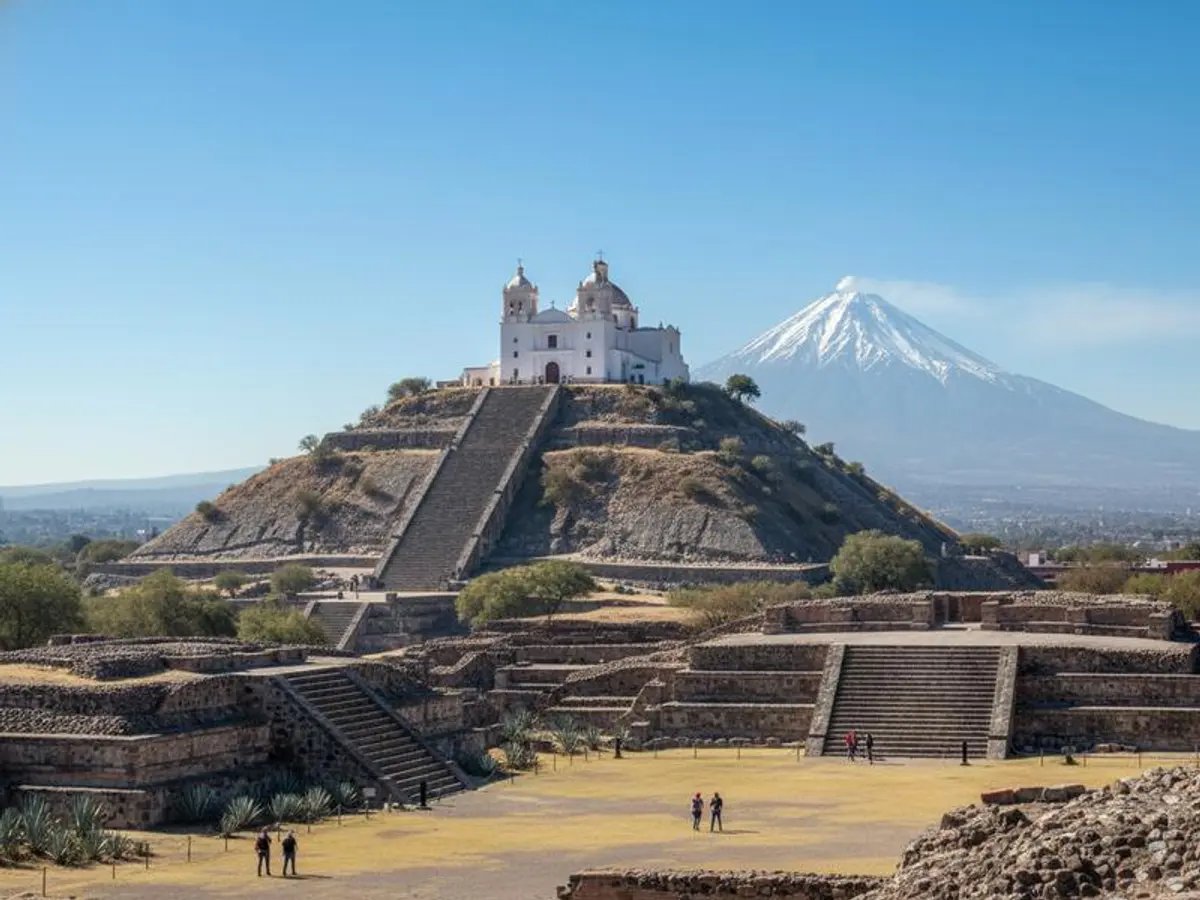
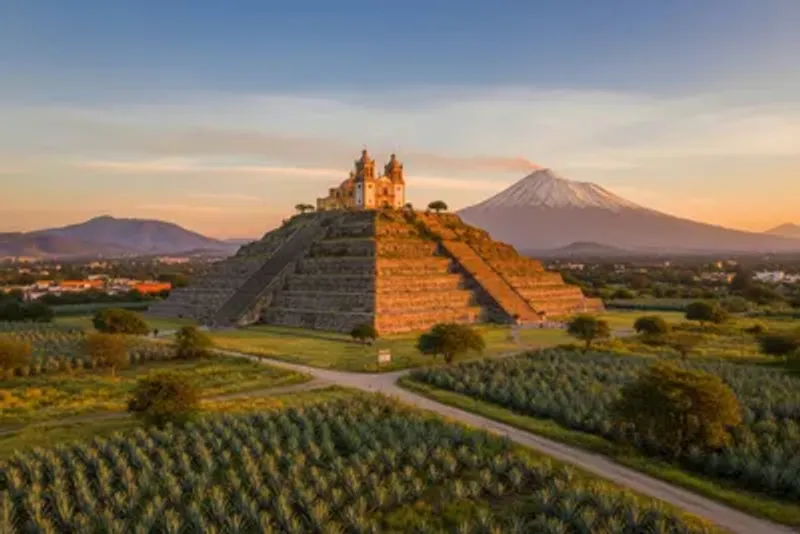
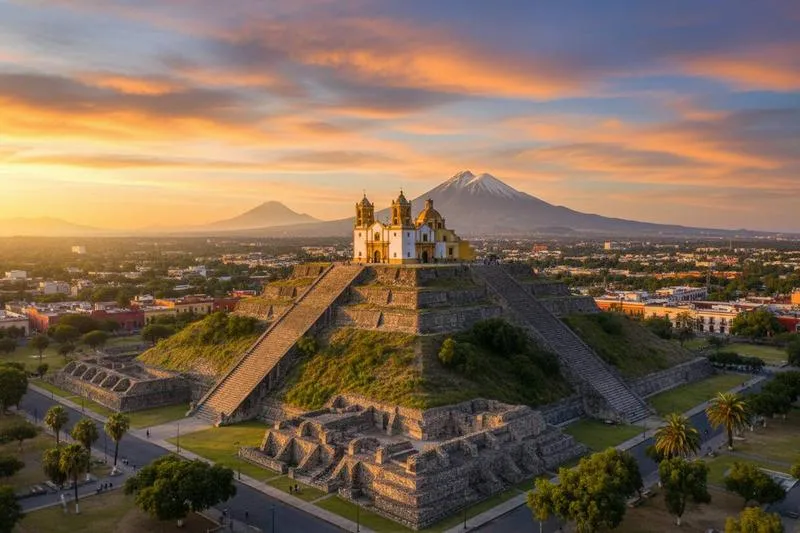
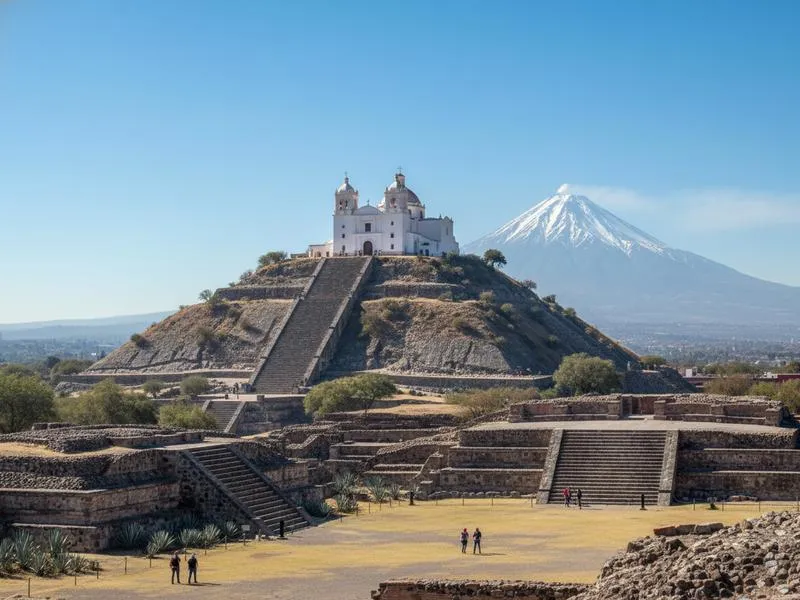
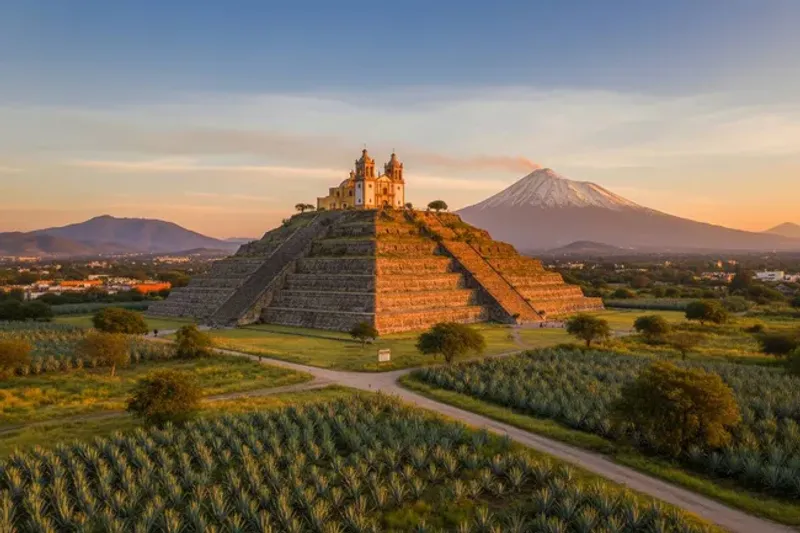
- Cholula — 15 min from Puebla city center. The Great Pyramid of Cholula is the largest pyramid in the world by volume (bigger than the Great Pyramid of Giza). The Spanish built a church on top. There are 8 km of tunnels underneath. Entry ~150 MXN.
- Barrio de los Sapos — Antique and artisan market near the historic center. Best on weekends.
- Talavera workshops — Puebla is the birthplace of Mexican Talavera pottery (UNESCO intangible heritage). Buy directly from workshops like Uriarte Talavera (founded 1824) or Cárdenas for guaranteed authenticity.
- Biblioteca Palafoxiana — The oldest public library in the Americas (1646), still with original books and shelves. Entry ~45 MXN.
Eat:
- Mole poblano — the original, in Puebla. Try it at Fonda Santa Clara or La Noria (old historic center spots, not tourist traps)
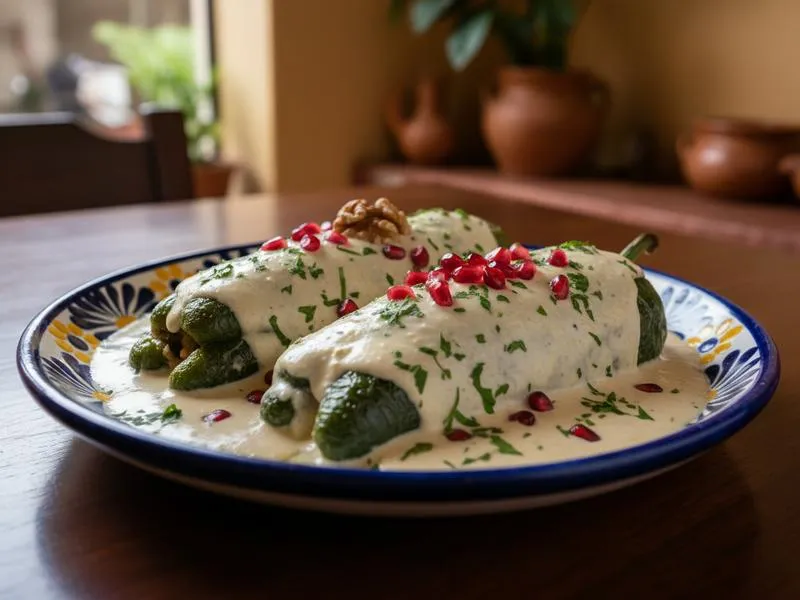
- Chiles en nogada — usually a late-July-through-September restaurant dish, so do not plan on finding it during Cinco de Mayo. For the seasonal window, use the current chiles en nogada guide. The walnut sauce, pomegranate, and parsley echo the Mexican flag.
- Cemitas — Puebla’s iconic sandwich. Sesame-roll stuffed with beef milanesa, avocado, quesillo, chipotle, and pápalo herb. Mercado El Carmen is the classic spot.
- Molotes — fried corn pastry stuffed with potato and chorizo. Street food, 15-25 MXN each.
- Agua de horchata or tamarindo — from the market stalls around the Zócalo.
See the full Things to Do in Puebla guide for the complete activity list and Day Trips from Puebla for Cholula, Tlaxcala, and beyond.
The Actual Mexican Independence Day (September 16)
Since we’re correcting the record: if you want to experience Mexico’s real national holiday, visit September 15-16.
The night of September 15, every city in Mexico holds its version of the Grito de Independencia. In Mexico City, the president appears on the balcony of the National Palace at 11 PM, rings a replica of Hidalgo’s church bell, and shouts “¡Viva México!” as 100,000 people in the Zócalo respond. In every city and town across the country, local mayors do the same.
September 16 brings military parades, civic ceremonies, and nationwide celebration. This is what Cinco de Mayo wishes it was.
Best Time to Visit Mexico covers all major Mexican holidays and when to plan your trip around them.
Practical Tips for Cinco de Mayo in Puebla
Getting to the Forts: Uber from the historic center to Cerro de Guadalupe costs 80-120 MXN (10-15 min). There are also taxis and occasional shuttle services on May 5. Don’t walk — it’s uphill and a 30-minute walk from the center.
Arriving early: The reenactment draws large crowds, mostly domestic Mexican visitors (not foreign tourists). Arrive at the Forts by 9 AM to get a good spot. By 10:30 AM it becomes difficult to move.
Photography: The battle reenactment offers spectacular photography opportunities — cannon fire, period costumes, organized formations against the hillside backdrop with Puebla visible below. Bring a zoom lens if you have one.
What’s closed on May 5 in Puebla: Banks, government offices, and many shops in the historic center. Restaurants, museums (special holiday hours), and the Forts are open. Stock up on cash the day before since ATMs can run low.
Weather: Early May in Puebla is excellent — sunny, 22-26°C (72-79°F) during the day, around 14°C (57°F) at night. The rainy season doesn’t typically start until mid-May or June. Light layers are fine; bring sunscreen for the open-air events at the Forts.
Crowds and safety: Cinco de Mayo in Puebla attracts large Mexican domestic crowds but is not known for safety issues. The historic center and Forts area are busy but well-policed. Standard urban safety precautions apply (watch pockets in crowds, secure bags). See our Mexico Safety guide for general tips.
Combining with a Mexico City visit: The Puebla day trip from CDMX is one of the best in central Mexico. You can leave Mexico City at 8 AM on May 5, catch the parade and reenactment, explore the historic center and have cemitas for lunch, and be back in CDMX by 9 PM. See Day Trips from Mexico City for logistics.
Cinco de Mayo in Puebla isn’t the tequila-and-mariachi party American media has sold you. It’s a genuine civic celebration — cannon fire on a hillside where an actual battle was fought, crowds of Mexican families watching their own history reenacted, and a city that genuinely cares about what happened here on May 5, 1862.
If you’re in central Mexico in late April or early May, it’s worth planning your itinerary around it.
Plan your visit: Puebla Travel Guide | Things to Do in Puebla | Day Trips from Puebla | Day Trips from Mexico City
Planning a trip around Cinco de Mayo? See the complete Mexico in May 2026 guide for weather, whale sharks, sea turtle season, Mother’s Day, and everything else happening in May. For late April context: Mexico in April. For broader seasonal planning, see Best Time to Visit Mexico or our Mexico Travel Tips.