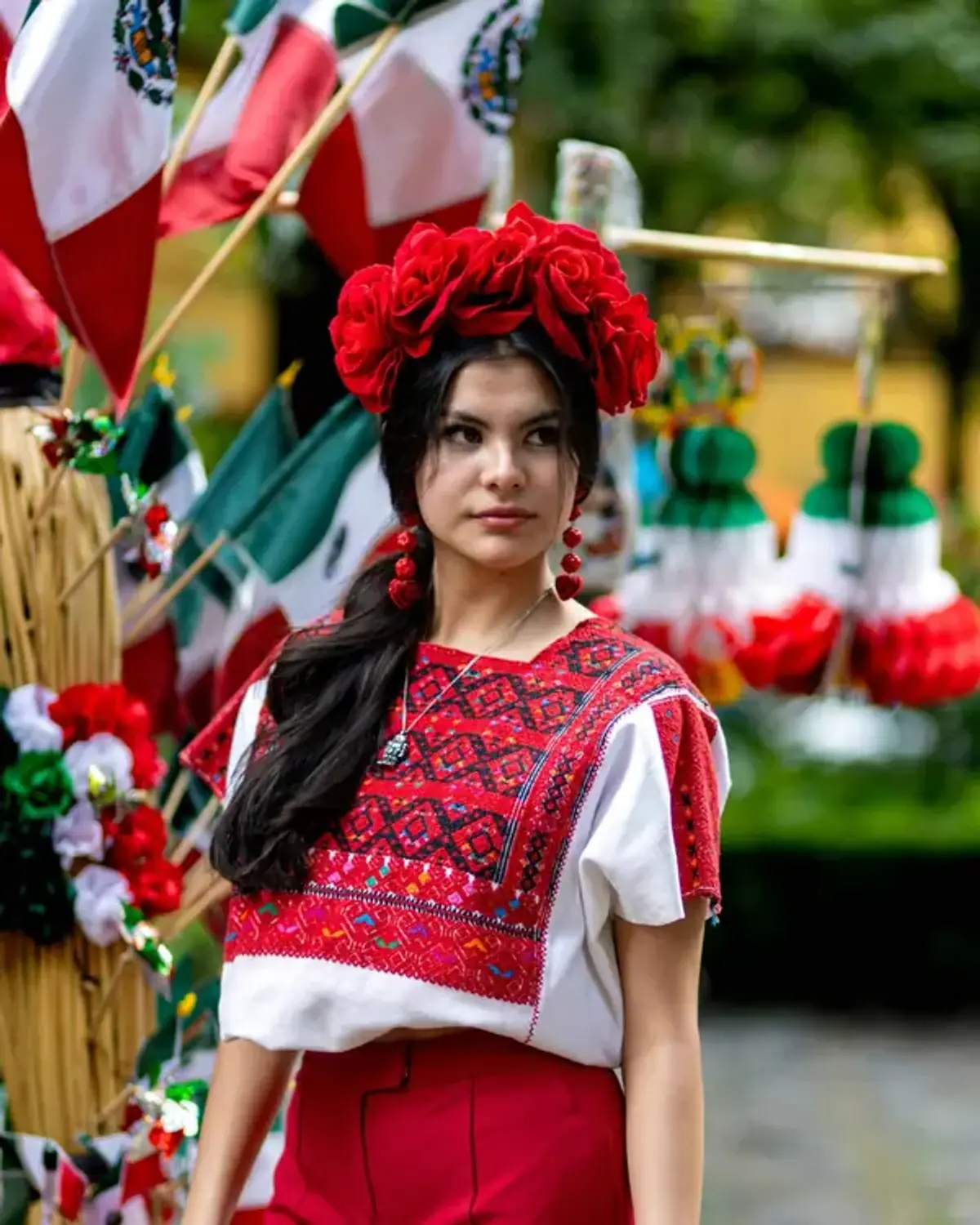
Traditional Mexican Clothing: 12 Outfits by Region
Traditional Mexican clothing is not one outfit. The names travelers usually need are charro suit, huipil, china poblana, tehuana dress, guayabera, sarape, and quechquémitl. Each comes from a specific region, community, or festival tradition, so the right answer depends on where in Mexico you are looking.
Mexico has 68 officially recognized indigenous languages and more than 300 distinct ethnic identities, so traditional dress changes dramatically by region. What many travelers call “Mexican clothing” is usually just one small part of a much larger textile tradition.
Updated for 2026, this guide covers the 12 most iconic and culturally significant traditional Mexican outfits by region, with a glossary of key garments, where travelers can see them worn at festivals, and where to buy authentic pieces respectfully.
Traditional Mexican Clothing in 30 Seconds
- Most famous men’s outfit: the charro suit from Jalisco, worn for mariachi and charreada
- Most famous women’s outfit: the china poblana from Puebla, one of Mexico’s national symbols
- Most important indigenous garment: the huipil, still worn in parts of Oaxaca, Chiapas, and Yucatán
- Best place to see many regional outfits together: the Guelaguetza in Oaxaca
- Best places to shop respectfully: artisan markets and cooperatives in Oaxaca, San Cristóbal de las Casas, and Mérida
Where Travelers Actually See Traditional Mexican Dress
| Place or event | What you can see | Best for |
|---|---|---|
| Guelaguetza in Oaxaca | Tehuana, huipiles, regional Oaxacan dress from multiple communities | The biggest single showcase of traditional clothing in Mexico |
| Chiapa de Corzo in January | Parachico and Chiapaneca costumes | UNESCO-recognized festival dress |
| Day of the Dead in the Huasteca and southern Mexico | Quechquémitl, huipiles, embroidered regional clothing | Traditional dress still tied to ceremony |
| San Cristóbal de las Casas markets and nearby villages | Tzotzil and Tzeltal huipiles in daily use | Living indigenous textile traditions |
| Guadalajara mariachi venues and charreadas | Charro suits and Jalisco folk dress | The most recognizable national-style outfit |
Quick Reference: 12 Traditional Mexican Outfits by Region
| Costume | Region | Gender | Occasion | Key Elements |
|---|---|---|---|---|
| Charro suit | Jalisco | Men | Charreada, mariachi, festivals | Silver embroidery, tight pants, wide sombrero |
| Tapatía dress | Jalisco | Women | Guadalajara festivals, folk dance | Ruffled blouse, poplin fabric, bright colors |
| China Poblana | Puebla | Women | National symbol, festivals | Green/white/red skirt, embroidered blouse, sequins |
| Guayabera & Terno | Yucatán | Men & Women | Formal occasions, Mérida festivals | White linen, vertical pleats (guayabera), 3-piece terno |
| Tehuana | Oaxaca | Women | Zapotec ceremonies, Guelaguetza | Huipil + skirt + lace headdress, Isthmus style |
| Chiapaneca | Chiapas | Women | La Fiesta Grande, festivals | Black satin, hand-embroidered flowers in petatillo |
| Parachico | Chiapas | Men | Fiesta de los Parachicos (January) | Colorful serape, mask, montera blond hair piece |
| Maya huipil | Quintana Roo / Yucatán | Women | Ceremonial + daily dress | White cotton, hand-embroidered floral hem and neckline |
| Huichol | Nayarit / Jalisco / Durango | Men & Women | Ceremonies, spiritual events | Intricate beadwork, embroidered manta, symbolic animals |
| Veracruz costume | Veracruz | Men & Women | La Bamba dance, Carnaval | White cotton, Papaloapan River tradition |
| Nuevo León costume | Nuevo León | Men & Women | Beer Festival, folk dance | White shirt/blouse, suede jacket, decorative grecas |
| Quechquémitl | San Luis Potosí (Huasteca) | Women | Huastec ceremonies, Xantolo | Triangular shoulder cape, cross-stitch embroidery |
The 12 Most Iconic Traditional Mexican Costumes
1. The Charro Outfit — Jalisco

The charro suit is Mexico’s most internationally recognized costume — the uniform of mariachi musicians and charros (Mexican horsemen). Born from the charrería (rodeo tradition) of Jalisco, it evolved from working ranch clothing into one of the most elaborate equestrian outfits in the world.
The suit consists of a short fitted jacket, tight pants with decorative suede or embroidered patterns, silver wrist cuffs, and a wide-brimmed sombrero. Colors are traditionally dark (black, dark brown, gray), with silver or gold metallic embroidery as the distinguishing detail. Full professional charro suits can cost tens of thousands of pesos — the embroidery alone takes months.
Charreada competitions are held nationwide, but Guadalajara is the heartland. See them during the Mariachi World Festival (September) and at Plaza de los Mariachis in Guadalajara.
2. The Tapatía Dress — Jalisco (Women)

The tapatía (from Guadalajara’s nickname Tapatío) is the female counterpart to the charro suit. Made from poplin fabric in solid base colors (deep red, royal blue, emerald green), the dress has a distinctive ruffled upper section with contrasting trims and color combinations.
Worn for folk dancing performances — particularly Jarabe Tapatío (the national dance of Mexico) — the tapatía dress represents Jalisco’s regional identity as strongly as the charro suit does.
3. La China Poblana — Puebla

The china poblana is one of Mexico’s national symbols — its green, white, and red skirt mirrors the Mexican flag. The name is intriguing: china in colonial Mexico referred to women of Asian or mixed origin, and the costume’s origin story involves a Chinese noblewoman named Mirrah, brought to Puebla as a slave in the 17th century who became a local saint figure.
The costume features a long embroidered skirt with sequins, ruffles, and tulle in the national colors, a white blouse heavily embroidered with bright colors, and a sash at the waist. The Jarabe Tapatío is often performed with china poblana (woman) and charro (man) together — this pairing is the iconic image of “traditional Mexican clothing” globally.
4. Guayabera and Terno — Yucatán

Yucatán’s traditional clothing reflects its Spanish-Maya fusion identity. The guayabera — a lightweight white linen or cotton shirt with four pockets and vertical pleating — is the formal attire for men throughout the Yucatán Peninsula and is now widely worn as business casual across tropical Mexico.
For women, the terno (three-piece ensemble) consists of the hipil (a white Maya-style blouse with embroidered neckline and hem), a white skirt with embroidered trim, and a square embroidered panel called the rebozo. The embroidery is traditionally done in a technique called bordado en tela, with brightly colored silk or cotton thread on white cotton fabric.
The jipi hat (woven from the same palm as Panama hats — Mexico’s version is called jipi-japa) and chillonas (high-heeled leather sandals that squeak when dancing) complete the men’s outfit.
5. Tehuana — Oaxaca (Isthmus of Tehuantepec)

The tehuana is Zapotec women’s traditional dress from the Isthmus of Tehuantepec in Oaxaca, and is the costume made internationally famous by Frida Kahlo, who wore it in many of her self-portraits as a political and feminist statement.
The costume has three elements: the huipil (embroidered upper garment), the falda (skirt, often in black velvet with floral embroidery in satin stitch), and the headdress — a white lace piece worn over the head that frames the face. The embroidery varies dramatically by community; Tehuantepec, Juchitán, and other Isthmus towns each have distinctive flower patterns and color schemes.
The tehuana reflects the Isthmus’s matriarchal Zapotec society — women historically controlled the markets and wore the tehuana as a symbol of economic and social power.
See it at: The Guelaguetza festival in Oaxaca City (July), and year-round in Isthmus markets and celebrations.
6. The Chiapaneca — Chiapas (Women)

The Chiapaneca is the traditional dress of women from Chiapa de Corzo, Chiapas. It is considered one of the most technically demanding traditional costumes in Mexico — a black satin blouse with a semi-circular neckline and wide tulle ruffles, each embroidered entirely by hand with silk thread flowers in petatillo technique (a fine weave pattern unique to Chiapas).
The long black satin circular skirt has multiple folds and flights, each with the same hand-embroidered flowers. The colors used — yellow, pink, blue, red — create a striking contrast against the black base.
The Chiapaneca costume takes months to complete and is recognized internationally for its craft value.
7. The Parachico — Chiapas (Men)

The Parachico costume is one of the most distinctive and unusual in Mexico — worn during the Fiesta Grande de Chiapa de Corzo (January 4–23), which UNESCO has declared an Intangible Cultural Heritage. The costume consists of:
- A carved wooden mask depicting the face of a Spanish conquistador (the act of wearing it mocks the colonizers)
- A montera — a headpiece made of blond fibers representing the Spaniards’ hair
- A colorful serape (woven wool blanket)
- A red sash and embroidered shawls hanging from the waist to the feet
The festival in January is the best time to see this costume in action.
8. The Maya Costume — Quintana Roo / Yucatán

The Maya traditional costume from Quintana Roo and the Yucatán Peninsula represents pre-Hispanic Maya royalty. The woman’s costume has two main elements:
- The lower garment: predominantly red, symbolizing the south cardinal point and the earth’s interior in Maya cosmology
- The cape: open at the sides to bust height, with green designs (sacred Maya color) representing nature and fertility, and motifs either embroidered or hand-painted
For everyday traditional dress across the Yucatán Peninsula, Maya women still commonly wear the hipil (huipil) — a white cotton tunic with colorful hand-embroidered flowers around the square neckline and hem. This is not a festival costume but actual daily wear in many communities.
9. The Huichol (Wixáritari) — Nayarit / Jalisco / Durango

The Huichol (Wixáritari) people of the Sierra Madre Occidental create the most visually complex traditional clothing in Mexico. Both men and women wear white manta cloth (cotton fabric) embroidered with extraordinarily detailed patterns in cross-stitch. The beadwork associated with Huichol art — made from hundreds of thousands of tiny glass beads — extends to their clothing through elaborate pectoral ornaments, bracelets, necklaces, and bags.
Every symbol is spiritual: the deer represents the creator of peyote and corn; the eye of God (a diamond pattern) represents the ability to see the unknown; the eagle connects the human and divine worlds; the fire is the most important divinity.
The backpacks men carry are a status symbol — the number and design of bags indicates rank in the community.
You can find authentic Huichol crafts in Guadalajara markets, Puerto Vallarta, and in the communities of Sierra Manantlán in Jalisco.
10. Traditional Veracruz Costume

The traditional Veracruz costume originated in the towns of the Papaloapan River basin. The defining characteristic is white — representing the Nahuatl dress of the indigenous communities. Both men and women wear white cotton garments with colorful embroidered accents and sashes.
The Jarocha (women’s version) features a white blouse and skirt with colorful embroidery and a bright sash at the waist, worn for La Bamba dance performances — one of Mexico’s most famous regional dances.
11. Traditional Nuevo León Costume

Unlike most traditional costumes that evolved over centuries from indigenous roots, the Nuevo León costume was specifically designed for the 1956 Beer Festival — a rare example of a 20th-century intentional folk costume creation.
Men wear a white shirt with neck bandana, a suede jacket with narrow decorative fringe on the sleeves, and gray or brown polyester pants with ranchero boots. Women wear a white blouse with a chest brooch and puffed sleeves, and a polyester skirt with grecas (decorative corrugated ribbon motifs).
12. Quechquémitl — San Luis Potosí (Huasteca)

The quechquémitl is a pre-Hispanic garment — one of the oldest surviving traditional clothing forms in Mexico. A triangular shoulder cape that drapes over the upper body, it has been worn by women in the Huasteca region of San Luis Potosí, Hidalgo, and Veracruz since before the Spanish conquest.
The Huastec version from San Luis Potosí features white cotton with cross-stitch embroidery in multiple colors, a white embroidered blouse with puffed sleeves, a white skirt with a red and blue striped sash, and a yarn wreath headdress of pre-Hispanic origin.
The quechquémitl features prominently in the Xantolo / Day of the Dead celebrations of the Huasteca.
Traditional Mexican Garment Glossary
| Term | Definition | Regions |
|---|---|---|
| Huipil | Loose rectangular tunic or blouse, the most widespread indigenous women’s garment in Mexico | Oaxaca, Chiapas, Yucatán, Guatemala border |
| Quechquémitl | Triangular shoulder cape, pre-Hispanic origin | Huasteca (SLP, Hidalgo, Veracruz), Puebla |
| Rebozo | Long woven shawl, used as wrap, baby carrier, and identity marker; each region has its own weave | Nationwide; Santa María del Río (SLP) most famous |
| Sarape | Colorful woven blanket-wrap for men, often striped; originally from Saltillo, Coahuila | Northern Mexico, Jalisco |
| Guayabera | Men’s lightweight pleated shirt with 4 pockets; tropical formal wear | Yucatán, Veracruz, all coastal states |
| Huaraches | Traditional leather sandals with woven straps; pre-Hispanic origin | Nationwide; Oaxaca, Jalisco |
| Sombrero | Wide-brimmed hat; the charro sombrero is the most elaborate; straw versions (jipi) are tropical | Jalisco (charro), Yucatán (jipi), nationwide |
| Manta | Plain white cotton cloth used for simple indigenous garments | Nationwide, especially indigenous communities |
| Tehuana huipil | The formal Zapotec huipil of the Isthmus of Tehuantepec; velvet with flower embroidery | Isthmus of Tehuantepec, Oaxaca |
| Terno | Three-piece women’s ensemble from Yucatán; hipil + skirt + embroidered panel | Yucatán, Campeche |
Where to See Traditional Mexican Clothing in Person
| Event | Location | When | What You’ll See |
|---|---|---|---|
| Guelaguetza | Oaxaca City | Last 2 Mondays of July | 16 indigenous groups in full regional costume |
| Día de los Muertos | Nationwide (best in Oaxaca, Michoacán, Puebla) | Nov 1–2 | Tehuanas, huipiles, regional folk dress |
| Fiesta de los Parachicos | Chiapa de Corzo, Chiapas | January 4–23 | Full Parachico and Chiapaneca costume |
| Mariachi Festival | Guadalajara, Jalisco | September | Charro suits, tapatía dresses |
| San Cristóbal de las Casas daily markets | San Cristóbal, Chiapas | Year-round | Tzotzil and Tzeltal women in huipiles (daily wear) |
| Mérida Sunday market | Mérida, Yucatán | Sundays | Guayaberas, ternos |
| Mexican Embroidery workshops | Teotitlán del Valle, Oaxaca | Year-round | Live weaving + tehuana traditions |
| Festival Internacional del Folklore | Zacatecas | August | National dance competition, all regional costumes |
Where to Buy Authentic Traditional Mexican Clothing
Oaxaca: The best city in Mexico for authentic textile purchases. The Mercado de Artesanías and Teotitlán del Valle workshops sell genuine handwoven garments. Look for huipiles, rebozos, and Zapotec-embroidered clothing.
San Cristóbal de las Casas, Chiapas: The cooperative markets around the central plaza sell Tzotzil and Tzeltal huipiles made by indigenous women’s cooperatives. Buying directly from cooperatives ensures fair payment to the maker.
Guadalajara, Jalisco: The Mercado San Juan de Dios and the Tlaquepaque artisan suburb have the best selection of charro accessories, guayaberas, and Huichol beadwork.
Mérida, Yucatán: The Mercado Lucas de Gálvez and Sunday markets sell quality guayaberas and Yucatecan embroidered clothing. Casa de las Artesanías de Yucatán on Calle 63 is the state’s official artisan showcase.
How to identify authentic pieces:
- Handmade embroidery has slight irregularities; machine-made is perfectly uniform
- Authentic huipiles are often made on a backstrap loom — look for the characteristic selvedge edges
- Pre-Hispanic textile techniques like petatillo, punto de cruz, and bordado en tela each have distinctive textures
- Authentic pieces will generally cost significantly more than tourist-market versions
What to Wear: Traditional Mexican Clothing for Women and Men
Traditional Mexican clothing for women
The most widely available and culturally appropriate options for women wanting to wear traditional Mexican clothing:
The huipil is the most authentic everyday garment — a loose-fitting embroidered tunic sold in Oaxacan markets from around $30 USD (factory-made) to $200+ USD (handwoven, artisan-made). In communities like Teotitlán del Valle, you can commission one directly from the weaver.
The china poblana skirt and blouse combination is popular for festivals and Mexican Independence Day events. Widely sold in costume shops and artisan markets across Mexico, usually in the green/white/red national colors.
The rebozo (woven shawl) is the most versatile and affordable traditional piece — used as a wrap, head covering, and baby carrier. Authentic handwoven rebozos from Santa María del Río in San Luis Potosí are considered the finest, starting around $50-150 USD.
Traditional Mexican clothing for men
The guayabera is the most practical and widely worn traditional piece for men — a lightweight linen shirt with four pockets and vertical pleating. This is actual business-formal wear across tropical Mexico, not a costume. Expect to pay $20-60 USD for a quality guayabera in Mérida or Veracruz markets.
The sarape (striped woven blanket) works as a shoulder wrap or table decoration. Authentic versions from Saltillo, Coahuila, start around $40-100 USD.
The charro suit is not practical for tourist purchase (full suits cost thousands of dollars and take months to make), but charro-inspired accessories — the wide sombrero, the embroidered jacket — are available in Guadalajara’s artisan markets.
Formal Mexican attire for events
For formal Mexican occasions (quinceañeras, weddings, Independence Day), the most common approach is:
- Women: a regional embroidered dress (tehuana, china poblana, or modern dress with traditional embroidery details)
- Men: a guayabera (Yucatán formal standard) or a simplified charro outfit
Many Mexican-American families wear the china poblana and charro combination for quinceañera celebrations and Mexican Independence Day events in the US.
Price guide: what to expect
| Item | Price Range (USD) | Where to Buy |
|---|---|---|
| Factory-made huipil | $15–$40 | Tourist markets, Mexican department stores |
| Artisan huipil (cooperative) | $80–$300 | Oaxaca cooperatives, Chiapas markets |
| Authentic rebozo | $50–$150 | Santa María del Río (SLP), Tenancingo (Estado de México) |
| Quality guayabera | $25–$80 | Mérida, Veracruz, Campeche |
| Charro sombrero (straw) | $20–$60 | Guadalajara markets, tourist areas |
| China poblana outfit | $30–$120 | Puebla, Mexico City artisan markets |
| Huichol beaded jewelry | $15–$200 | Guadalajara, Puerto Vallarta |
Related Guides
- Mexican Crafts: What to Buy & How to Avoid Fakes — 34 authentic Mexican crafts including textiles, ceramics, and beadwork
- Types of Mexican Embroidery — Regional embroidery styles: Tenango, Otomí, Mazahua, Huichol, and more
- Guelaguetza Festival Guide — The best place to see all regional costumes at once (July, Oaxaca)
- Mexican Culture Guide — Broader context for understanding Mexico’s cultural diversity
- Day of the Dead in Mexico 2026 — When traditional clothing appears in the most meaningful context
- What is a Mariachi? — The charro suit in its musical context
- Oaxaca City Guide — Best destination for textile shopping and tehuana culture
- San Cristóbal de las Casas Guide — Where Tzotzil and Tzeltal huipiles are worn as daily dress
- Chiapas Travel Guide — Context for Chiapaneca and Parachico costumes
- Huasteca Potosina Guide — Where the quechquémitl tradition is most alive
- Indigenous Groups in Mexico — The 68 peoples behind these diverse clothing traditions
- What to Pack for Mexico — Including what to wear when visiting indigenous communities (dress respectfully)