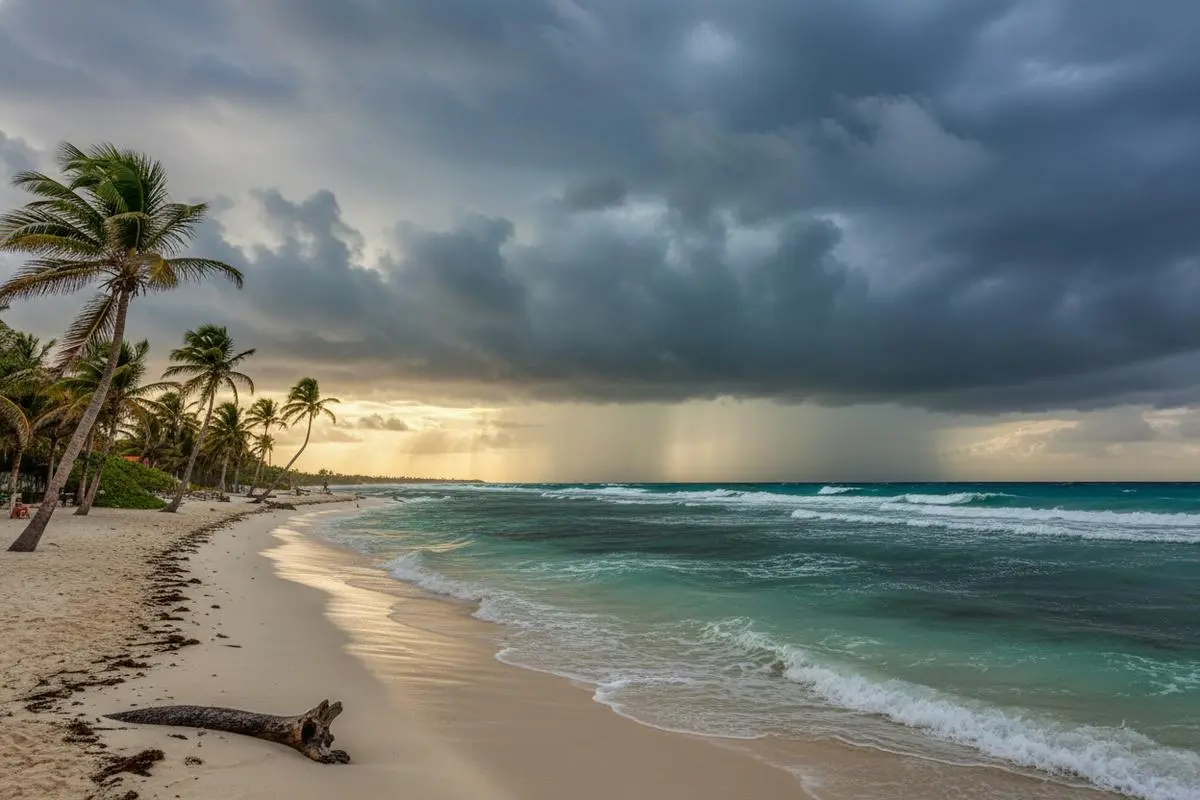
Tulum Hurricane Season 2026: Risk, Sargassum & Value
Tulum is one of the hardest Mexico destinations to answer honestly in hurricane season because the town is both magical when conditions cooperate and frustrating when they do not.
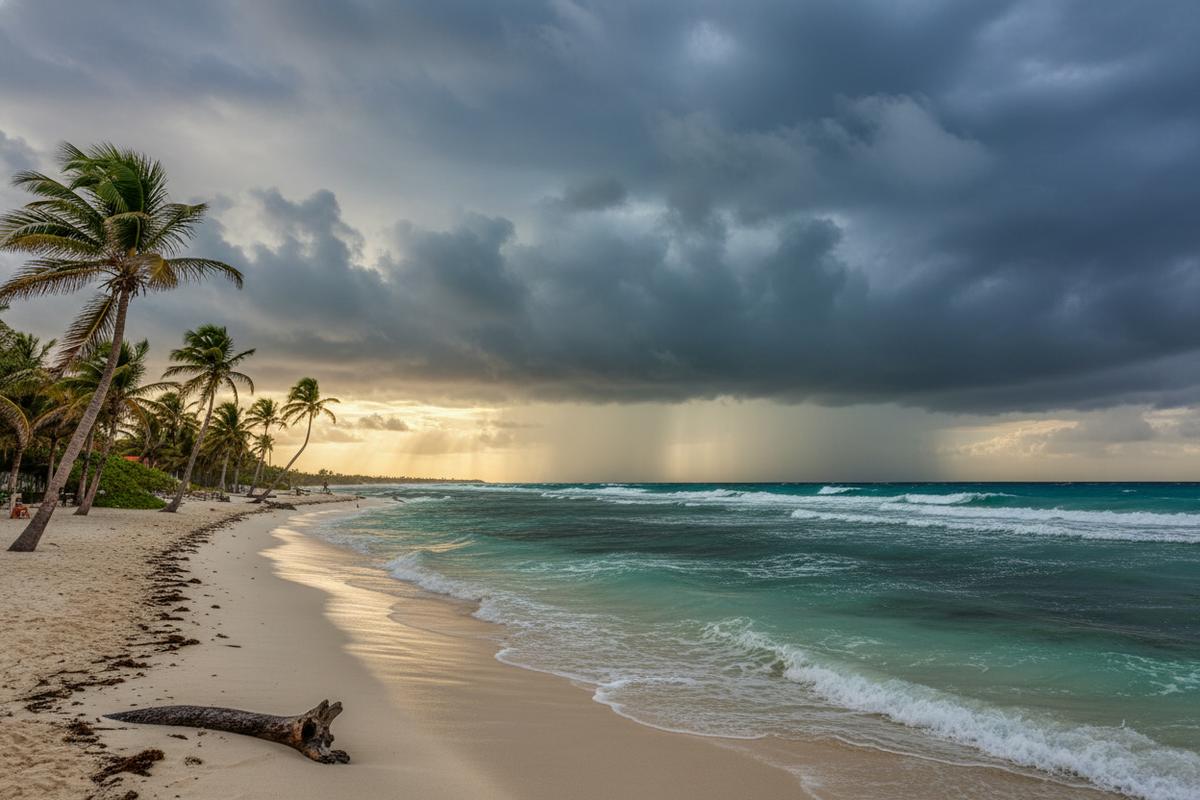
That is not because Tulum becomes dangerous every summer. It is because Tulum’s best experiences are unusually sensitive to weather. The beach road, the reef, the photogenic turquoise water, Sian Ka’an trips, and long outdoor days all depend on sea conditions and decent skies. Add peak sargassum season, and you get a destination where a “good deal” can stop feeling like one very quickly.
So yes, Tulum can still be worth it in hurricane season. But it works best for travelers who are buying the destination for cenotes, food, jungle atmosphere, and flexibility, not for guaranteed Caribbean perfection.
For the broader month-by-month picture, pair this guide with best time to visit Tulum, Tulum travel guide, cenotes near Tulum, and our sitewide Mexico hurricane season guide.
The Short Answer
| Question | Quick answer |
|---|---|
| Best hurricane-season month for Tulum | June |
| Best shoulder value | Early July |
| Cheapest month | September |
| Most difficult month for most travelers | September |
| Main non-hurricane issue | Sargassum, often worse than Cancun |
| Best backup activity | Cenotes, which stay excellent year-round |
| Best booking rule | Stay flexible and keep checking NHC forecasts plus your hotel’s cancellation terms |
If I had to simplify Tulum’s storm season into one sentence, it would be this: the town works far better in hurricane season than the beach fantasy does.
Why Tulum Is Tougher Than Cancun in Storm Season
Cancun has big resorts, stronger on-site infrastructure, more indoor fallback options, and cleaner logistics when the weather turns. Tulum has a more exposed personality.
A large part of what people are paying for in Tulum is this exact mix:
- beach clubs and beach-road energy,
- long bike or scooter days,
- open-air restaurants,
- reef and boat access,
- jungle-luxury hotels,
- and water that looks like it belongs on a postcard.
Those are wonderful in dry season. In hurricane season, they are also exactly the elements most likely to degrade first.
That does not mean the trip is ruined. It means the trip feels worth it only if you came for more than the beach.
The Three Tulum Windows
1. June to early July: the best value answer
This is the cleanest way to do Tulum in season.
The official Atlantic season has started, but you are still earlier than the late-summer peak. Rates soften. The town feels less overrun than winter. Cenotes are fantastic, and if your expectations around the beach are realistic, you can still get a strong overall trip.
Typical 2026 pricing in this window:
- stylish town hotel: $70 to $160 USD (1,300 to 3,000 MXN) per night
- better boutique hotel near beach or jungle: $180 to $320 USD (3,300 to 6,000 MXN) per night
- high-end beach stay: $280 to $500 USD (5,200 to 9,300 MXN) per night
2. Mid-July to August: hot, humid, and conditional
This is the point where Tulum starts asking more patience from you. Afternoon rain becomes more common, the air feels heavier, and seaweed can be a real mood killer if beach time is the main reason you came.
At the same time, cenotes are still brilliant, the jungle looks greener, and prices remain well below high-season winter levels.
3. September to early October: cheapest, but hardest sell
If you search hotel prices in Tulum around late September, the deals can look amazing. That is not a scam. It is simply the market pricing in the reality that this is the highest-risk stretch for weather and one of the roughest stretches for sargassum.
A beach hotel that can sit around $400 to $650 USD (7,400 to 12,100 MXN) in peak dry season may drop into the $190 to $360 USD (3,500 to 6,700 MXN) range. Town hotels can fall below $100 USD (1,900 MXN). Those are real savings. But Tulum in late September is not the version I recommend to travelers who need reliability.
The Sargassum Problem Matters More Here
This is the part many travelers underestimate.
Tulum is one of the Mexican Caribbean destinations most exposed to sargassum because its shoreline orientation is less protected than Cancún’s Hotel Zone. In other words, even if there is no storm anywhere near you, beach conditions can still be disappointing in hurricane season simply because seaweed is heavy.
That is why I do not like oversimplified advice such as “just go in September because it is cheap.” In Tulum, you are not only taking on more weather volatility. You are also traveling inside the toughest seaweed window.
If you need a clearer look at that side of the equation, read our 2026 Mexico sargassum guide.
What Still Works Very Well in Tulum in Hurricane Season
This is the section that decides whether the trip makes sense for you.
Cenotes
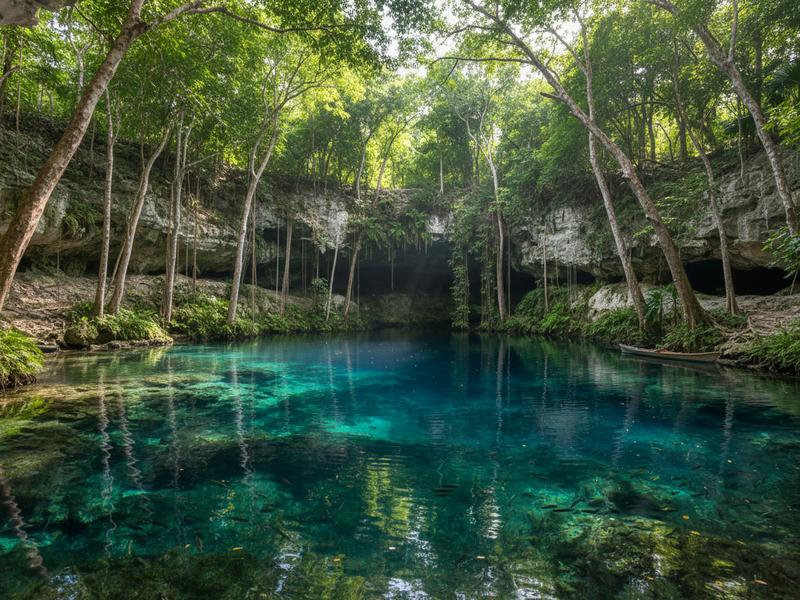
Cenotes are the great equalizer. They do not care about sargassum, and they often look incredible after summer rains.
Good storm-season cenote days include:
- Gran Cenote, about 500 MXN (around $27 USD) with rentals and extras depending on the setup
- Dos Ojos, often 600 MXN (around $32 USD) for standard entry
- Cenote Calavera and other smaller spots for 200 to 350 MXN ($11 to $19 USD)
If your Tulum trip is built around cenotes, town restaurants, and a few opportunistic beach hours when conditions are good, hurricane season becomes much easier to justify.
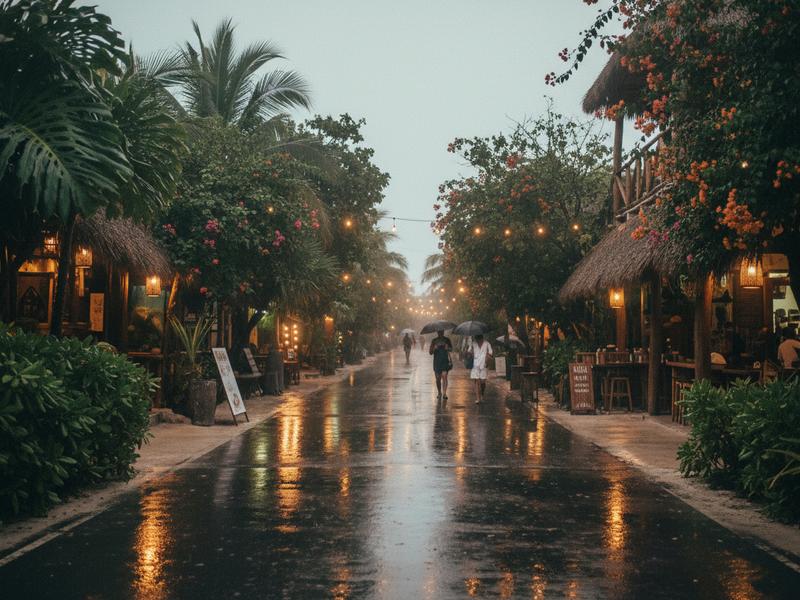
Food and town atmosphere
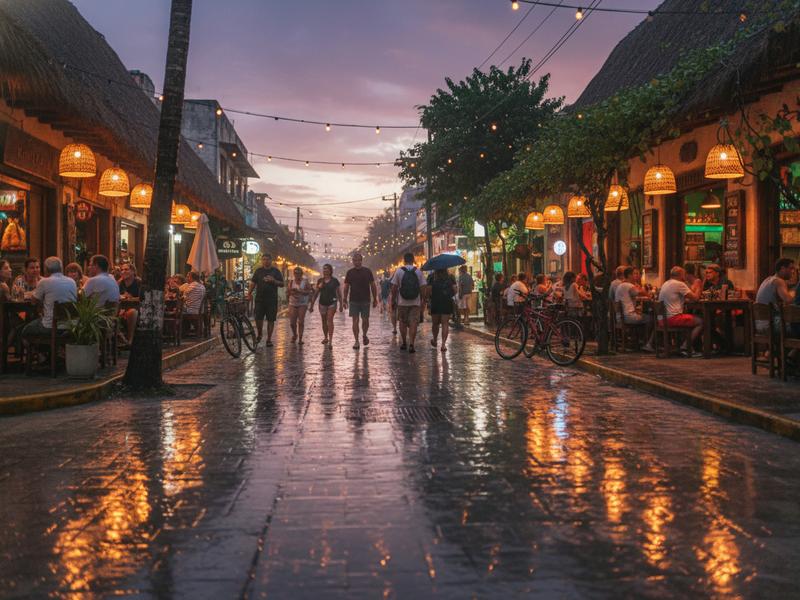
Tulum town still works well when the beach is mediocre. You can eat very well for much less than beach-zone prices. A strong dinner for two in town can land around 700 to 1,200 MXN ($38 to $65 USD), while a trendy beach-zone dinner with cocktails easily runs 2,000 to 4,000 MXN ($108 to $216 USD).
Short-notice wellness and spa days
Many travelers who try to force beach time in bad conditions end up frustrated. The smarter move is often to lean into the slower rhythm: massage, longer lunch, cenote swim, then a better dinner.
The Tulum Ruins and Sian Ka’an in Storm Season
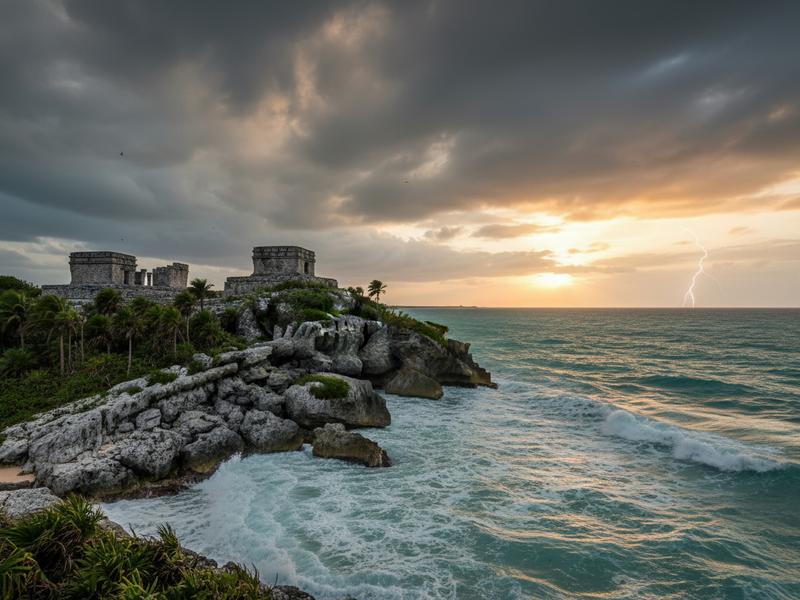
The ruins still work surprisingly well in hurricane season because they are best visited at opening time anyway. If you arrive early, you can often beat both the heat and the afternoon weather. What changes is the sea backdrop. On calm dry-season mornings it looks electric blue. In rougher weather it can look darker, choppier, and less photogenic.
Sian Ka’an is more weather-sensitive. If your dream Tulum trip depends on boat channels, lagoon color, and long biosphere excursions, remember that those are exactly the activities that suffer first when wind and rain increase. This does not make Tulum a bad storm-season destination, but it does make it a destination where you need more plan B energy.
Town or Beach Zone?
In dry season, this is mostly a style choice. In hurricane season, it becomes a strategy choice.
Town is the smarter storm-season base for most travelers
Why?
- it is cheaper,
- it gives you more restaurant and backup options,
- you do not pay beach-zone premiums on days when the beach may be underwhelming,
- and it makes it easier to pivot toward cenotes and inland plans.
Beach zone works if luxury is the whole point
If you are booking Tulum because you specifically want the beach-club version of Tulum, I get it. But then I would choose June or skip hurricane season entirely. Paying top-end beach rates in late September is rarely the best use of money unless the discount is dramatic and you truly accept the risk.
What Gets Disrupted First in Tulum
When the weather starts deteriorating, these are usually the first things to feel it:
- boat trips and snorkeling,
- beach-club quality and water color,
- Sian Ka’an excursions,
- long scooter days,
- and parts of the beach-road experience.
What usually keeps working unless the system is more serious:
- town hotels,
- restaurants,
- cenotes,
- ruins if timed around weather,
- and inland day trips.
This is why I like Tulum in storm season only when the itinerary is diversified.
What a Smart Hurricane-Season Tulum Trip Looks Like
A smart Tulum storm-season itinerary usually has this rhythm:
- sunrise or early-morning beach time when conditions allow,
- a long breakfast or coffee in town,
- midday cenote or spa time,
- a flexible afternoon that can absorb rain,
- and dinner after the roads cool down.
That rhythm is not glamorous on Instagram, but it is how you turn a potentially frustrating trip into a genuinely good one.
The Right Way to Book Tulum in Hurricane Season
1. Keep the hotel flexible
This rule matters even more in Tulum than Cancun because beach value is so condition-dependent. If a storm develops or seaweed is awful, you want the ability to shift or cancel.
2. Bias your trip toward town, not the beach road
Unless your heart is set on a luxury beach stay, a town base is usually the smarter storm-season move.
3. Budget for insurance
A basic one-week policy often costs $40 to $80 USD (750 to 1,500 MXN). On a Tulum trip with flights, transfers, and boutique lodging, that is usually reasonable.
4. Check official weather, not vibes
Use the National Hurricane Center and CONAGUA when your trip gets close. Tulum rumor culture is terrible for weather planning. Go straight to the forecast.
My Honest Recommendation
If you want me to be direct:
- Best storm-season month for Tulum: June
- Best balance of savings and sanity: June or early July
- Best traveler type for late-summer Tulum: repeat visitors with flexible expectations
- Worst traveler type for late-summer Tulum: beach-first honeymooners who need perfect conditions
Tulum is still worth considering in hurricane season if you love cenotes, food, and the wider Riviera Maya more than you love the beach itself. If the beach is the whole dream, either go in dry season or choose a more forgiving destination.
Final Take
Tulum during hurricane season is not a blanket yes or no.
It is a question of what version of Tulum you are actually buying.
If you are buying cenotes, town food, and a flexible Riviera Maya base, it can be excellent value. If you are buying the fantasy of flawless beach-club days and electric blue water on command, the odds are much worse, especially by late summer.