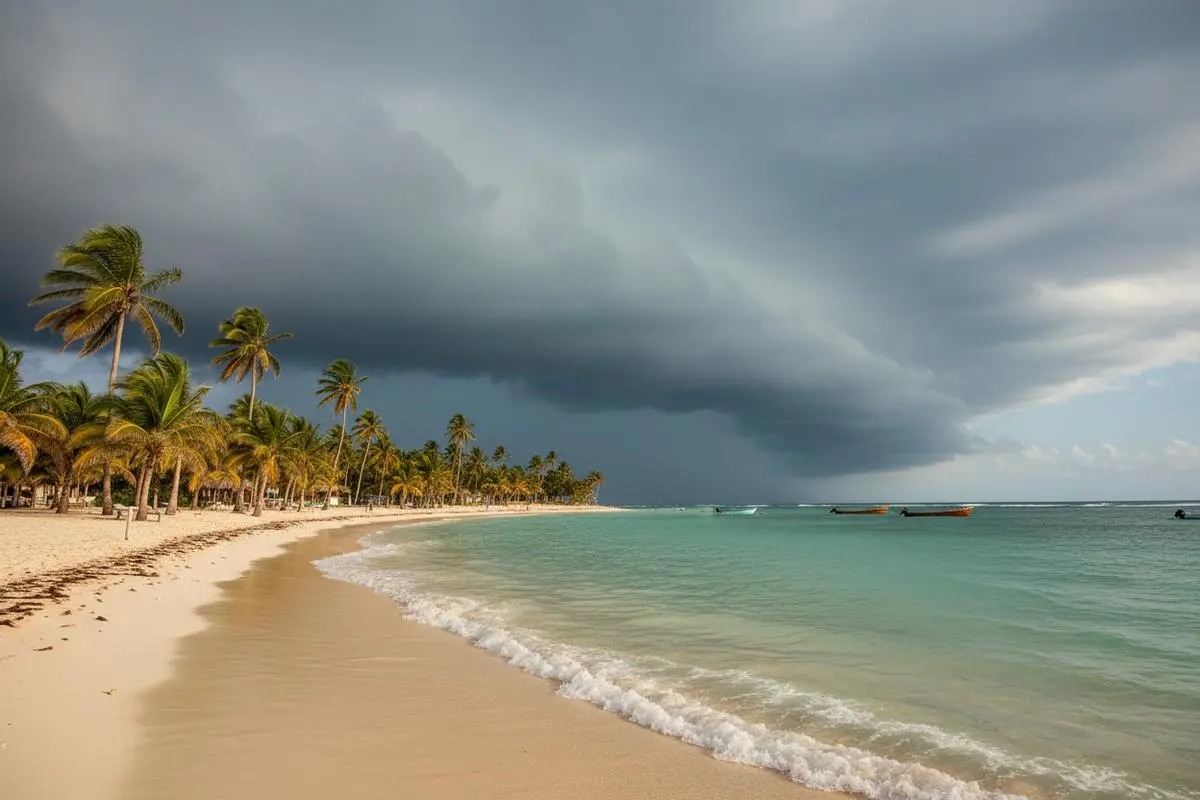
Mexico Hurricane Season 2026: Risk by Region
Mexico hurricane season is one of those topics that gets explained badly on both sides. Some guides act like the whole country turns into a no-go zone from June to November. Others wave it off and tell you not to worry at all. Neither answer helps when you’re about to spend real money on flights, hotels, ferries, airport transfers, and a week of your life.
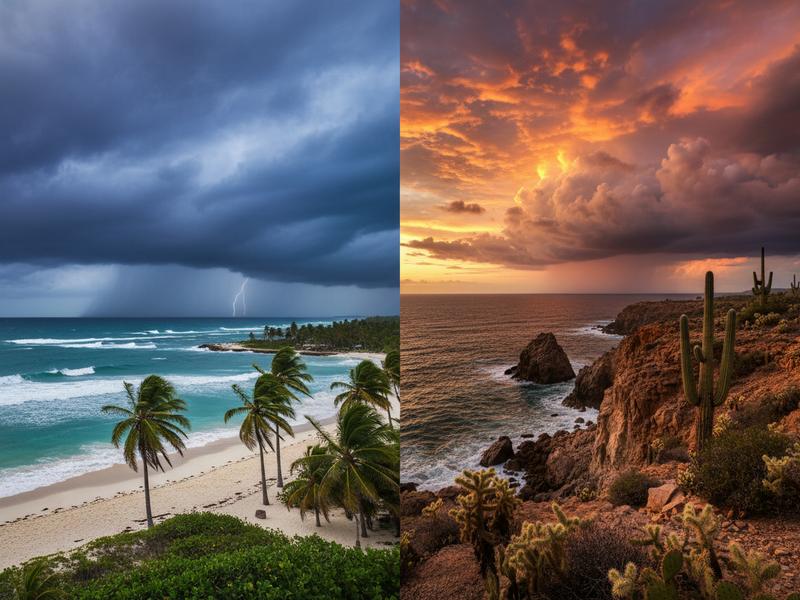
The practical answer is this: Mexico has two hurricane seasons at once, and they do not affect the country equally. The Caribbean side, including Cancún, Isla Mujeres, Cozumel, Playa del Carmen, and Tulum, follows the Atlantic season. Los Cabos and Baja California Sur follow the eastern Pacific season. Puerto Vallarta and Riviera Nayarit sit in a middle zone where tropical systems matter, but the day-to-day experience is often more about afternoon rain, rough seas, and humidity than a direct hurricane threat.
That difference matters because a June trip to Cancún is not the same bet as a late-September trip to Tulum. A September week in Los Cabos is not the same as a September week in Oaxaca City. And a traveler who cares most about cheap luxury pricing can accept more uncertainty than someone planning a once-a-year family vacation with fixed school dates.
This guide is the honest version for 2026, built around what travelers actually need to decide:
- which parts of Mexico carry the most storm risk,
- which months are usually workable,
- how much money you really save,
- what gets disrupted first when a storm develops,
- and how to book so a weather problem becomes annoying instead of trip-ruining.
If you are weighing specific destinations, start with our broader Mexico rainy season guide, then compare the destination-specific storm-season pages below.
The 30-Second Answer
If you only need the fast answer, here it is.
| Question | Short answer |
|---|---|
| When is Mexico hurricane season? | Atlantic side: June 1 to November 30. Pacific side: May 15 to November 30. |
| Highest-risk month overall | September |
| Smartest hurricane-season months for travel | June and July for the Caribbean, June and early July or late October to early November for many Pacific destinations |
| Most weather-sensitive areas | Cancún, Tulum, Riviera Maya, Holbox |
| More forgiving coastal picks | Los Cabos, Puerto Vallarta, Riviera Nayarit |
| Safest mainstream bets | Mexico City, Oaxaca City, Guanajuato, Querétaro, San Miguel de Allende |
| Typical savings | Often 20 to 50 percent below winter peak hotel pricing |
| Booking rule | Choose refundable rates, monitor the National Hurricane Center, and never lock yourself into a nonrefundable late-September Caribbean trip |
The most important planning takeaway is that hurricane season is not one long block of equal danger. June is usually much easier than September. Cancún is more exposed than Mexico City by definition. Tulum is more weather-sensitive than inland Valladolid because the beach road, boats, and reef activities are the first things to be affected.
What NOAA Says About the Season
NOAA’s National Hurricane Center is the cleanest place to start. According to its tropical cyclone climatology, the Atlantic season runs June 1 to November 30 and peaks around September 10. The same climatology notes that the eastern Pacific season runs May 15 to November 30, with activity spread more broadly from late June through early October.
For Mexico travelers, that translates into four practical truths:
- The Caribbean side starts earlier than many people think. June is already inside the official Atlantic season, even if the highest risk still lies ahead.
- September is the big pivot month. This is when you usually find the lowest prices and the highest weather anxiety on the Caribbean coast.
- The Pacific side can get active earlier. Baja California Sur is part of the eastern Pacific story, so storms and tropical systems matter there before many travelers expect them to.
- Forecasting has gotten better, not perfect. You usually get several days of notice when a storm is organizing, which is why booking flexibility is so valuable.
I strongly recommend checking the NHC 5-day tropical outlook before any June-November Mexico trip, and also the Mexican weather service at CONAGUA when your travel window is close.
The Biggest Myths About Mexico Hurricane Season
Myth 1: The whole country is a bad idea from June to November
Not even close. Mexico City, Oaxaca City, Guanajuato, Querétaro, Puebla, and San Miguel de Allende do not suddenly become bad summer destinations because the Caribbean is active. Even on the coasts, June and July are very different from September.
Myth 2: If a hurricane does not hit, the trip is unaffected
Also false. Plenty of non-hurricane weeks still feel compromised because seas are rough, ferry routes are suspended, rain sticks around, or sargassum ruins the beach. Travelers need to plan around disruption, not only around catastrophic landfall.
Myth 3: Cheap rates mean it is worth going no matter what
Cheap rates matter only if the destination still matches what you want. If you are dreaming about postcard Caribbean water and all-day beach time, saving $180 USD, about 3,350 MXN, per night on a Tulum stay does not feel like a win when the sea is brown, rough, or closed.
Myth 4: The Pacific side is basically irrelevant
Not true. Baja California Sur and parts of the Pacific coast absolutely belong in the conversation. The eastern Pacific season starts earlier, and Cabo travelers in particular should stop assuming sunny desert means no storm risk.
Atlantic Side vs Pacific Side: Why Travelers Get Confused
Most travelers hear “Mexico hurricane season” and picture Cancún. That is only half the country.
The Atlantic-Caribbean side includes Cancún, Isla Mujeres, Cozumel, Playa del Carmen, Tulum, Bacalar, Mahahual, and Holbox. This side is most exposed to classic Atlantic storms moving through the Caribbean and the Gulf. When a significant system threatens Quintana Roo, the disruptions can include:
- airport schedule changes,
- ferry suspensions,
- rough sea conditions,
- beach closures,
- cenote and lagoon tour cancellations,
- and multi-day stretches of rain even without a direct hit.
The eastern Pacific side includes Los Cabos, La Paz, Puerto Vallarta, Riviera Nayarit, Mazatlán, and the southern Pacific coast. This side has its own storm track. In practice, that often means:
- hot and humid buildup before a storm,
- swells and unsafe sea conditions,
- marina closures,
- flash flooding in arroyos or low roads,
- and occasional direct-impact events, especially in Baja California Sur.
The Pacific side often feels less scary to first-time travelers because there are fewer viral “Cancún hurricane” memories in English media. But that does not mean it is storm-free. It means the rhythm, geography, and most common disruptions are different.
Mexico Hurricane Season by Month
Here is the planning version, not the meteorology lecture.
| Month | Caribbean Mexico | Pacific Mexico | My travel take |
|---|---|---|---|
| May | Not yet official season, but rain and humidity start building | Official Pacific season begins mid-month | Fine for most trips, especially inland or Pacific shoulder-season escapes |
| June | Low to moderate risk, workable for flexible travelers | Moderate risk, storms can begin forming | One of the better bargain months if you book flexible rates |
| July | Moderate risk, more humidity and afternoon rain | Moderate risk, hot and sometimes rough seas | Good value month, especially if your priority is price over certainty |
| August | Risk rises meaningfully | Active stretch begins to matter | Acceptable if you understand the tradeoff and have backup plans |
| September | Highest risk month | Very active on the Pacific too | Cheapest, but hardest month to recommend for rigid trips |
| October | Still elevated, especially early October | Still active, then slowly easing | More workable late in the month than early |
| November | Official season still runs through Nov 30 but risk usually tapers | Same | Often underrated, especially after mid-month if forecasts are quiet |
The key is not simply which month is “safe” or “unsafe.” It is whether the month matches your trip style.
Good fit for hurricane season
- travelers chasing lower hotel prices,
- repeat visitors who can pivot plans easily,
- people happy to spend more time in spas, restaurants, cenotes, museums, or hotel pools,
- and anyone booking fully refundable reservations.
Bad fit for hurricane season
- honeymoons built around perfect beach time,
- inflexible family trips with locked school dates,
- weddings or group trips where one storm affects ten separate bookings,
- and anyone who gets anxious checking forecasts every day.
Where Hurricane Season Matters Most
1. Cancún and the northern Riviera Maya
Cancún is the biggest hurricane-season search term for a reason. The city is easy to reach, packed with resorts, and directly on the Caribbean. The good news is that hotel infrastructure is experienced and heavily drilled for storms. The downside is that beach quality, ferries, and water tours are sensitive to wind and surf even before any serious storm arrives.
If you’re deciding specifically on Cancún, read our dedicated Cancún hurricane season guide, plus the separate month-by-month breakdowns for June, August, and September.
2. Tulum and the southern Riviera Maya
Tulum is weather-sensitive in a different way. The town itself is more resilient than the beach experience. But many travelers come for the beach road, boho hotels, reef trips, Sian Ka’an, and long outdoor days. Those are exactly the things that become less reliable when seas get rough or heavy rain sets in.
Tulum also combines storm risk with sargassum season, which is why it can feel less forgiving than Cancún in late summer. If you want the full breakdown, see our Tulum-specific guide and the broader 2026 sargassum guide.
3. Los Cabos and Baja California Sur
Los Cabos is the most misunderstood mainstream destination in this conversation. Travelers know the weather is sunny most of the year, so they underestimate late-summer storm season. The reality is that Cabo can be excellent value in summer and fall, but you need to respect the eastern Pacific pattern, the heat, and the occasional flooding or marina shutdown that comes with a nearby system.
Our full Los Cabos hurricane season guide goes deeper, and you should pair it with the broader destination guide when you are ready for hotel and neighborhood details.
4. Puerto Vallarta and Riviera Nayarit
Puerto Vallarta deserves a quick note because it often gets lumped into the same risk category as Cancún, which is misleading. Yes, Puerto Vallarta sits inside the Pacific storm season. No, it does not usually feel like the Riviera Maya in September. More often, summer and early fall here mean lush hills, afternoon storms, rougher surf, and lower room rates. Direct major impacts are less common than on the most exposed Atlantic beach zones.
That said, if your whole trip depends on perfect boat weather, late summer is still a compromise.
Where Hurricane Season Matters Least
If your priority is to lower weather stress while still traveling in summer or early fall, stop forcing yourself onto a beach just because flights look cheap.
These destinations are usually much easier calls during hurricane season:
- Mexico City for museums, neighborhoods, food, and cooler evenings after rain
- Oaxaca City for markets, mezcal, and summer cultural energy
- Guanajuato for architecture and compact walking days
- Querétaro and San Miguel de Allende for city breaks where rain is more interruption than threat
- Mérida if you understand the heat and plan around it, even though the wider Yucatán Peninsula still shares the Atlantic basin
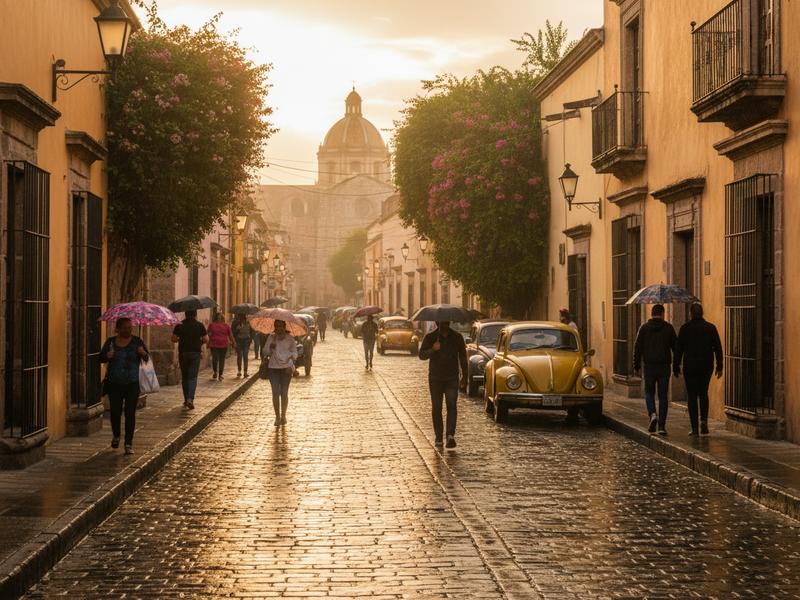
For many travelers, the smartest hurricane-season move is simple: go inland. You trade beach uncertainty for predictable city logistics and still get lower shoulder-season pricing on flights and hotels.
How Much Money You Actually Save
Savings are real. That is why people keep searching this topic.
A traveler looking at the same 4-star resort room in a beach market can easily see a major difference between peak dry-season pricing and late-summer or early-fall pricing. These are realistic planning ranges for 2026:
| Destination | Peak winter rate | Hurricane-season rate | Typical savings |
|---|---|---|---|
| Cancún all-inclusive | $260-480 USD ($4,800-8,900 MXN) | $140-280 USD ($2,600-5,200 MXN) | 25-45% |
| Tulum beach hotel | $300-650 USD ($5,600-12,100 MXN) | $180-380 USD ($3,300-7,100 MXN) | 30-45% |
| Los Cabos resort | $420-900 USD ($7,800-16,700 MXN) | $240-520 USD ($4,500-9,700 MXN) | 30-50% |
| Puerto Vallarta resort | $220-420 USD ($4,100-7,800 MXN) | $120-240 USD ($2,200-4,500 MXN) | 25-45% |
Flights can soften too, though not always as dramatically as hotels. What travelers sometimes miss is that the cheapest room is not the best value if it is nonrefundable. Paying an extra $20 to $40 USD per night for a flexible rate can be the smartest money you spend in hurricane season.
How Flights, Ferries, and Hotels Usually React
This is the piece travelers rarely model correctly.
Flights
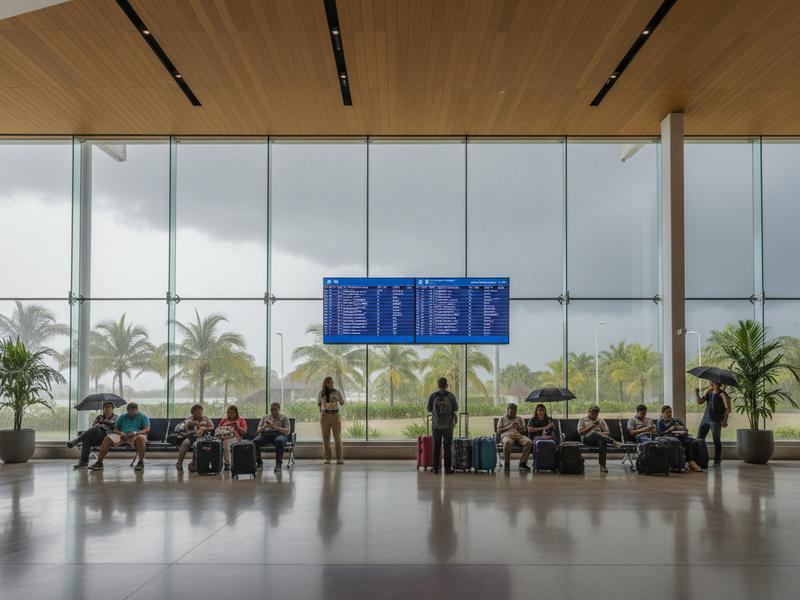
Flights are often the last major tourism component to fully shut down. Airports can keep operating through weather that already cancels beaches, boats, and diving. That means a hurricane-season trip can feel disappointing before it becomes truly impossible.
The bigger issue is timing. If a serious system is forecast 48 to 72 hours out, airlines start filling up fast as people try to move their flights. That is why flexible fare classes or points redemptions can matter more than people expect.
Ferries and boats
These go first. Cozumel ferries, Isla Mujeres routes, Holbox logistics, fishing charters, snorkeling boats, and catamarans all react quickly to rough seas. If your trip relies on an island hop, never book the island departure for the same day as your international flight home.
Hotels
Hotels in Mexican beach destinations are usually experienced. Large resorts in Quintana Roo, Los Cabos, and Puerto Vallarta have procedures, backup staffing, and supply chains designed for this exact season. The catch is that not every hotel is equally flexible on rate rules.
If you are booking the Caribbean in August, September, or early October, treat refundable terms as part of the room product, not as an optional add-on.
The Real Booking Rules
This is the section that saves trips.
1. Book refundable hotels
If you remember only one rule, make it this one. In hurricane season, the most expensive mistake is not a higher nightly rate. It is getting trapped by a nonrefundable booking when the forecast turns bad five days out.
I would only book nonrefundable Mexico beach inventory in hurricane season if all three of these are true:
- the rate is dramatically cheaper,
- the travel dates are in June or early July,
- and I would still go happily even if the weather turned mixed.
2. Avoid tight island and ferry chains
Stormy weather affects ferries quickly. If your trip depends on perfect connections like Cancún to Isla Mujeres, Playa del Carmen to Cozumel, or mainland to Holbox, build margin into the schedule. Do not fly home the same day you must ferry off an island.
3. Buy real travel insurance, not just hope
A decent policy for a one-week trip often costs around $35 to $80 USD ($650 to $1,500 MXN) depending on age, trip cost, and coverage. It will not make the weather sunny, but it can soften the financial hit of interrupted travel, rebooked flights, or added hotel nights.
4. Know what gets canceled first
Long before a hotel tells you to evacuate, these are the things that usually start dropping out:
- catamaran trips,
- snorkeling and diving,
- whale shark boats,
- fishing charters,
- ferries,
- and beach club operations.
That is why weather-sensitive trips need backup plans even when a storm never becomes a direct hit.
A Simple Decision Matrix
Use this if you are stuck between book it and wait.
| Trip type | June | July | August | September | October |
|---|---|---|---|---|---|
| First Mexico beach trip | Yes | Usually yes | Maybe | No for most people | Maybe late month |
| Luxury deal hunt | Yes | Yes | Yes with caution | Yes if very flexible | Yes, especially late |
| Family trip with fixed dates | Yes | Yes | Maybe | Usually no | Maybe late month |
| Honeymoon | Maybe | Maybe | Caution | No | Maybe late month |
| City-break traveler | Yes | Yes | Yes | Yes | Yes |
If this table feels overly conservative, good. Hurricane-season planning should lean conservative before payment and flexible after booking.
Best Mexico Hurricane-Season Strategies by Traveler Type
For honeymooners
Choose November, late October, or June over September if you want lower prices without inviting maximum weather stress. If you still want beach luxury, Los Cabos is often easier to justify than Tulum late in the season.
For families
If school calendars force a summer trip, June and July are usually the most rational compromise. You still get savings, warm water, and lower statistical risk than September. Avoid betting the whole family vacation on a late-September Caribbean resort unless you truly do not mind pivoting the plan.
For budget travelers
September deals are real. If cheap is your first priority, you can absolutely make hurricane season work. Just keep the trip flexible, choose a destination with good backup activities, and accept that “cheapest” and “most reliable” are opposites.
For repeat Mexico travelers
This is the group that can win big in hurricane season. If you’ve already done the postcard beach trip, you may be perfectly happy with a cheaper room, one stormy afternoon, and more city meals than boat days. That is when the math starts to work.

What To Do if a Storm Shows Up on the Forecast
Do not panic. Also do not ignore it.
When a storm appears on the map, work through this order:
- Check the official forecast at the National Hurricane Center and not a random Instagram account.
- Contact your hotel and ask about cancellation or rebooking options in writing.
- Review airline flexibility before the last-minute scramble begins.
- Look at timing, not just category. A tropical storm arriving the day after you leave may matter less than a weaker system arriving right in the middle of your stay.
- Avoid island transfers if marine conditions are changing.
- Listen to local instructions. Hotels in Quintana Roo and Baja have real storm protocols because this is not new to them.
The good news is that you usually have lead time. Mexico’s beach destinations are not ambush travel markets in this respect. The infrastructure has experience. The key is giving yourself the contractual flexibility to use that lead time.
My Honest Recommendation for 2026
If someone asked me for the cleanest hurricane-season recommendation with no extra context, I would say this:
- Best balance of savings and sanity: June and July
- Most weather-sensitive month: September
- Best coastal value for flexible travelers: Los Cabos or Puerto Vallarta in summer, Cancún in June or early July
- Worst match for rigid beach expectations: Tulum in September
- Safest all-around move: choose an inland city instead of forcing a late-season beach trip
And if you are stuck between several destinations, use these rules:
- Want the best chance of calm beach conditions? Travel outside hurricane season.
- Want good savings without max risk? Choose June.
- Want the deepest discounts? Take September, but book like an adult, not an optimist.
- Want culture over weather stress? Go to Oaxaca or Mexico City and stop checking marine forecasts.
When You Should Choose an Inland Trip Instead
A lot of bad hurricane-season trips happen because travelers fall in love with a beach discount when the smarter answer was a city.
If your tolerance for weather uncertainty is low, an inland trip is often the right move. Oaxaca, Mexico City, Guanajuato, Puebla, and Querétaro still give you excellent food, architecture, neighborhoods, and lower shoulder-season pricing, but without the same dependence on sea conditions, ferry schedules, and water-color luck.
This is especially true for travelers who only have four to six days. On a short trip, losing two beach days to rough weather feels huge. On a city trip, a rainy afternoon usually just becomes a longer lunch or museum stop. That is why inland Mexico remains one of the best summer workarounds in the country. It gives you most of the seasonal price advantage with far less emotional volatility. For many travelers, that is the most rational compromise in the entire Mexico calendar, especially when the alternative is paying peak winter prices for a beach trip they only half need. In practice, that shift alone solves the season for a lot of people, especially first-time summer visitors with limited flexibility at all.
What to Pack and Prepare for a Mexico Storm-Season Trip
This part sounds boring until it saves your week.
A smart hurricane-season packing list is not about apocalypse gear. It is about friction reduction.
Bring:
- a small dry bag for ferries, boats, and sudden downpours,
- sandals that can handle wet pavement instead of only fashion shoes,
- one light long-sleeve layer for over-air-conditioned restaurants or flights,
- a battery pack so weather updates do not compete with your phone charge,
- and enough room in the budget for a changed transfer, extra taxi, or one additional hotel night.
If you are heading to the Caribbean, I also like keeping the last 24 hours of the itinerary simpler than the rest of the week. The closer you get to departure day, the less you want to be stacked across islands, ferries, and long road transfers.
How Frequent Mexico Travelers Usually Think About This
People who return to Mexico often stop asking, “Is hurricane season okay?” and start asking better questions.
They ask:
- Is this destination still enjoyable if the beach is only average?
- Can I afford to book flexibility instead of only the lowest rate?
- Would I rather take a cheaper room and more uncertainty, or pay winter prices for a cleaner forecast?
- Is there enough food, culture, spa, or city life here to make one rainy day irrelevant?
That is the adult way to think about the season.
For some travelers, the answer is yes, and hurricane season becomes one of the best-value windows in the whole Mexico calendar. For others, especially people on a first big beach trip, the better choice is to pay more and go later.
Final Take
Mexico during hurricane season can absolutely be worth it. But the people who feel happiest with the decision are usually the ones who understood the tradeoff before they booked.
You are not buying certainty. You are buying better pricing in exchange for more weather volatility.
For some travelers, that is a great deal. For others, it is false economy.
If you’re still comparing specific beach destinations, start next with our guides to Cancún in September, Tulum in September, and Mexico’s 2026 sargassum season. Those pages break down the local reality around the hardest beach month, water conditions, and the booking tactics that matter.