Veracruz Travel Guide 2026: Port City, Gulf Coast & Jarocho Culture
Veracruz doesn’t get the attention it deserves. While travelers flock to Cancún beaches or Oaxaca’s mezcal bars, Mexico’s oldest port city sits on the Gulf Coast offering three things none of those places can match: a Carnival rivaling Rio de Janeiro, seafood that defines Mexican coastal cuisine, and 500 years of cultural layering in a city that feels genuinely alive.
This is where Hernán Cortés first landed in 1519. Where jarocho music was born from African, indigenous, and Spanish roots. Where the lechero ritual at Café La Parroquia has been performed for over 200 years. Come for the atmosphere — stay for the food.
Why Veracruz Belongs on Your Mexico Itinerary
Most Mexico travel guides treat Veracruz as a transit point. That’s a mistake. The state of Veracruz contains multitudes: the port city itself, the lush coffee highlands of Xalapa, El Tajín’s pre-Columbian ruins, the UNESCO-listed colonial fishing village of Tlacotalpan, and some of Mexico’s most spectacular waterfalls in the Huasteca Potosina region.
The Gulf Coast advantage:
- Water temperature averages 28°C year-round — warmer than the Caribbean in winter
- No sargassum. The Gulf Coast doesn’t get the seaweed blooms that plague Quintana Roo beaches
- Prices 30–40% lower than Riviera Maya equivalents
- Better seafood. The Gulf produces extraordinary shrimp, crab, red snapper, and octopus
The state is also Mexico’s agricultural engine — it’s the world’s largest vanilla producer and a major coffee growing region. That context matters when you’re eating here.
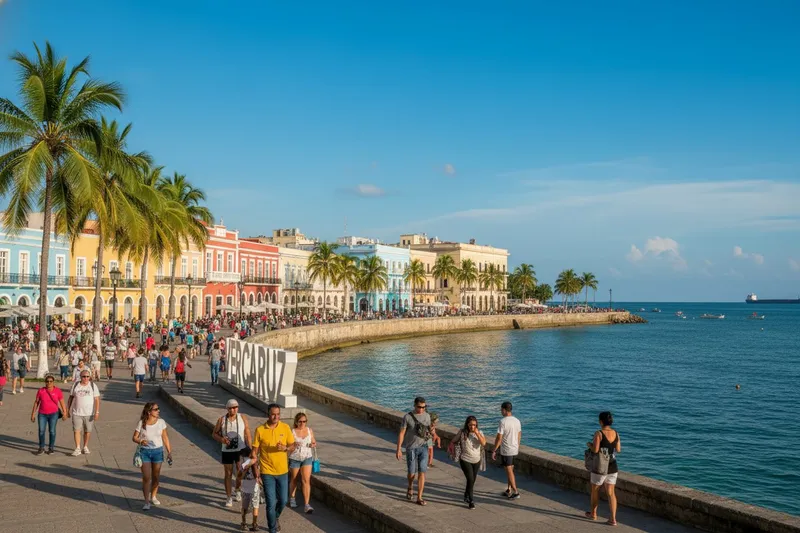
Veracruz City: The Port That Built Mexico
La Parroquia and the Lechero Ritual
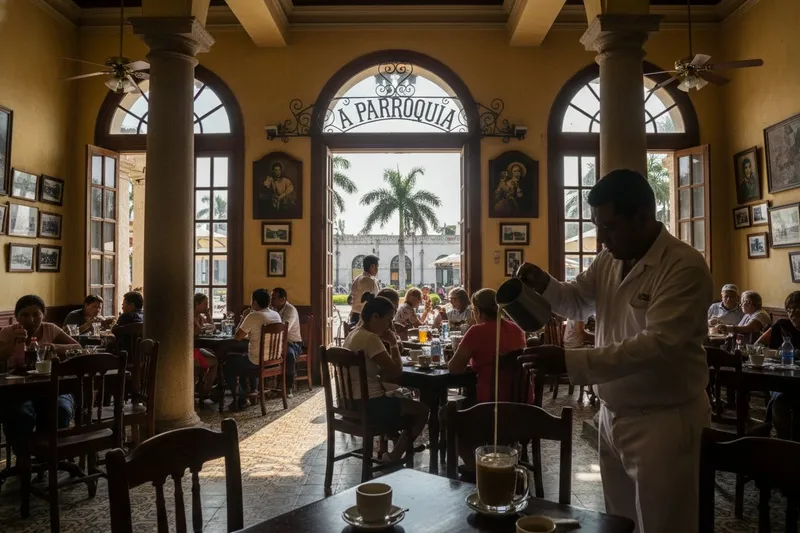
Start every morning the way Veracruzanos have for generations. Café La Parroquia on the Malecón is an institution, open since 1808. Order a café americano or café negro — a glass arrives with a shot of espresso. Then tap your glass with a spoon. A waiter materializes and pours a long stream of steaming hot milk from shoulder height into your glass, creating the perfect café lechero.
It sounds simple. It’s electric. The whole café fills with the sound of spoons tapping glass, waiters moving between tables with their iconic kettles, the smell of fresh bread. This is the Veracruz morning ritual — and it costs about 40 MXN.
The restaurant has two locations on the Malecón; both work fine. Come for breakfast, come for afternoon coffee, come multiple times.
Fort San Juan de Ulúa
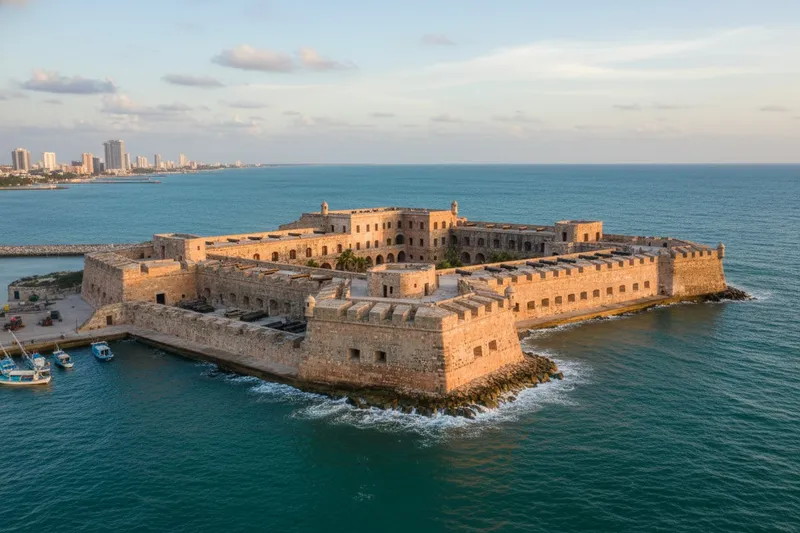
The fortress visible from the Malecón is Fort San Juan de Ulúa — one of the most significant historical sites in Mexico. Construction began in 1535, making it the oldest colonial structure in continental America. For centuries it guarded the port; later it became a prison where political enemies of various regimes were held in notoriously brutal conditions.
The tour (around 65 MXN) takes you through the fortifications, drawbridges, dungeons, and cannons. The view of the port from the ramparts is excellent — you can watch container ships navigate the harbor while standing on 16th-century stonework.
Access by water taxi from the Malecón (about 15 MXN each way) or by road around the port.
Carnival: The Second Largest in the World
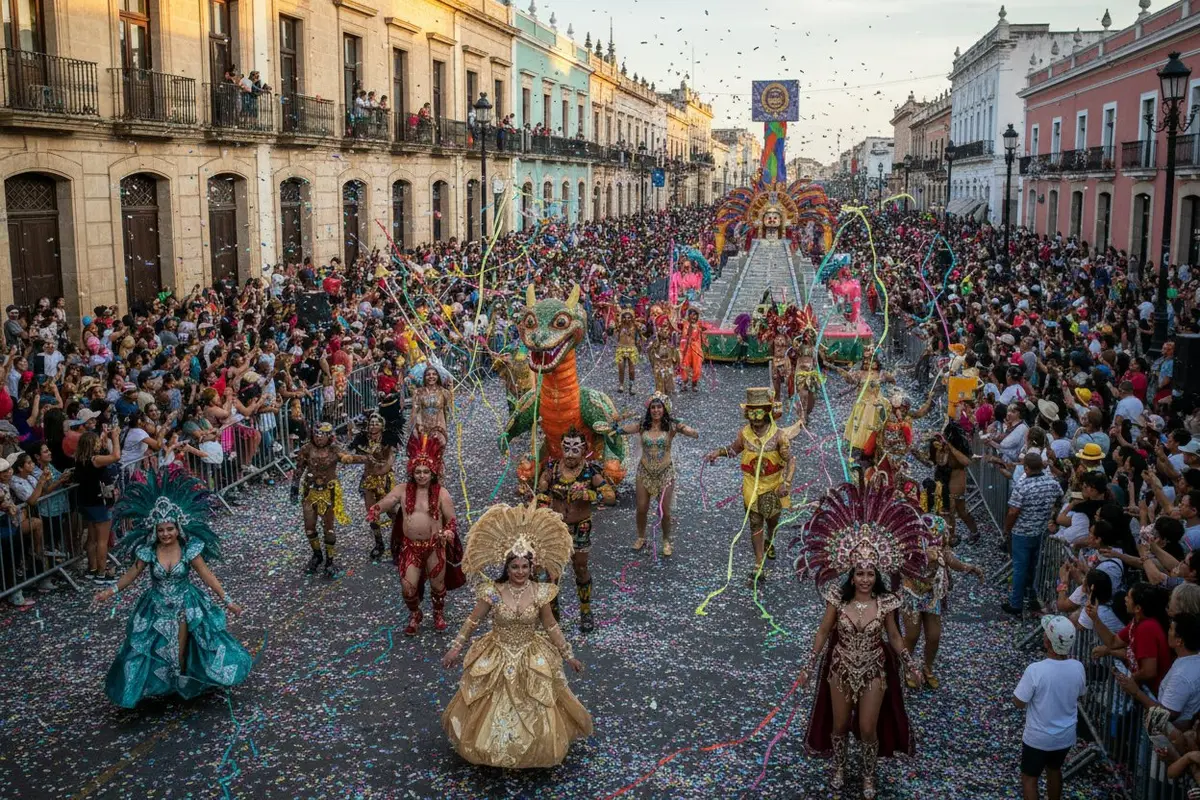
Veracruz hosts what it calls the second-largest Carnival on earth after Rio — and while that ranking is debated, the celebration itself is not. Every February, 9 days before Ash Wednesday, the city transforms. Float parades wind along the Malecón, bands play danzón and salsa in the zócalo around the clock, and the entire city dresses in costume.
The symbolic “burning of bad humor” (quema del mal humor) opens the festivities — a giant papier-mâché figure representing pessimism goes up in flames. The coronation of the Carnival queen draws massive crowds. Hotel prices triple during Carnival week; book 3–4 months ahead.
If you can’t make Carnival, the city’s zócalo hosts live marimba and danzón music on weekend evenings year-round. The dancing is impromptu and anyone can join.
Jarocho Music and Son Jarocho
Veracruz’s musical tradition — son jarocho — is unlike anything else in Mexico. Born from the collision of West African rhythms, indigenous Totonac melodies, and Spanish instrumentation, it produces something that sounds simultaneously ancient and joyful. The jarabe tapatío (hat dance) you know as “Mexican folk music” is from Jalisco; the Veracruz version is the La Bamba, made globally famous by Ritchie Valens.
The fandango — a communal musical gathering where people play, sing, and dance on a wooden platform — still happens in communities around Veracruz. Ask at the tourist office on the zócalo about upcoming fandangos.
Xalapa: The Cultural Capital
Xalapa (or Jalapa — both spellings are used) sits 90 minutes from Veracruz city in the highlands at 1,400m. It’s the state capital, a university city, and home to what is arguably the best anthropology museum in Mexico outside of the capital.
Museum of Anthropology of Xalapa
The Museo de Antropología de Xalapa holds five of the world’s seventeen known giant Olmec heads — stone monuments carved between 900 and 400 BCE, weighing up to 40 tons each, each with distinct facial features. Seeing them in person is genuinely striking. The museum also holds thousands of artifacts from Totonac, Huastec, and other Gulf Coast cultures.
Entry costs around 90 MXN. Allow 2–3 hours. The museum garden is beautifully landscaped with outdoor stone sculptures.
Xalapa’s Coffee Culture
The highlands around Xalapa produce some of Mexico’s finest coffee — grown in the shade of cloud forest, at elevation, with volcanic soil. Café Chiquito and La Parroquia (a different café, same name, better quality than the port version) are worth seeking out. Buy whole beans to take home.
The city itself is attractive — colonial architecture, frequent festivals, a strong student energy from the Universidad Veracruzana, and cool temperatures year-round. Worth a 1–2 night stay.
El Tajín: The Gulf’s Greatest Ruins
Located 200 km north of Veracruz city near the city of Papantla, El Tajín is the most important pre-Columbian site on Mexico’s Gulf Coast. The pyramid complex flourished between 600 and 1200 CE, built by the Totonac people.
The Pyramid of the Niches is El Tajín’s most distinctive structure — 365 square niches (one for each day of the solar calendar) cover its seven stepped levels. It’s not as tall as Teotihuacan’s pyramids but more intricate, and the site is far less crowded.
The real spectacle at El Tajín happens every day: the Voladores de Papantla. Four men climb a 30-meter pole, attach ropes to their ankles, and spin downward in 13-revolution circles (13 × 4 = 52, the Aztec calendar cycle). The fifth man stands atop the pole playing a flute throughout. It’s one of the most visually spectacular indigenous ceremonies still performed regularly in Mexico.
Entry to El Tajín: around 85 MXN. Voladores performances happen several times daily; a small donation is expected.
Tlacotalpan: UNESCO River Town
Two hours south of Veracruz city, Tlacotalpan sits at the confluence of the Papaloapan River and one of its tributaries. UNESCO listed it as a World Heritage Site in 1998 for its colonial architecture — brightly painted facades (ochre, coral, turquoise, mint) lining streets of continuous arcades.
The town has roughly 13,000 people and is a living community rather than a museum piece. The annual Candelaria festival in early February draws pilgrims and musicians for a week of celebrations that include carrying the Virgin of Candelaria statue in procession along the river. Bull running also happens during this festival — on a floating platform on the river.
Outside festival season, Tlacotalpan is peaceful and less visited. The riverside restaurants serve river fish and shrimp. Walk the arcaded streets in the evening when the lights hit the painted facades. Day trip from Veracruz city (bus or car) or stay overnight in one of the small guesthouses.
Huasteca Potosina: Waterfalls Near the Gulf
Technically just inside San Luis Potosí state rather than Veracruz, the Huasteca Potosina is geographically and culturally part of the Gulf Coast experience. The region contains some of Mexico’s most spectacular waterfall landscapes.
Key sites:
- Tamul Falls — Mexico’s largest waterfall by volume, 105 meters high. Reach by canoe up the Gallinas River — the approach through jungle canyon is as impressive as the falls themselves
- Micos Cascades — series of natural water slides and pools in the jungle; good for swimming
- Tamasopo — turquoise pools fed by cold springs, excellent for swimming June–October
Base yourself in Ciudad Valles (the hub) or Xilitla (home to Edward James’s surrealist sculpture garden Las Pozas — a genuinely bizarre and wonderful detour).
The Huasteca Potosina is 3–4 hours from Veracruz city by bus. It warrants a dedicated 2–3 day addition to a Veracruz itinerary.
For deeper coverage, see Huasteca Potosina waterfalls guide.
Coatzacoalcos: Gateway to the South
At the southern end of the state, Coatzacoalcos is primarily an industrial port city — not a tourist destination in itself, but a useful transit point if you’re heading toward Tabasco, Villahermosa, or Chiapas. The PEMEX refinery complex dominates the skyline; the city has restaurants and hotels but little to detain travelers beyond a night.
From Coatzacoalcos, Villahermosa is 2 hours by bus. The Villahermosa and Tabasco guide covers the Olmec heads at Parque La Venta and the Ruta del Cacao.
Veracruz Food Guide
Gulf Coast cuisine is Mexico’s seafood capital. What you should eat:
Huachinango a la Veracruzana — The signature dish. Whole red snapper baked in a sauce of tomatoes, olives, capers, and chiles. The combination of Atlantic and Mediterranean ingredients reflects Veracruz’s port history. Every seafood restaurant does a version; quality varies. Ask locals which spot they use.
Chilpachole de Jaiba — A thick, spiced blue crab chowder with epazote herb and chipotle. Available at market comedores and proper restaurants. Order it with a basket of tostadas.
Ceviche Veracruzano — Different from Sinaloa-style ceviche. Uses local Gulf shrimp and fish, marinated in lime with tomato, cilantro, olives, and jalapeño. Often served in a glass with tostadas on the side.
Arroz a la Tumbada — A soupy, saffron-tinted seafood rice with shrimp, octopus, clams, and whatever the kitchen caught that day. Cooked in clay pots at some traditional spots.
Garnachas — Street snacks: thick oval masa discs topped with black beans, shredded meat, salsa, and queso. Sold from carts and market stalls. Budget 20–30 MXN per piece.
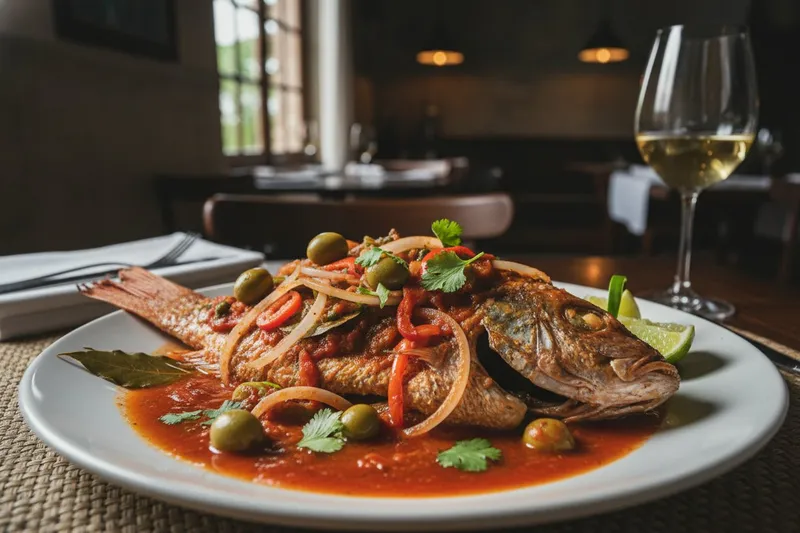
Where to eat: Mercado Hidalgo for market food. Gran Café de la Parroquia for breakfast. Los Cangrejos and El Pescador (Boca del Río) for serious seafood.
Getting to Veracruz
By air: Veracruz International Airport (VER) has direct flights from Mexico City (1 hour), Monterrey, and Guadalajara on Volaris and VivaAerobus. International connections require Mexico City or Guadalajara layovers. The airport is 8 km south of the city center; taxis cost around 200 MXN.
By bus: ADO operates premium first-class buses from Mexico City TAPO terminal (5 hours, 400–600 MXN), Oaxaca (6 hours), Puebla (3 hours), and Villahermosa (4 hours). ADO’s Platino service has lie-flat seats on overnight routes.
By car: Mexico City to Veracruz is 4–5 hours via MEX-150D (toll road, around 400 MXN in tolls). The route through Puebla and Orizaba is scenic — the climb down from the Sierra Madre toward the Gulf is one of the great road descents in Mexico.
Within the state: Renting a car gives the most flexibility for visiting Xalapa, El Tajín, Tlacotalpan, and the coast. ADO buses connect all major cities within the state.
Safety in Veracruz
The U.S. State Department rates Veracruz state at Level 2 (Exercise Increased Caution). What this means in practice:
- Veracruz city center, Boca del Río, and the Malecón: Safe for tourists. These areas are heavily frequented by Mexican families and locals. Normal city precautions apply.
- Xalapa: Safe. University city with a strong local security presence.
- El Tajín / Papantla area: Safe for tourist visits.
- Tlacotalpan: Safe. Very few tourists, peaceful river town.
- Southern Veracruz state (toward Coatzacoalcos): More caution warranted. Don’t drive rural roads at night.
- Coatzacoalcos: Industrial city; stick to main routes and daytime travel.
The primary risks in Veracruz are petty theft in crowded areas and road safety — use toll highways, avoid driving at night in rural areas, and don’t flash expensive equipment in public.
Check the latest U.S. State Department advisory at Mexico Travel Advisory 2026 before your trip.
Budget Guide
| Category | Budget | Mid-Range | Splurge |
|---|---|---|---|
| Hostel/Hotel (per night) | 300–500 MXN | 800–1,500 MXN | 2,000–4,000 MXN |
| Meals | 80–150 MXN | 200–400 MXN | 500+ MXN |
| Local transport | 20–50 MXN | 100–200 MXN | Private taxi |
| Day trip (El Tajín) | 600–900 MXN | 1,200–1,500 MXN | Private tour |
| Carnival hotel premium | 3× normal | 3× normal | 3× normal |
Daily budget: Budget traveler 600–900 MXN/day (35–55 USD). Mid-range 1,500–2,500 MXN/day (90–150 USD).
Best Time to Visit Veracruz
November–April: Best weather. Dry season, pleasant temperatures (25–30°C), low humidity. February brings Carnival — book far ahead if that’s the plan.
May–June: Increasingly hot and humid before rains start. Still manageable.
July–October: Rainy season. Afternoon downpours are typical but often short. August and September are the most intense months. Hurricane risk is real for the coast — check forecasts.
Carnival: Happens the 9 days leading to Ash Wednesday (late January to late February, varies by year). The best street festival in Mexico. Hotels book out; prices triple. Worth planning a dedicated trip around.
For more on timing your Mexico trip, see Best Time to Visit Mexico.
How to See More of the Gulf Coast
Veracruz city is the natural base for a Gulf Coast trip. Suggested structure:
- Days 1–2: Veracruz city (Malecón, La Parroquia, Fort San Juan de Ulúa, market food)
- Day 3: Xalapa day trip (Museum of Anthropology, coffee, colonial center)
- Day 4: El Tajín / Papantla (Voladores de Papantla, ruins)
- Day 5: Tlacotalpan (day trip or overnight)
- Days 6–8: Huasteca Potosina (waterfalls, natural pools — requires base shift to Ciudad Valles)
For more on Veracruz day trips, see Day Trips from Veracruz.
More reading: Things to Do in Veracruz | Mexico Travel Tips | Mexico Food Guide