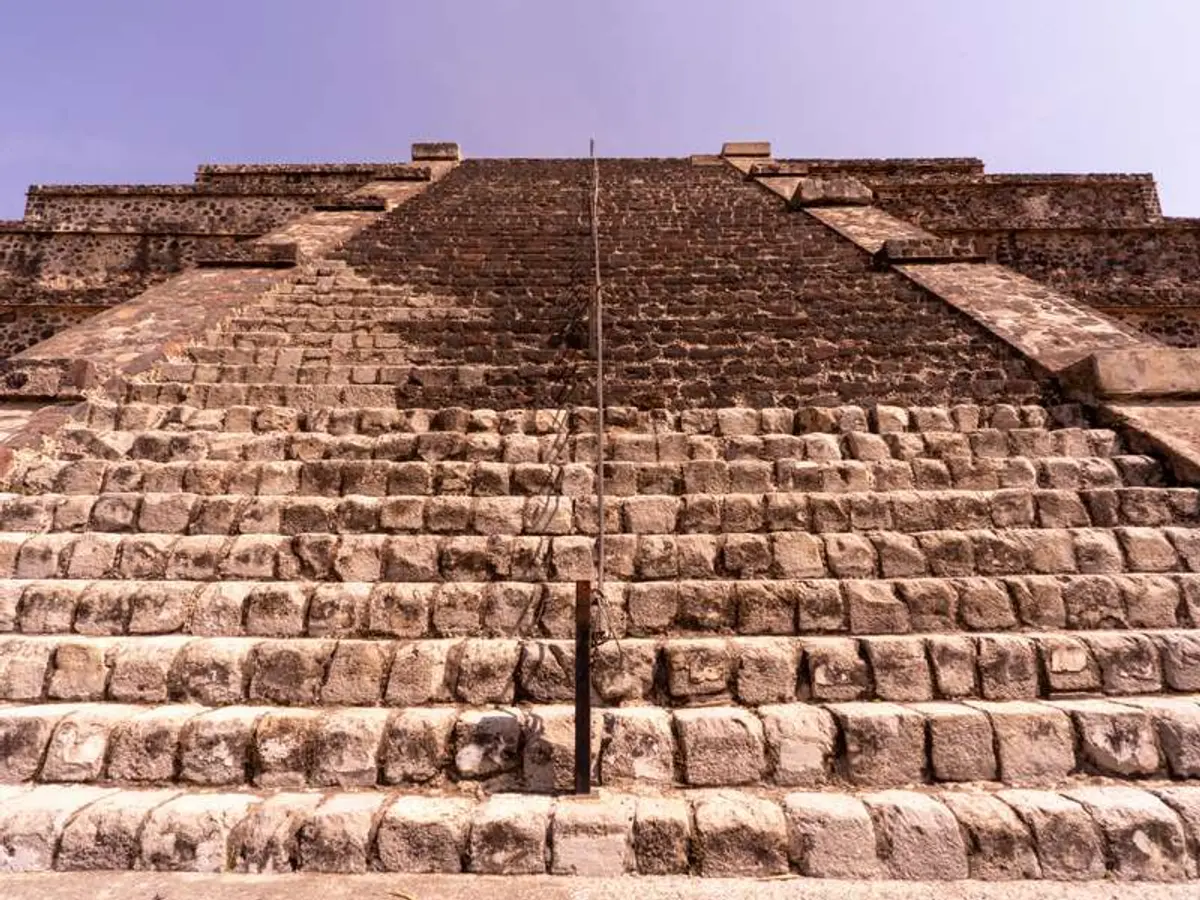
Mexico Photography Guide 2026: Best Photo Spots, Permits & Safety Tips
Mexico is one of the easiest countries in the world to photograph badly and one of the most rewarding to photograph well. The subjects are obvious, ruins, markets, colonial streets, volcanoes, desert canyons, surf towns, but the difference between average and exceptional images usually comes down to three things: arriving earlier than everyone else, knowing where photography rules change, and asking before you shoot people.
If you want the shortest answer, Mexico is best for photographers who build the trip around first-light ruins, blue-hour colonial cities, and market or street scenes handled respectfully. The biggest mistakes are assuming drones are loosely regulated, treating indigenous communities like open-air sets, and showing up to famous ruins after the tour buses.
This guide covers the best photo spots in Mexico, the permit requirements that can catch you off guard, the drone laws most tourists underestimate, and the cultural protocols that keep you from losing access or trust.
Mexico Photography Guide in 30 Seconds
| If you want to photograph… | Best place to start | Best time | Biggest mistake to avoid |
|---|---|---|---|
| Maya ruins without crowds | Chichen Itza | Gates open at 8am | Sleeping in Cancún and arriving after 10am |
| Big-city architecture and street scenes | Mexico City | Dawn to 9am, then blue hour | Carrying a full camera kit into crowded markets |
| Colonial facades and rooftop views | Oaxaca City or Campeche | Sunrise and blue hour | Only shooting at harsh midday |
| Wildlife or water photography | Holbox, Celestún, or Monarch reserves | Seasonal windows matter more than clock time | Going with the cheapest large-group boat tour |
| Colorful hillside cityscapes | Guanajuato | Early morning or night | Reaching the viewpoint too late for directional light |
| Market portraits and food scenes | Oaxaca, CDMX, Mérida | After buying something first | Photographing vendors before asking |
What Catches Photographers Off Guard in Mexico?
Before you plan lenses or routes, keep these four rules in mind:
- Some of Mexico’s most famous ruins allow personal photos but restrict tripods, commercial setups, or drones.
- Photography rules inside indigenous ceremonial spaces are not negotiable. San Juan Chamula is the clearest example.
- The best light at famous sites usually overlaps with the emptiest window. In practice, this means opening time beats sunset at many ruins.
- Respect buys access. In markets and villages, a small purchase and a direct question usually open more doors than trying to shoot unnoticed.
Top Photography Destinations
Chichen Itza: Beat the Crowds at Sunrise
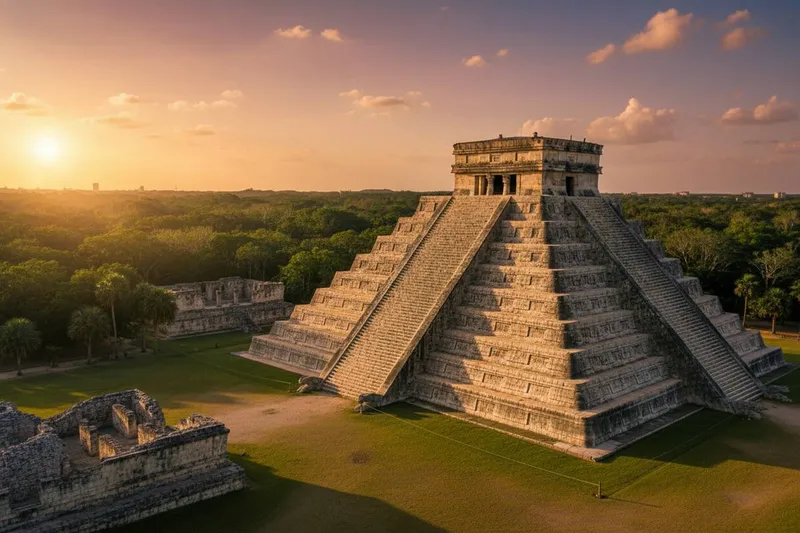
Chichen Itza is genuinely spectacular as a photograph — El Castillo pyramid is one of the most geometrically precise man-made structures in the Americas. The problem is that by 11am, the site fills with tour groups from Cancún and Playa del Carmen, and the pyramid disappears behind a crowd of 3,000 people.
The solution: arrive at 8am when the gates open. From 8am to 10am you have the site at working capacity — some people, but manageable. El Castillo catches the morning sun from the southeast, which creates a dramatic shadow effect on the north face by 9am. The Great Ball Court (the largest in Mesoamerica) is usually empty for the first hour.
Shooting position for El Castillo: Approach from the southeast corner to capture the staircase in full relief shadow. At equinox dates (March 21, September 21), the famous serpent shadow appears on the north staircase — but those dates bring enormous crowds specifically to photograph the effect. If you want the serpent, go on March 19 or 23 instead.
Staying nearby in Valladolid (40 minutes away) vs. Cancún (2+ hours) is the practical difference between getting to Chichen Itza at 8am and getting there at 11am.
Teotihuacan: Equinox Angles and Balloon Sunrise
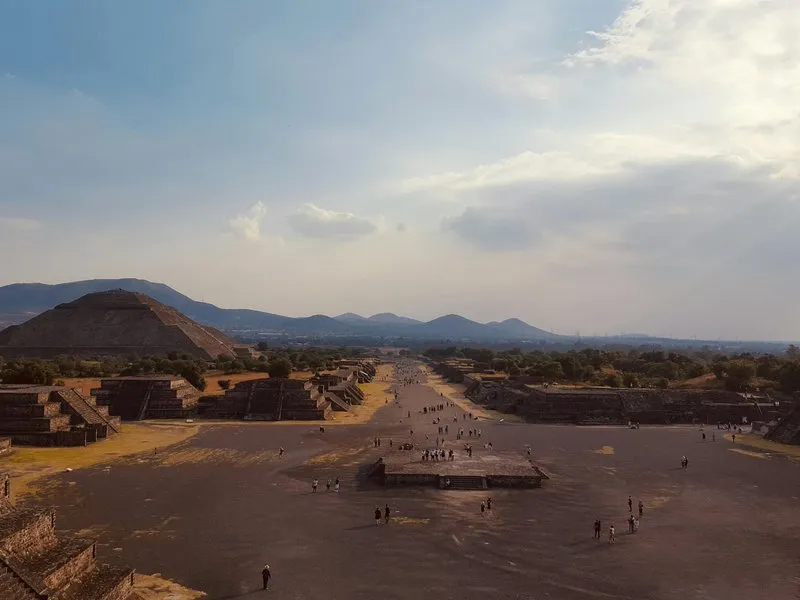
Teotihuacan, 50 kilometers from Mexico City, offers two premium photography windows:
-
Hot air balloon at sunrise: Multiple operators fly at dawn over the pyramids. Weather-permitting, the view of the Avenue of the Dead from 200 meters at 6am with the sun breaking behind the Pyramid of the Sun is extraordinary. Operators including Globos Teotihuacan run daily flights at 7,000-9,000 MXN per person.
-
Equinox angles: The Pyramid of the Sun is precisely oriented to the sunset on the equinox dates. On March 20-21 and September 20-21, the sun sets directly in line with the pyramid’s west face. Crowds are heavy on these dates — if you want the geometry without the people, visit in the week before or after.
Ground-level shooting: The Pyramid of the Moon at the northern end of the avenue photographs best from the southern approach in late afternoon light. The street of the dead runs north-south, so morning light hits the eastern walls and afternoon light hits the western walls.
Copper Canyon from El Divisadero
The Barranca del Cobre (Copper Canyon) is four times the size of the Grand Canyon. El Divisadero is the classic viewpoint — accessible by the El Chepe train — where canyon walls drop 1,800 meters directly in front of you.
Best photography conditions: Morning mist fills the canyon between 6-9am in the rainy season (June-September), creating layered fog photography with canyon ridges emerging above cloud lines. Dry season (October-April) delivers clearer panoramas but no mist. The canyon runs roughly east-west, so morning light illuminates the western walls and afternoon light hits the eastern face.
See our Copper Canyon guide for the El Chepe rail photography logistics.
Urban Photography in Mexico City
Palacio de Bellas Artes
Mexico City’s art nouveau opera house is one of the most photographed buildings in Latin America. For exterior photography: arrive before 7am when the flower vendors are setting up in Alameda Park and the building catches the low eastern sun. By 9am, tour groups and commuter traffic fill the plaza.
Interior photography is permitted during museum visiting hours (free on Sundays). The interior dome and murals by Diego Rivera and José Clemente Orozco are genuinely worth the visit — bring a wide-angle lens or shoot panoramic sequences.
Mercado Jamaica: Flowers at Dawn
Mercado Jamaica (open 24 hours) is Mexico City’s wholesale flower market. The best photography happens between 4-7am when the overnight deliveries arrive and vendors are arranging displays. Marigold mountains for Día de los Muertos season (October-November) are extraordinary. Off-season, the gladiola and rose arrangements still create color compositions unavailable anywhere else in the city.
Protocol: Walk through first, identify the composition you want, then ask. Vendors are generally receptive if you buy something — a small bunch of flowers (20-40 MXN) buys you genuine goodwill for fifteen minutes of portrait photography with the vendor.
Barrio de Tepito Murals
The neighborhood murals of Tepito are world-class street art — detailed, politically charged, technically sophisticated. They photograph beautifully.
With care: Tepito has a reputation and it’s somewhat deserved. Go in the morning (before noon), travel with someone who knows the area or join a guided street art tour, and don’t walk with expensive camera equipment on obvious display. The murals are on public streets; photography is legally permitted. Use judgment about when and how.
Nature Photography
Monarch Butterflies: November to March
The Monarch butterfly overwintering sites in Michoacán operate November through March. At peak density (December-February), trees at Cerro Pelon and El Rosario are so covered in butterflies that branches bend and you can hear the sound of millions of wings.
Photography logistics: The butterflies are most active and airborne between 10am-2pm on warm, sunny days. Cold mornings mean clusters on tree branches — easier to photograph but less dramatic. Bring a telephoto (200mm minimum) for individual butterfly portraits, and a wide angle for the forest-full-of-orange context shots.
Cerro Pelon vs. El Rosario: Cerro Pelon requires a horseback approach (no road access) and has dramatically fewer visitors. The experience is more intimate and the photography is better. See our note in the luxury section about private guides to Cerro Pelon.
Whale Sharks at Holbox: June to September
Whale sharks gather near Isla Holbox from June to September, with peak density in July and August. In the water photography requires a waterproof camera or underwater housing — the sharks feed at the surface, so depth isn’t needed, but the boat wash and surface chop make for challenging shooting conditions.
Key protocol: Mexican regulations prohibit touching whale sharks, getting within 2 meters of the tail, and using flash photography underwater near the animals. Group tours often have 8-10 swimmers in the water simultaneously, which creates documentary chaos. Private boat tours allow controlled deployment of your group, better timing, and more time in the water per person.
Pink Flamingos at Celestun
The Celestun Biosphere Reserve on the Yucatán coast harbors one of the largest flamingo colonies in North America. Best photography: March-May, when the colony is largest and the low-angle light in early morning reflects pink birds on still water against mangrove backdrops.
The boat tour takes you within 30-50 meters of the colony — telephoto lens (300-400mm) is essential for frame-filling bird portraits. The golden hour window is 7-9am before the estuary winds pick up and disturb the water surface. Early morning boats (arrange the night before in Celestun village) beat the day-tripper traffic from Mérida.
Architecture Photography
Campeche: Colored Facades on Deserted Streets
Campeche’s walled colonial city UNESCO site is photogenic in a way that’s actually accessible. The colored building facades (mustard yellow, terracotta, sky blue, forest green) on narrow colonial streets photograph best in:
- Early morning (6-8am): Empty streets, even light, pastel colors before harsh midday sun bleaches everything.
- Blue hour after sunset: The colonial buildings lit by streetlights against a deep blue sky, with zero pedestrian traffic.
The fortified walls (murallas) running the perimeter of the old city photograph well from the seaward side at any time of day — the water bounces light back onto the stone in a way that eliminates harsh shadows.
Guanajuato: Aerial from Pípila
The Monumento al Pípila above Guanajuato offers the city’s classic aerial view — the colored houses stacked up the callejones (alleyways), the university dome, the Basilica towers. Cable car operates until 9:45pm; the city at night with all lights on and fog rolling into the valley is exceptional.
For daytime photography, arrive at Pípila before 9am for raking light across the city’s east-facing facades. By noon, the city sits in flat midday light that flattens the depth.
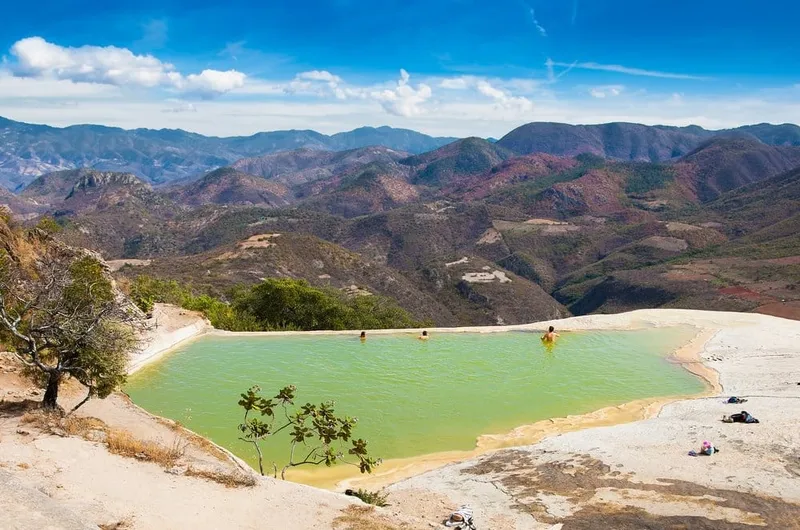
Oaxaca Colonial
Oaxaca City’s Santo Domingo church is one of the most photographed buildings in Mexico — and for good reason. The baroque gold interior photographs best with available light in the afternoon when the western windows create diagonal light shafts. Ask permission before using a tripod inside.
The rooftop of Mercado 20 de Noviembre (or any nearby building with rooftop access) gives a mid-rise view across Oaxaca’s low-rise colonial skyline with the surrounding mountains. This perspective — city at eye level, mountains beyond — is underused in Oaxaca travel photography.
Food Photography
Taco Stands: Ask First
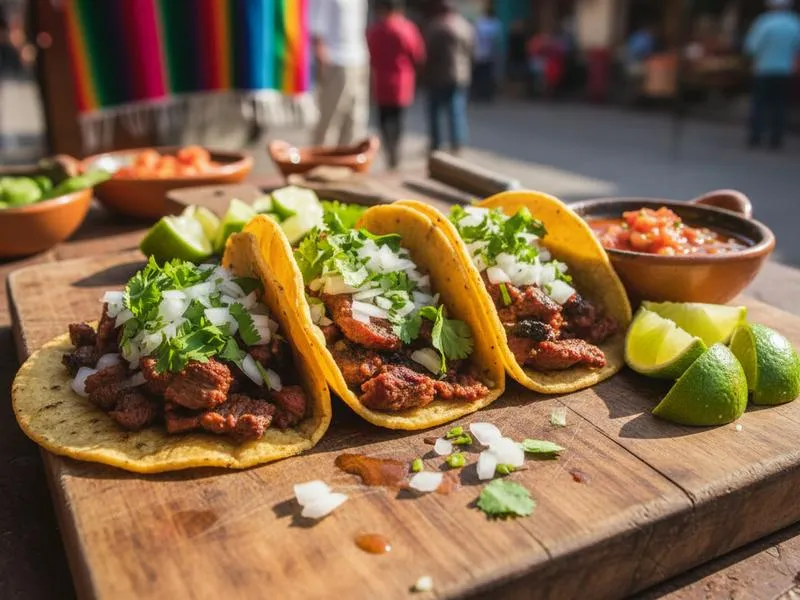
Street taco vendors operate on small margins and fast service. Walking up with a camera without buying anything is poor form. The protocol: order 3-4 tacos, eat them, show genuine appreciation, then ask if you can photograph the preparation. Almost all vendors will agree. A few won’t, and that’s their right.
The best taco photographs happen when vendors are in motion — flipping meat, stacking tortillas, ladling salsa. Static food portraits of tacos on a plate are less interesting than the live action of someone at work.
Market Vendors: Buy Something First
The same principle applies in every market from Mercado Benito Juárez in Oaxaca to Mercado de Jamaica in CDMX. Buy something small first — a mango, a bag of chiles, a handful of chapulines (grasshoppers, 20 MXN). This establishes you as a customer rather than a tourist who treats markets as photographic opportunities. The relationship changes immediately.
Portrait photography of vendors requires explicit permission in most cases. A simple “¿Le puedo tomar una foto?” (Can I take your photo?) is all it takes. More people will say yes than you expect.
Mole Negro in Oaxacan Restaurants
For food photography at Oaxacan restaurants, the black mole (mole negro) is the composition challenge worth pursuing — the contrast between the black sauce, the white chicken, and the garnish of white sesame and orange slices is exceptional in natural light. Request a table near a window. The best Oaxacan light for food photography is 12-2pm on overcast days, when the light is soft and diffuse without harsh shadows.
Permit Rules
Chichen Itza
- Standard entry fee (2026): 573 MXN (includes INAH + Yucatán state fee)
- Tripod use: Allowed with a paid permit (approximately 300 MXN). Standard photography without tripod is included in entry.
- Commercial photography and video: Requires advance authorization from INAH. Apply with your project scope, dates, and equipment list.
- Flash photography: Permitted outside but some interior spaces have restrictions.
- Drone photography: Completely prohibited. No exceptions.
Teotihuacan
- Entry fee: 100 MXN
- Tripods: A tripod permit is technically required (about 45 MXN at the entrance). Enforcement is inconsistent, but buying the permit is the right approach.
- Some ruins ban tripods entirely: Smaller sites may prohibit tripods to control flow. Check on arrival.
- Drone photography: Prohibited at all INAH sites.
General INAH Site Rules
INAH (Instituto Nacional de Antropología e Historia) manages most major archaeological sites. Photography for personal use is permitted at entry fee; professional equipment (video rigs, lighting, commercial shoots) requires advance authorization via the INAH website. Plan 2-4 weeks for commercial permit applications.
Drone Laws in Mexico
Mexico’s drone regulations are managed by the DGAC (Dirección General de Aeronáutica Civil). The key points:
- DGAC permit required for drones over 250g used for photography
- No drones at any archaeological site managed by INAH — this is absolute and enforced
- Urban restrictions in Mexico City and near all airports (standard international rules apply)
- Penalties: Unauthorized drone use can result in fines up to 50,000 MXN (approximately 2,500 USD) and equipment confiscation
- Permit application: Via the DGAC’s sistema de gestión website. Apply at least 2 weeks before your shoot with location, dates, and equipment specifications
The practical reality: drone enforcement varies significantly by location. Remote coastal areas see little enforcement. Ruins and cities are actively monitored. The 50,000 MXN fine possibility is real and has been applied. If drone photography is central to your project, apply for the permit. The application is straightforward.
Indigenous Community Rules
San Juan Chamula: Absolutely No Photography Inside the Church
This rule is categorical. The Tzotzil Maya community of San Juan Chamula, 10 kilometers from San Cristóbal de las Casas, practices a form of Catholicism blended with indigenous belief. The interior of the church is a living ceremonial space — candles, pine needles, Coca-Cola offerings, shamanistic healing rituals.
Photography inside the church = camera or phone confiscated, potential fine, possible escort out of the community.
This has happened to many tourists who thought the rule applied to other people. It does not. The community enforces it. The outside of the church (white facade, brightly painted cemetery) can be photographed.
Learn more about visiting San Juan Chamula responsibly in our San Juan Chamula guide.
Zapotec Villages in Oaxaca: Ask Permission
The Zapotec communities around Oaxaca Valley (Teotitlán del Valle, San Bartolo Coyotepec, Santa Ana del Valle) have varying attitudes toward photography. The baseline: ask before photographing people. “¿Me permite tomarle una foto?” works in most communities.
In weaving cooperatives and craft workshops, always ask the owner before photographing workers or their products. Many will agree; some won’t. Accept the answer.
General Indigenous Community Protocol
- Never photograph ceremonies unless explicitly invited. If you arrive during a festival and someone with authority invites you closer to photograph, that’s different from walking in uninvited.
- Photographing children requires parental permission. Always.
- Buy something if you photograph a market vendor’s products. The products are their livelihood.
- Turn the camera around. Show vendors and subjects the photos you’ve taken. It builds trust and often opens more access.
Golden Hour by Destination
| Destination | Best Golden Hour Direction | Window | Notes |
|---|---|---|---|
| Chichen Itza | East (sunrise) | 7-9am | Beat crowds, SE approach for El Castillo |
| Teotihuacan | West (sunset) | 5-7pm | Pyramid of the Sun from the Moon platform |
| Copper Canyon | Any direction | 6-8am (mist), 4-6pm | Mist adds depth in rainy season |
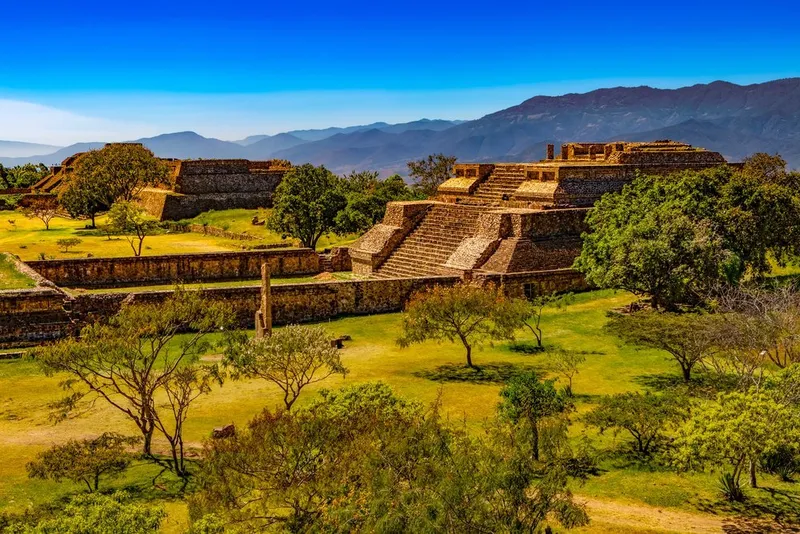
| Monte Albán | 360° hilltop | 5:30-7pm | Open until 6pm, light dramatic before close |
| Guanajuato | East-facing city | 7-9am from Pípila | Night equally good — city lights at 8pm |
| Campeche walls | West (ocean) | 6-8pm | Seawall at sunset, colored facades in blue hour |
| Bacalar Lagoon | East | 6-8am | Still water, color spectrum most vivid at dawn |
Best Instagram Spots: Effort vs. Reward
| Spot | Effort | Reward | Notes |
|---|---|---|---|
| Guanajuato from Pípila | Low (cable car) | High | Classic colored city view |
| Chichen Itza sunrise | Medium (early start) | Very High | Empty pyramid — worth the alarm |
| Campeche facades | Low (walk the old town) | High | Best light at 7am or 8pm |
| Bacalar lagoon colors | Medium (day trip from Cancún) | Very High | Most photogenic lake in Mexico |
| Teotihuacan balloon | High (cost + early start) | Exceptional | Nothing else like it |
| San Juan Chamula cemetery | Low | High | Colorful graves, no restrictions outside |
| Monarch butterflies Cerro Pelon | High (horseback, advance planning) | Exceptional | Privately guided, no crowds |
Camera Security
Mexico’s popular tourist areas have petty theft. The practical measures:
- Use a sling bag or vest rather than a backpack with an obvious camera compartment
- Carry one body, one lens in public markets and crowded streets — your full kit can wait at the hotel
- Smartphone bracket over full DSLR setup for walking around markets — same images, much less conspicuous
- Camera insurance from a specialty provider (Lenstag, Photo Guard, or as a rider on travel insurance) matters if you’re bringing 3,000+ USD in equipment
- Los Cabos and the Riviera Maya resort zones are generally safe for visible camera use; CDMX markets and Tepito murals require more discretion
Photography Tours and Workshops
Guided photography tours in Mexico offer local knowledge and location access that self-guided shooting can’t replicate — guides know which direction the light hits and when, which market vendors are receptive, and how to navigate permit requirements.
Find photography-focused tours on Viator for Oaxaca, Mexico City, Yucatán, and Copper Canyon. travel insurance USD/month covers your equipment trip and medical coverage while on location.
Continue Your Mexico Planning
For Chichen Itza logistics beyond photography, see our Chichen Itza guide. Oaxaca photography opportunities — Monte Albán, the valley villages, mezcal production — get full coverage in our Oaxaca travel guide. For the Chiapas photography scene including Chamula and the Sumidero Canyon, see our San Juan Chamula guide. Practical Mexico planning including sim cards, safety, and transport is all in our Mexico travel tips.
Mexico rewards photographers who show up early, learn a little Spanish, and treat subjects with genuine respect. The images you get from asking “¿Le puedo tomar una foto?” are almost always more interesting than the ones you take without asking.