What Is Mezcal? Taste, Types & How to Drink It
Mezcal is a Mexican spirit distilled from agave, usually after the agave hearts are roasted in an underground pit. It can taste smoky, earthy, fruity, floral, or vegetal depending on the agave and producer. This guide explains how mezcal differs from tequila, which types to try first, how to drink it, and how to choose a bottle or visit an Oaxaca palenque.
If you want the comparison between mezcal and tequila specifically, we have a dedicated Tequila vs Mezcal guide that covers that ground. This post goes deeper — into agave species, legal categories, how to visit a working palenque, and how to read a label before you buy.
What Makes Mezcal Different
Mezcal is the original distilled agave spirit. Tequila came later, as a regional industrialized version of the concept — limiting itself to blue agave in a specific territory and scaling production with modern equipment.
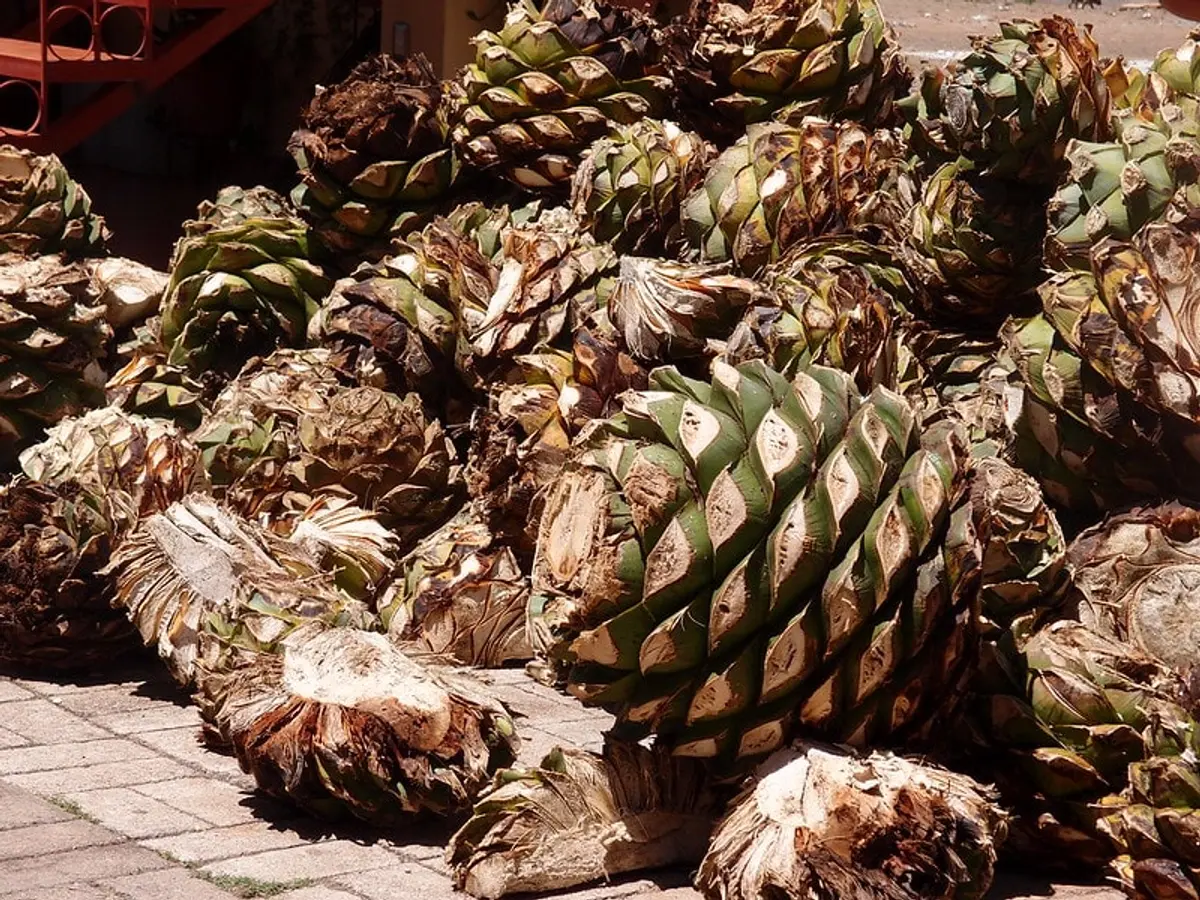
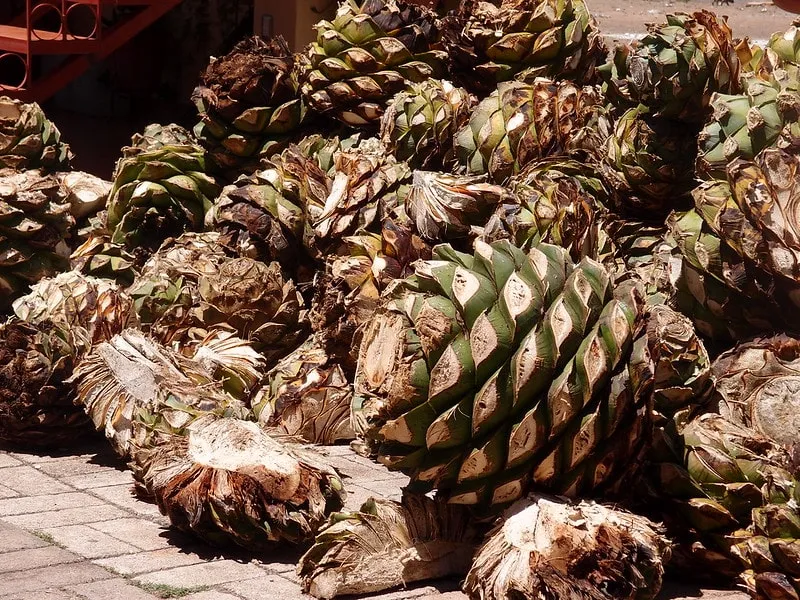
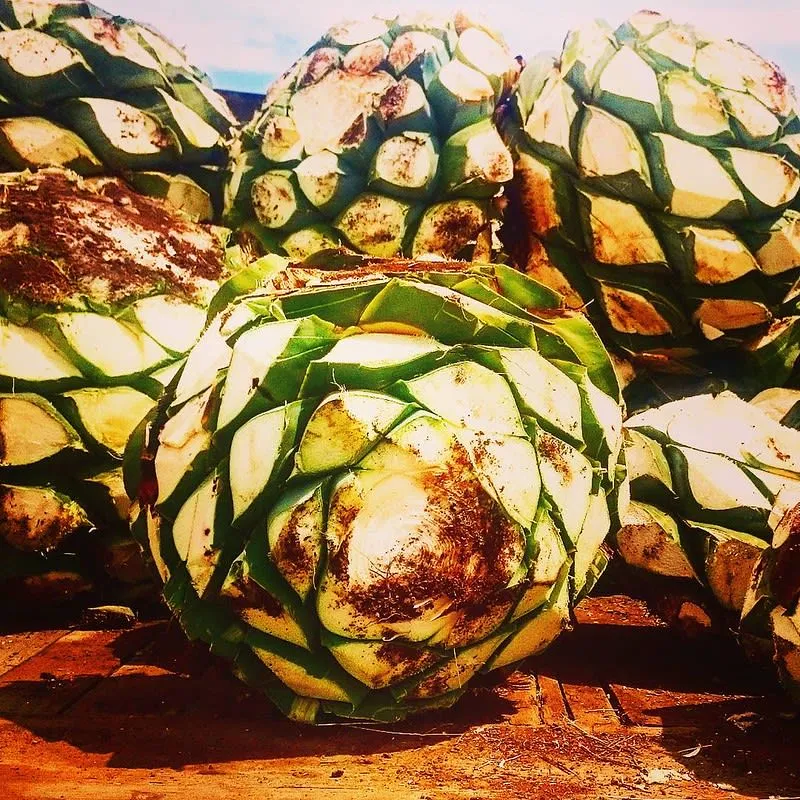
Mezcal, by contrast, allows any agave species from a legally defined denomination. That means the diversity of raw material is enormous: over 50 agave species can legally be used, each with distinct sugars, fibers, and flavor compounds. The traditional production method — roasting the piña (heart) of the agave in an underground pit, crushing it manually or with a stone wheel pulled by horse or donkey, fermenting in open-air wooden vats, distilling in clay or copper pots — is preserved by regulation at the higher tiers.
The smoke that defines many mezcals comes directly from that pit roasting. The piñas sit over burning wood inside an earthen oven for three to five days. The sugars caramelize, the smoke permeates the fibers, and that character carries through fermentation and distillation into the final spirit.
This is not a defect. It is the point.
The 3 Legal Categories: A Pyramid
Mexico’s Consejo Regulador del Mezcal (CRM) defines three tiers based on production method. Think of it as a pyramid: the widest base is the most common and most commercial; the apex is the rarest and most traditional.
Mezcal (Base Category)
Industrial or semi-industrial production is permitted. Autoclaves (pressure cookers) can replace pit ovens for cooking. Diffusers can replace stone wheels. Stainless steel tanks for fermentation. The result is consistent and clean but lacks the depth and character of the categories above.
Most bottles you’ll find in airport duty-free and hotel minibars are in this category, even if the label doesn’t say so. Check for “Mezcal” with no further descriptor.
Artesanal Mezcal (Middle Tier)
Still requires traditional pit or above-ground clay oven roasting. Mechanical crushing is allowed (up to a point), but fermentation must be in wood, stone, clay, or animal hide — no stainless steel. Distillation in copper or clay pot stills. This is where most craft mezcal sits. Del Maguey, Rey Campero, and most respected small producers fall here.
Ancestral Mezcal (Apex)
The strictest category. Pit roasting required. Crushing only by stone tahona or wooden mallet. Fermentation in natural vessel — wood, stone, clay, or the hollowed-out agave trunk itself. Distillation only in clay pot stills (not copper). Production quantities are tiny because the method is labor-intensive and low-yield. Ancestral mezcal is rare, expensive, and worth every peso.
Agave Species Guide
The agave you’re drinking from is more important than the producer’s name. Here are the main species you’ll encounter:
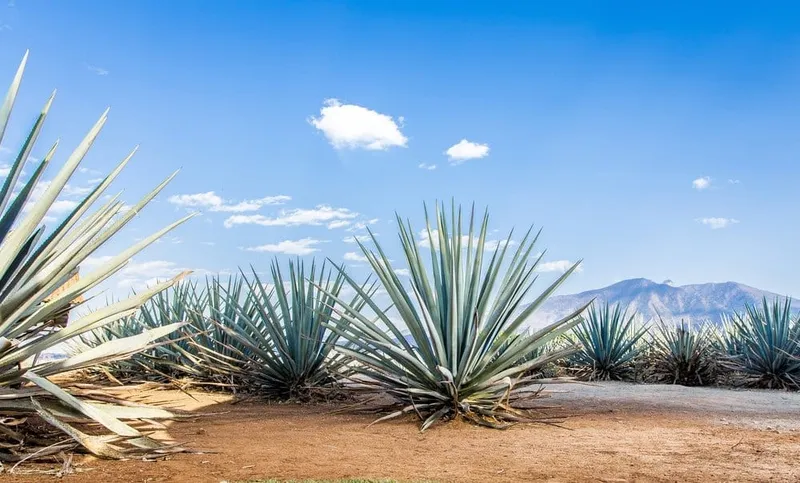
Espadín (Agave angustifolia) Roughly 90% of all mezcal production uses espadín. It matures in 7-12 years, can be cultivated (not just wild-harvested), and produces reliably. The flavor profile is earthy, smoky, and approachable — a good entry point to the category. Most espadín is artesanal category. Price range: relatively affordable at 600-1,000 MXN per bottle at palenque.
Tobalá (Agave potatorum) A wild-harvest agave that grows in rocky hillsides at altitude. Takes 12-15 years to mature, cannot be efficiently cultivated, and produces significantly less liquid per plant than espadín. The flavor is floral, complex, sometimes berry-forward — very different from espadín. Tobalá is expensive because of scarcity, and some species are at risk. Buy from producers who track wild harvests. Price: 1,200-2,000 MXN at palenque.
Cuishe and Madrecuixe (Agave karwinskii varieties) Long, narrow piñas that grow vertically rather than in the classic rosette. Cuishe produces a vegetal, herbaceous mezcal with less smoke than espadín. Madrecuixe is slightly more bitter and mineral. Both are Oaxaca-specific and hard to find outside the state. These reward exploration.
Tepeztate (Agave marmorata) Wild-harvest only. Takes 25+ years to mature — the plant you’re drinking was growing before you were born. The flavor is intensely vegetal, wild, almost medicinal. Not for everyone, but nothing else tastes like it. Due to maturation time and wild-only status, sustainability questions apply. Ask the producer how they source.
Arroqueño (Agave americana var. oaxacensis) Large plant, 15-20 year maturation. Produces a rich, fruit-forward mezcal with notes of tropical fruit and earth. Less common than espadín but not as rare as tobalá. Excellent from producers in the Miahuatlán region.
How to Drink Mezcal Properly
Many bars serve mezcal in the wrong vessel at the wrong temperature with the wrong accompaniments. Here’s what traditional consumption looks like:
The Vessel: Copita A small clay cup, roughly 30-50ml capacity. The porous clay doesn’t interfere with flavor the way plastic or some metals do, and the small size prevents gulping. If a bar gives you a shot glass, you can ask for a copita. If they don’t have one, use a small wine glass — never a shot glass.
Temperature Room temperature. Mezcal should not be chilled. Cold suppresses the volatile aromatics that carry the flavor. Many of the interesting flavor compounds in quality mezcal only reach your nose at room temperature. Ice is not appropriate here.
The Accompaniment: Sal de Gusano The traditional pairing is a slice of orange (not lime) with sal de gusano on the side. Sal de gusano is a mixture of coarse salt, dried ancho or pasilla chile, and ground dried maguey worm (the larva that feeds on agave). It sounds alarming. It tastes like a smoky, savory, slightly spicy salt. It complements mezcal rather than masking it.
Lime is tequila. Orange is mezcal.
No Shooting Shooting mezcal is wasteful and defeats the purpose. The aromatics, the finish, the complexity — these require time on the palate. Sip, let it rest, breathe through your nose, notice what comes. A 30ml copita should last five minutes minimum.
The Palenque Visit Guide
Santiago Matatlan: The Village of Mezcal
Santiago Matatlan sits 45km southeast of Oaxaca city on Highway 190. The town has over 200 registered palenques — working distilleries, most of them small family operations that have been running for generations. Driving through, you’ll see agave planted in every direction, small roadside stands with bottles, and the occasional plume of smoke from an active pit.
This is a real working town, not a tourist attraction. Treat it accordingly.
Getting There From Oaxaca city: collective taxi from the second-class bus terminal (30-40 MXN, 45 minutes) or private taxi (300-400 MXN round trip). Don’t rent a car if you’re going to taste seriously.
What to Bring
- Cash (pesos) — most palenques don’t take cards
- Closed-toe shoes — the production areas are muddy and hot
- A small notebook if you’re serious — you’ll taste several and forget which was which
- An empty bag or backpack for bottles
How to Visit Walk in, introduce yourself, ask if you can see the production. Almost all palenques welcome visitors who show genuine interest. You’ll see the earthen pit, the stone tahona wheel, the open fermentation vats, and the clay or copper stills. The process takes 2-4 weeks from roasting to bottling.
Tasting is expected. Buying is your choice. Don’t feel pressured to buy at every stop — one or two bottles from producers you really liked is better than six bottles purchased out of guilt.
Buying Direct vs Market At the palenque: you get the actual producer price, you can ask questions about the agave source and production method, and you know what you’re getting. At Oaxaca city markets: more selection in one place but higher prices and less provenance information. For gifts and experiments, the city is convenient. For serious bottles you know you love, go to the palenque.
Joven, Reposado, and Añejo
Unlike tequila, where aging is often considered desirable, the mezcal world is divided on this question.
Joven (unaged) — The vast majority of quality mezcal is joven, released fresh from the still without oak aging. This preserves the agave character, the terroir of where the plant grew, and the production method’s influence unobscured. Most mezcal connoisseurs prefer joven.
Reposado (rested 2-11 months in oak) — Some producers rest their mezcal in used bourbon or wine barrels. Done carefully, it can add vanilla and caramel notes that complement the agave. Done carelessly, the oak covers everything interesting.
Añejo (aged 1-3 years) — Less common in mezcal than in tequila. The risk is that a 25-year-old agave plant’s flavor character gets buried under 18 months of oak. Some producers do it beautifully. Approach with curiosity and skepticism.
A simple rule: buy joven first. If you fall in love with a producer, then try their aged expressions.
How to Read a Mezcal Label
Mexican law requires specific information on mezcal labels. Here’s what to look for:
NOM Number (Norma Oficial Mexicana) The NOM number identifies the specific distillery. You can look up any NOM at the CRM website to see the registered producer, location, and category. If two bottles have the same NOM, they came from the same distillery regardless of brand name. This is useful for spotting when large companies repackage the same mezcal under different labels.
DO (Denominación de Origen) Mezcal’s denomination of origin covers Oaxaca (the largest), Guerrero, San Luis Potosí, Durango, Zacatecas, Guanajuato, Tamaulipas, Michoacán, and Puebla. The state of origin matters because different states have distinct agave species and traditions.
Category Must be one of: Mezcal, Artesanal, or Ancestral. If the label just says “Mezcal” with no further category, it’s the base industrial tier.
Agave Species Required on the label. If it just says “agave” without specifying the species, that’s a red flag.
ABV Mezcal typically runs 40-55% ABV. Higher ABV mezcals (above 48%) often have more flavor concentration — the water added to reduce ABV can dilute aromatic compounds. Some ancestral mezcals come off the still at 55-60%.
Lot and Batch Number Traditional mezcal is made in small batches. Batch numbers indicate this is a real production run, not an industrial blend.
Brands Worth Knowing
For Introduction:
- El Silencio Espadín — widely available, approachable, good entry point
- Banhez — made from ensemble (espadín + barril blend), light and slightly sweet, good for non-mezcal drinkers
For the Serious:
- Del Maguey — the brand that introduced artisanal mezcal to the international market; their village-specific single-origin expressions (Chichicapa, San Luis del Río) are benchmarks
- Rey Campero — family producer in Candelaria Yegolé, excellent tobalá and cuishe
- Real Minero — one of the few ancestral category producers, clay pot distillation, outstanding
Avoid: unmarked bottles in tourist shops priced under 400 MXN. Also avoid “mezcal” with a fake worm in the bottle — real mezcal doesn’t have a worm (that’s a marketing gimmick from mid-20th century commercial brands). The worm (gusano) belongs in the sal de gusano, not the bottle.
Price Guide
| Format | Price Range |
|---|---|
| At palenque (espadín, artesanal) | 600-1,000 MXN |
| At palenque (tobalá, rare species) | 1,200-2,500 MXN |
| Retail in Oaxaca city (artesanal) | 1,200-2,000 MXN |
| Retail in Oaxaca city (rare/ancestral) | 2,000-4,000 MXN |
| Bar pour (30ml copita) | 80-200 MXN |
| Tourist shop budget bottles | Avoid |
Top Mezcal Bars in Oaxaca City
In Llano (Barrio de Jalatlaco and Centro)
La Mezcaloteca — One of the original serious mezcal bars in the city. Small, focused, knowledgeable staff who will guide you through a tasting. No menu — you describe what you want and they find it. Reservations recommended.
Sabina Sabe — Cafe by day, mezcal bar by night. Good food, excellent mezcal selection, lively atmosphere without being a tourist trap. Strong list of small-producer espadín and ensemble expressions.
Cuish Mezcalería — Named after the agave variety, this bar specializes in rare species. If you want to try cuishe, madrecuixe, or tepeztate side by side, this is the place.
El Destilado — Restaurant and mezcal bar. The food program is excellent and they source mezcal thoughtfully. Good for a full evening rather than just drinks.
In Hotel / Upscale: Coqueta Mezcalería (Hotel Virreyes area) — Higher prices, polished service, good for special occasions or impressing guests. The mezcal list is serious despite the upscale setting.
Responsible Consumption
Several agave species used in mezcal production are at risk due to over-harvesting. Wild agave takes years to decades to mature; demand from a booming international market is outpacing natural regeneration in some regions.
Ask producers about their sourcing practices. Questions to ask:
- Is this agave cultivated or wild-harvested?
- Do you replant or maintain wild populations?
- Is this species from your own land or purchased?
Brands like Del Maguey, Real Minero, and El Jolgorio work with communities and support sustainable agave management. Buying from producers who answer these questions honestly is the right approach.
Book a Mezcal Experience
A guided mezcal tour from Oaxaca typically includes palenque visits, an expert explaining production at each step, structured tastings of multiple expressions, and help selecting bottles to take home. These are genuinely excellent value — a knowledgeable guide transforms the experience.
Browse Oaxaca mezcal tours on Viator →
Related Guides
- Tequila vs Mezcal — the full comparison
- Oaxaca Travel Guide — where to stay, eat, and explore
- Day Trips from Oaxaca City — including Santiago Matatlan
- Things to Do in Oaxaca — markets, ruins, cuisine
- Mexico Food Guide — the full cuisine picture