Snorkeling in Mexico 2026: 15 Best Spots & What to Expect
Snorkeling in Mexico: Two Coasts, Multiple Worlds
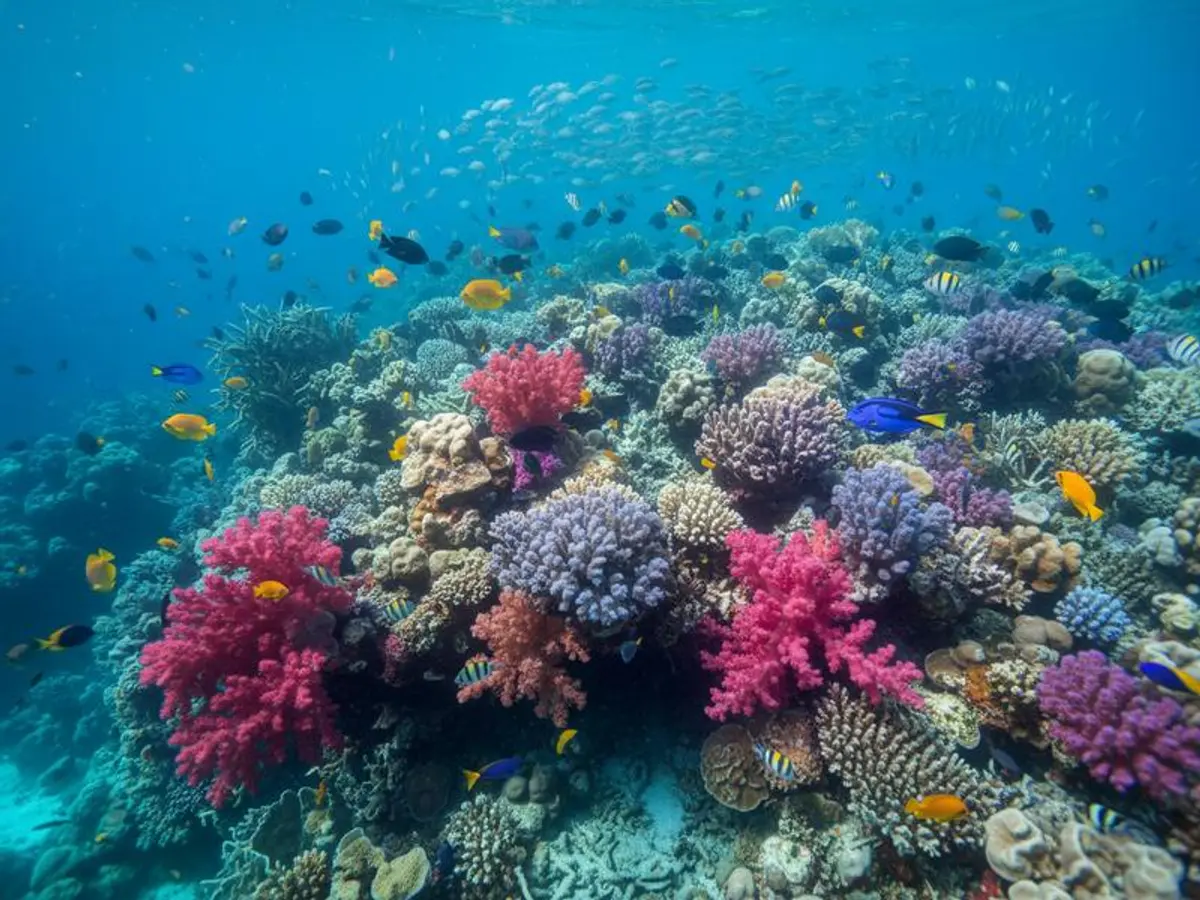
Mexico offers snorkeling across three distinct environments: the Caribbean side (Mesoamerican Reef — the world’s second largest, with some of the clearest warm water on earth), cenotes (flooded limestone caves and open pools with fresh/saltwater halocline layers unlike anything in open ocean), and the Pacific and Baja coasts (different species, different character, and the mega-fauna encounters — sea lions, hammerheads, mobula rays).
This guide ranks 15 of the best snorkeling spots across all three, with honest information about visibility, access, and what you’ll actually see.
Caribbean Reef Snorkeling (5 Spots)
1. Cozumel — Palancar Reef & Santa Rosa Wall
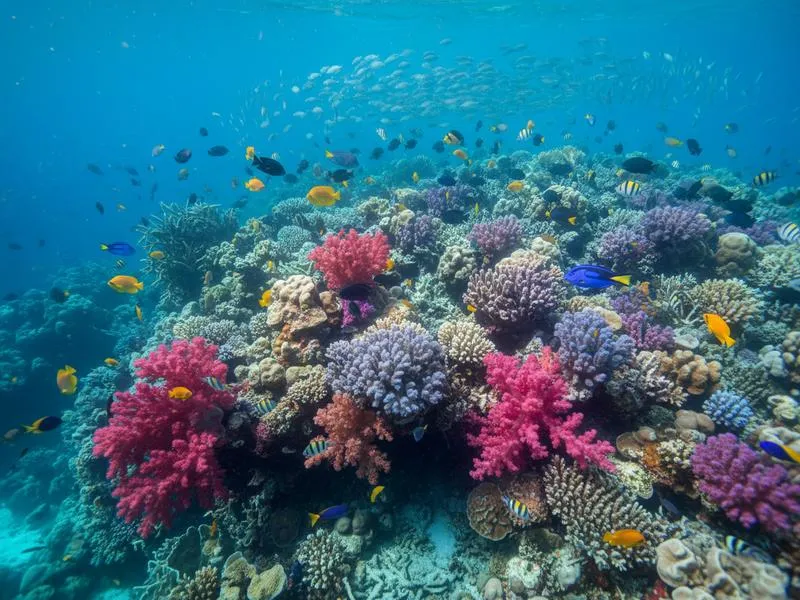
Cozumel is one of the top snorkeling and diving destinations on earth, and its reputation is completely deserved. Palancar Reef and Santa Rosa Wall are sections of the Mesoamerican Reef — 30+ meters of visibility in calm conditions, coral formations in every color, sea turtles, eagle rays, nurse sharks, and schools of fish dense enough to block the light.
The key advantage of Cozumel for snorkeling: the island sits in the path of a consistent west-to-east current that flushes the water clean constantly. The west coast (where almost all snorkeling takes place) is sheltered from Atlantic swell. The result is reliably flat, clear water even when the mainland coast gets choppy.
How to go: Day-trip by boat from the waterfront in San Miguel de Cozumel. Multiple operators offer snorkel tours to 3-4 sites per trip. Book in person at the pier or through Viator in advance.
Cost: 600-1,200 MXN for a half-day snorkel tour from Cozumel. Day trips from Playa del Carmen (including ferry) run 1,200-1,800 MXN.
Visibility: 20-40m year-round. Best October-May.
For full Cozumel planning, see our Cozumel travel guide.
2. Puerto Morelos Reef — Quintana Roo
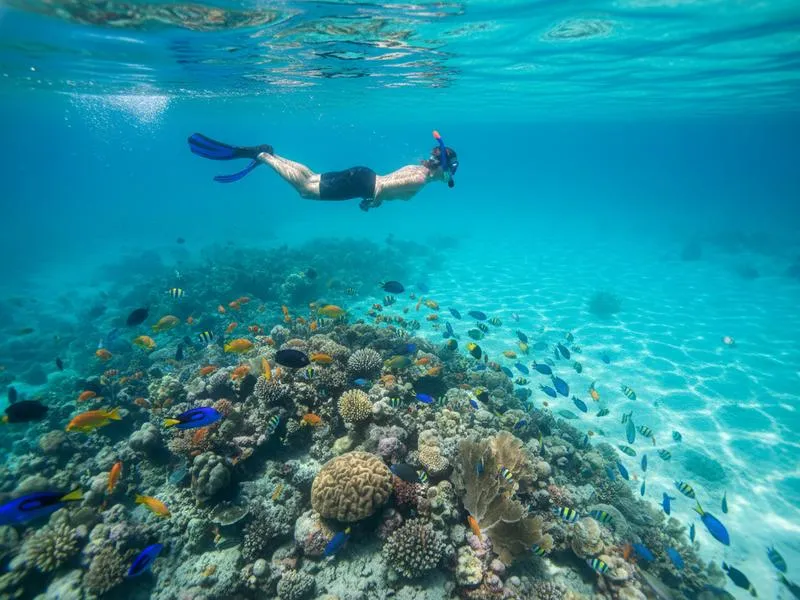
Puerto Morelos sits on one of the largest sections of living coral reef on the Mexican Caribbean coast — 500 meters offshore in water that’s often flat calm due to the reef breaking offshore swell. The entire reef is a national park, which means anchor damage is restricted and fishing is banned. The result is a healthier, more intact reef than you’ll find at most other Yucatan sites.
Shore snorkel? No — the reef is 500m offshore. Take a boat tour (30-minute rides, frequent departure from the pier).
Cost: Tours 500-800 MXN per person, typically 2 hours.
Sargassum: Puerto Morelos faces east. Sargassum can affect the beach April-October, but offshore reef conditions are usually unaffected once you’re on the water.
3. Akumal Bay — Sea Turtles — Quintana Roo
Akumal (“place of turtles” in Mayan) delivers exactly what the name promises: year-round sea turtle encounters in a calm, shallow bay that’s ideal for snorkeling. Green sea turtles and loggerheads graze on the seagrass beds in 2-4 meters of water. On a good morning, you’ll see 5-15 turtles within 200 meters of shore.
The key: Arrive early. By 8am conditions are calm and turtles are active. By 10am, tour boats arrive in numbers and the bay gets crowded. The turtles don’t leave, but the experience degrades.
Access: Shore snorkel from the beach (200 MXN entrance through the access road). Mask and fins rental available.
Rules: No sunscreen in the water (reef-safe mineral sunscreen only if you must). Keep 2 meters from turtles. No touching, no flash photography.
4. Los Islotes — Isla Mujeres (Sea Lions)
A short boat trip from Isla Mujeres, Los Islotes is a rock outcrop where a colony of Caribbean monk seal… no, that’s extinct. What you actually find here are a small number of sea lions that were somehow introduced — the exact story varies by tour guide. It’s an unusual encounter, nothing like the sea lion colonies of Baja, but genuine and worth the trip.
Access: Half-day tour from Isla Mujeres, 800-1,400 MXN including snorkel gear.
Visibility: 15-25m. Water is Caribbean warm year-round.
5. MUSA — Cancún Underwater Sculpture Museum
The Museo Subacuático de Arte (MUSA) is a series of 500+ life-size sculptures installed on the ocean floor in 3-10 meters of water off Cancún and Isla Mujeres. The sculptures are made of pH-neutral concrete that encourages coral growth — over the years they’ve become artificial reefs colonized by fish, corals, and sponges.
Snorkeling over MUSA’s shallow zones (3-6m) is a genuinely weird and memorable experience: crowds of human figures standing on the sand, faces weathered by years of growth, coral blooming from their shoulders.
Cost: 600-1,200 MXN for a guided boat tour with snorkel equipment.
Visibility: 10-20m. Best in dry season.
Cenote Snorkeling (4 Spots)
Cenotes are flooded limestone sinkholes — the collapsed ceiling of the Yucatan’s vast underground river network. They offer an experience completely different from ocean snorkeling: freshwater (or a halocline where fresh meets salt in a visible layer), cathedral-like light shafts, stalactites, crystal clarity, and complete calm.
Note on reef-safe sunscreen: Sunscreen is banned in cenotes. Chemical UV filters damage the aquifer. Use a long-sleeved UV-protective top instead.
6. Gran Cenote — Tulum
The most accessible and beautiful of the Tulum-area cenotes for snorkeling: a large, partly covered cave system with an open swimming area, crystal-clear fresh water, and the halocline visible as a shimmering lens where fresh groundwater meets ancient salt water below.
Snorkeling the cave sections (with a guide) reveals stalactites and stalagmites that formed thousands of years ago when these passages were dry. The light plays differently in cave cenotes — sunbeams enter through cracks and holes, creating blue columns in the water.
Cost: 150 MXN entrance.
Hours: 8am-4:30pm. Arrive early — afternoons get crowded.
Getting there: 4km from Tulum town center. Bicycle, taxi, or tour.
For more cenotes in the Yucatan, see our guide to the best cenotes in Mexico.
7. Dos Ojos — Quintana Roo
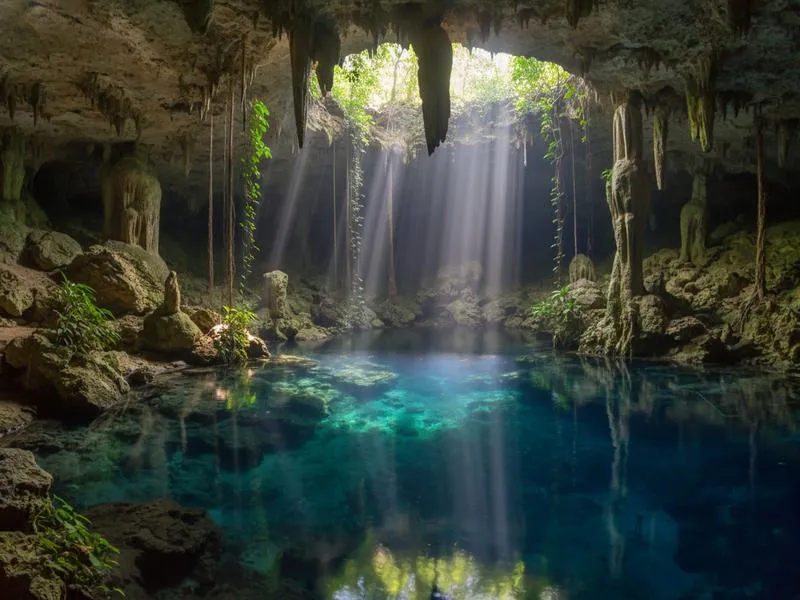
Two connected cave cenotes — “Dos Ojos” means “two eyes” — that form part of the Sac Actun cave system. Snorkeling Dos Ojos means entering the cave passages with a guide and floating through passages where the water is so clear it’s almost invisible below you.
The halocline at Dos Ojos is dramatic — a visible layer where fresh water floats above ancient salt water, creating a warping lens effect that makes the cave floor appear to ripple.
Cost: 100 MXN entrance. Guided cave snorkel tours 400-800 MXN through local operators.
Logistics: 10km north of Tulum. Bring your own mask for the best fit.
8. Cenote Azul — Quintana Roo
A large, open cenote with shallow edges and deeper center sections — more like a natural swimming pool than a cave. Excellent for families and beginners: no confined spaces, good natural light, shallow enough to stand in large sections.
Cost: 100 MXN entrance.
Who it’s for: First-time cenote visitors, families with children, those who find cave snorkeling claustrophobic.
9. Ik Kil — Yucatan
The famous “waterfall cenote” near Chichén Itzá — hanging vines from the rim, small waterfalls trickling down the walls, a circular pool 26 meters below the surface. Snorkeling the center (30-40m deep in the middle) while looking up at the circular opening of sky above is a particular experience.
Cost: 180 MXN entrance.
Timing: Arrive before 10am. Ik Kil is on every Chichén Itzá tour itinerary and becomes very crowded by mid-morning.
Fish: Ik Kil has a population of small catfish visible just below the surface.
Pacific Snorkeling (3 Spots)
10. Cabo Pulmo Marine Reserve — Baja California Sur
In the 1990s, Cabo Pulmo was a dying reef. Local fishing families made the decision to stop fishing their waters entirely. The result is one of the most extraordinary marine recovery stories anywhere: biomass in the protected area increased by 463% in 10 years. Cabo Pulmo today has more fish per square meter than almost anywhere in Mexico.
The reef is the northernmost coral reef in the eastern Pacific. Visibility is 15-25m. Species include bull sharks, giant schools of jacks, manta rays, hawksbill turtles, moray eels, and — seasonally — hammerhead sharks.
Access: 4WD required for the last section of road. Limited accommodation in the village (book ahead). Day trips possible from Los Cabos (4hr drive each way — most people stay overnight).
Cost: Snorkel tours from the village 600-1,000 MXN.
Season: Year-round, but October-May for the calmest conditions.
11. Los Arcos — Vallarta, Jalisco
A group of rocky islands and natural arches 15 minutes by boat from Puerto Vallarta. The submarine rock formations are covered in coral and home to parrotfish, angelfish, moray eels, and manta rays. Visibility is typically 10-20m — not Caribbean standard but very good for the Pacific.
Access: Boat tours from Puerto Vallarta beach (30 min setup + 15 min ride). Book through pier operators or Viator.
Cost: 700-1,200 MXN for a half-day boat tour.
12. Marieta Islands — Nayarit
The Islas Marietas are uninhabited islands off Punta de Mita, designated a UNESCO Biosphere Reserve. Snorkeling the underwater caves and around the rocky perimeter gives encounters with sea turtles, blue-footed boobies on the rocks above, reef fish, and occasionally dolphins.
The famous “hidden beach” (Playa Escondida, accessible only by swimming through a tunnel) is on the same islands — a separate permit is required to access the beach itself.
Access: Day tours from Punta de Mita or Sayulita. Permits required — visitor numbers are capped by SEMARNAT. Book well in advance.
Cost: Tours 1,000-1,800 MXN including permit fee.
Baja California Snorkeling (3 Spots)
13. Espíritu Santo Island — La Paz
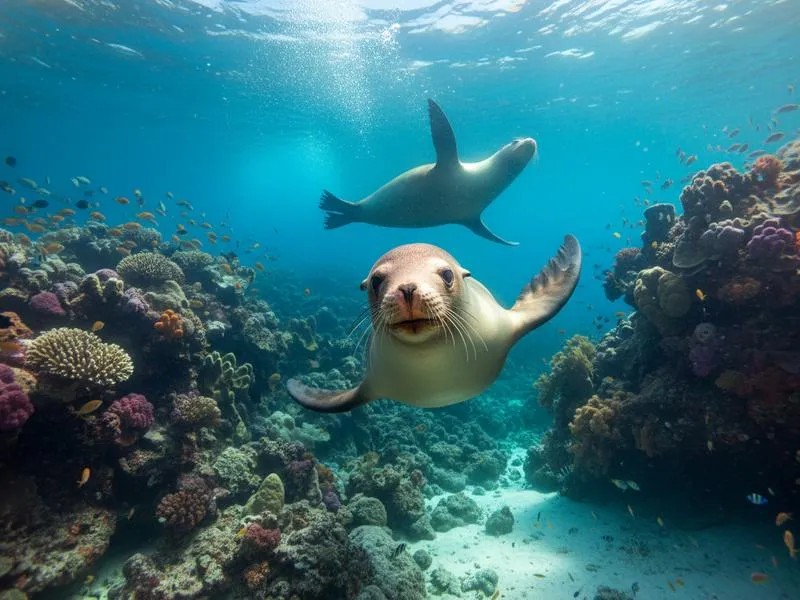
Espíritu Santo is a UNESCO World Heritage island 25km off La Paz in the Sea of Cortez. The island has a permanent sea lion colony of several hundred animals — genuinely curious, playful, and accustomed to snorkelers. Snorkeling here involves sea lions circling you, coming within arm’s reach, spinning upside down to show off.
Beyond the sea lions: hammerhead sharks (seasonal, at depth — occasionally visible on surface), mobula rays in large schools, whale sharks (October-May, separate from Holbox season), and spectacular reef fish diversity.
Cost: Day tours from La Paz 900-1,600 MXN including equipment, guide, and lunch.
Season: Year-round for sea lions. October-May for whale sharks. December-February for large hammerhead aggregations at El Bajo seamount nearby.
For full La Paz planning, see our La Paz travel guide.
14. El Bajo Seamount — La Paz
A submerged seamount 40km offshore from La Paz. The nutrient upwelling draws scalloped hammerhead sharks in large schools from December through February — an extraordinary open-water snorkel experience when conditions cooperate.
Who it’s for: Experienced, confident snorkelers comfortable in deep open water. This is a boat trip to open ocean, not a sheltered bay.
Cost: Liveaboard or fast day-boat from La Paz, 1,500-3,000 MXN. Limited operators run this trip.
15. Balandra Bay — La Paz
The calmest, most accessible snorkel site in Baja: a shallow, protected bay north of La Paz with flat water and seagrass beds hosting rays, small sharks, and reef fish. Perfect for beginners, families, and anyone who wants a relaxed, independent snorkel.
Access: 20 minutes north of La Paz by car. Public beach, no entrance fee.
Visibility: 5-15m. Variable depending on tide and conditions.
Note: Arrive early — Balandra is a popular day-trip destination for La Paz locals on weekends.
Visibility by Location (Monthly Average)
| Location | Jan-Mar | Apr-Jun | Jul-Sep | Oct-Dec |
|---|---|---|---|---|
| Cozumel west coast | 25-40m | 20-35m | 15-30m | 25-40m |
| Puerto Morelos | 15-25m | 10-20m | 10-15m | 15-25m |
| Akumal bay | 8-15m | 5-12m | 5-10m | 10-18m |
| Gran Cenote | 30-50m | 30-50m | 30-50m | 30-50m |
| Dos Ojos | 30-50m | 30-50m | 30-50m | 30-50m |
| Cabo Pulmo | 15-25m | 10-20m | 10-20m | 15-25m |
| Espíritu Santo (La Paz) | 15-25m | 10-20m | 8-15m | 15-25m |
Cenotes are freshwater with near-constant visibility year-round. Ocean sites vary with season, rainfall runoff, and sargassum.
Guided vs Shore Snorkel by Site
| Site | Shore Snorkel? | Boat Required? | Guide Required? |
|---|---|---|---|
| Cozumel Palancar | No | Yes | No (boat only) |
| Puerto Morelos reef | No | Yes | No (boat only) |
| Akumal bay | Yes | No | No |
| Los Islotes | No | Yes | No |
| MUSA | No | Yes | No |
| Gran Cenote | Yes | No | Recommended for cave sections |
| Dos Ojos | Yes | No | Yes for cave sections |
| Cenote Azul | Yes | No | No |
| Ik Kil | Yes | No | No |
| Cabo Pulmo | Yes (some sites) | Optional | No |
| Los Arcos | No | Yes | No |
| Marieta Islands | No | Yes | Yes (permit required) |
| Espíritu Santo | No | Yes | Recommended |
| El Bajo | No | Yes | Yes |
| Balandra Bay | Yes | No | No |
Snorkeling Gear Guide
Mask: Rent is fine for casual snorkeling. For multiple days or if you’re particular about fit, bring your own — a properly-fitted mask is the difference between a good and great experience. Make sure it seals without leaking before you enter the water.
Reef-safe sunscreen: In Mexico, chemical sunscreen is legally prohibited in cenotes and national park reefs. Oxybenzone and octinoxate bleach coral and damage aquifer ecosystems. Use reef-safe mineral sunscreen (zinc oxide or titanium dioxide only) or, better, a UV-protective long-sleeved rash guard that covers your arms, back, and neck.
Fins: Standard open-heel fins work well for reef snorkeling. In cenotes, fins are often not permitted (they kick up sediment and disturb the formations). Check before you pack.
Wetsuit: Not needed for the Caribbean or Pacific coast May-October (water 28-30°C). November-February: the Caribbean is still warm (25-27°C) but a 1mm wetsuit or rash guard makes a 3-hour snorkel comfortable. Cenotes run cool (about 24°C) year-round — a rash guard helps.
Sargassum: Which Sites Are Affected?
Sargassum (floating seaweed masses) affects Mexico’s Caribbean east coast from roughly April through October each year. It collects on beaches and in the water column.
Sites usually unaffected by sargassum:
- Cozumel west coast — consistently clear because it faces the sheltered channel, not the open Atlantic
- All cenotes — freshwater, completely unaffected
- Pacific sites (Cabo Pulmo, Los Arcos, Marieta Islands) — different ocean, zero sargassum
- Baja sites (Espíritu Santo, Balandra) — Sea of Cortez has no sargassum
Sites that can be affected April-October:
- Puerto Morelos beach (offshore reef is usually clear)
- Akumal bay — varies year to year
- Playa del Carmen area — depends on wind direction
Check current conditions at sargassummonitoring.com or through hotel operators before booking. Sargassum moves — today’s clear beach can be covered tomorrow.
Book Your Snorkel Tour
Most sites on this list have options on Viator with certified operators and genuine reviews. Particularly useful for:
- Cozumel reef tours (many boats, use reviews to find the best)
- Marieta Islands (permits sell out — book weeks ahead)
- Whale shark snorkel from Holbox or Isla Mujeres
- Espíritu Santo sea lion snorkel from La Paz
Before heading out, make sure your travel insurance covers water activities. That matters most if your trip includes open-ocean snorkeling, boat outings, or anything beyond calm shore-entry swimming.
More Mexico Snorkeling Resources
- Cozumel Travel Guide — planning a full trip around the reef
- Best Cenotes in Mexico — the complete cenote guide
- Swim with Whale Sharks Mexico — Holbox vs Isla Mujeres vs La Paz
- La Paz Travel Guide — Espíritu Santo, El Bajo, and the sea of Cortez
- Riviera Maya Travel Guide — planning the full Caribbean coast trip