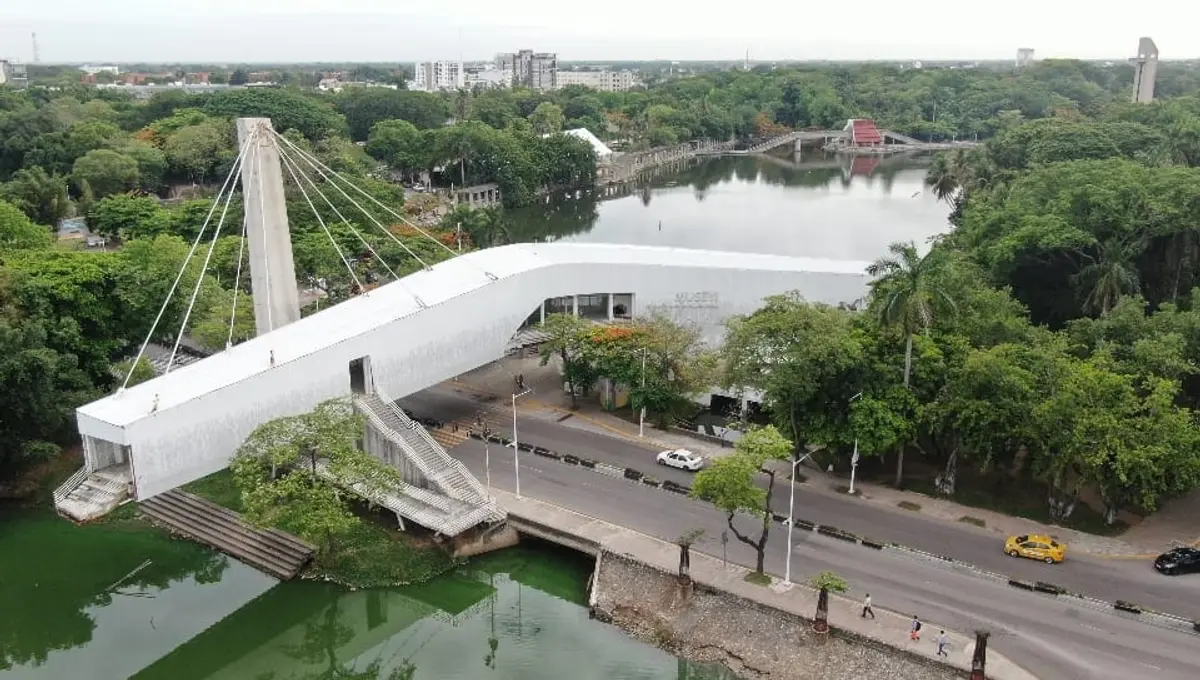
Gulf Coast Mexico Travel Guide 2026: Best Places, Food, Beaches & Safety
If you’re wondering whether the Gulf Coast of Mexico is worth visiting, the short answer is yes, especially if you want a cheaper, less touristy, more culturally layered alternative to the Riviera Maya. The best Gulf Coast stops for most travelers are Veracruz city, El Tajín, Xalapa, Tlacotalpan, Tabasco’s Olmec sites, and the Huasteca Potosina waterfalls.
Mexico has two coasts. Everyone knows the Caribbean side — Cancún, Riviera Maya, Playa del Carmen, a turquoise strip of resort hotels and cenotes. Far fewer travelers talk about the Gulf Coast, even though it’s one of the most rewarding regions in the country for history, food, and lower-cost travel.
The Mexican Gulf Coast stretches 3,000 km from the Texas border to the Yucatán Peninsula — an arc of states including Tamaulipas, Veracruz, Tabasco, and the edges of Campeche. It contains Veracruz, one of the most historically significant cities in the Americas. It contains El Tajín, the greatest pre-Columbian site most travelers have never heard of. It contains Olmec giant heads in an outdoor park, UNESCO colonial villages painted in pastel colors, and the Huasteca Potosina — a region of turquoise waterfalls that rivals anything in Southeast Asia for beauty.
And it costs 30–40% less than the Yucatán.
Gulf Coast Mexico at a Glance
- Best for: food, history, archaeology, road trips, river towns, and travelers who want a less touristy side of Mexico
- Skip it if: you want swimmable white-sand beaches, polished resort infrastructure, or an easy English-only trip
- Best first stop: Veracruz
- Top ruins: Papantla and El Tajín
- Best nature add-on: Huasteca Potosina from Ciudad Valles
- Best Gulf beaches intro: Veracruz beaches
- Best easy add-on from Veracruz: Day trips from Veracruz
Why the Gulf Coast
The case for going:
The Gulf of Mexico is warmer than the Caribbean at 28°C year-round. It produces extraordinary seafood — shrimp, blue crab, red snapper, octopus — at prices that make Cancún restaurants look absurd. The cultural depth is exceptional: five centuries of port history in Veracruz, the Olmec civilization’s heartland in Tabasco, Totonac ruins at El Tajín, jarocho music born from African-indigenous-Spanish collision.
No sargassum. The brown seaweed that has plagued Caribbean beaches since 2015 doesn’t reach the Gulf Coast. Beaches and waters are clear.
Lower prices. A beachfront seafood lunch in Veracruz costs 150–250 MXN. The equivalent in Tulum is 600 MXN.
The realistic context: The Gulf Coast is not the place for resort beach vacations. Infrastructure is less developed, international tourism is thin, and you’ll need to be comfortable navigating in Spanish. Come for the cultural depth, the food, and the nature — not for luxury resort amenities.
Veracruz City: Where Mexican History Began
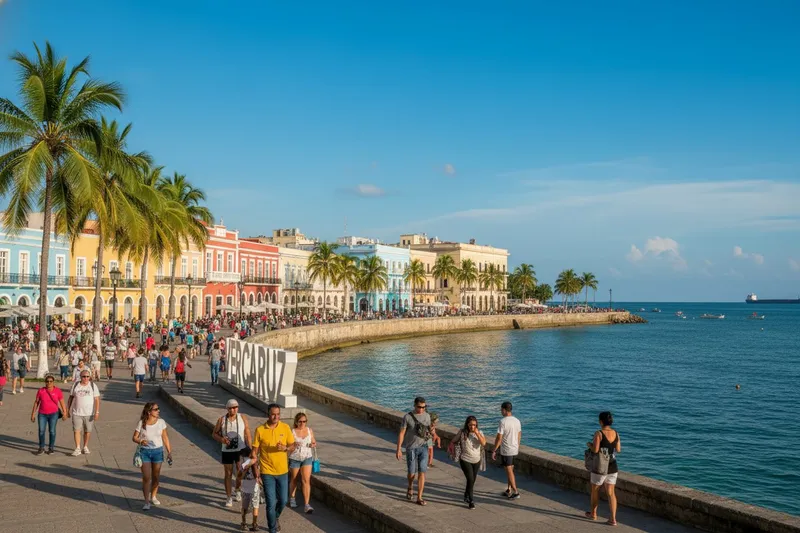
Veracruz is Mexico’s oldest port city and one of the most consequential places in the Americas. Hernán Cortés landed here in 1519. African slaves arrived through this port for three centuries. The city was bombarded by the US Navy in 1914. Five centuries of history are layered into 60 blocks of colonial and 20th-century architecture along one of the best seafront Malecóns in Mexico.
La Parroquia and the Lechero Ritual
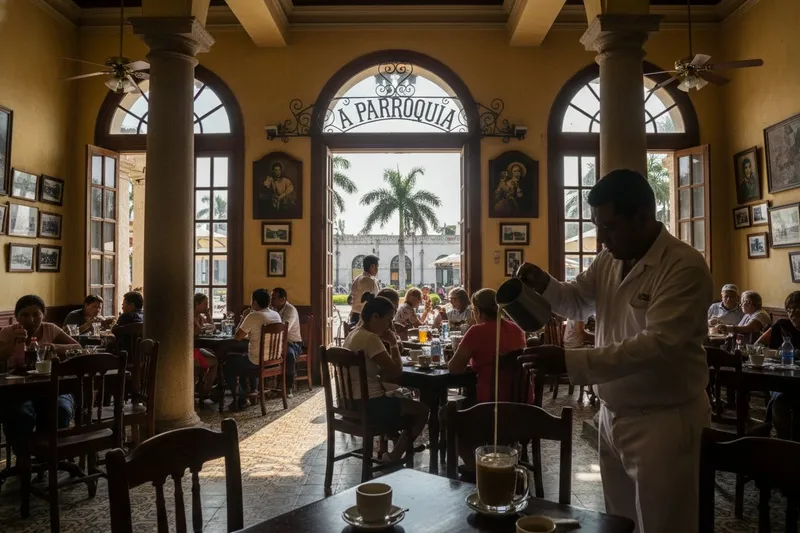
Veracruz runs on coffee. Start every morning at Café La Parroquia on the Malecón — open since 1808. Order a café americano, then tap your glass with a spoon. A waiter appears and pours steaming milk from shoulder height into your glass in a long arc, creating the café lechero. The whole café clinks and steams. This ritual has been performed here for over 200 years.
Breakfast costs about 120–180 MXN total. Do it twice.
Fort San Juan de Ulúa
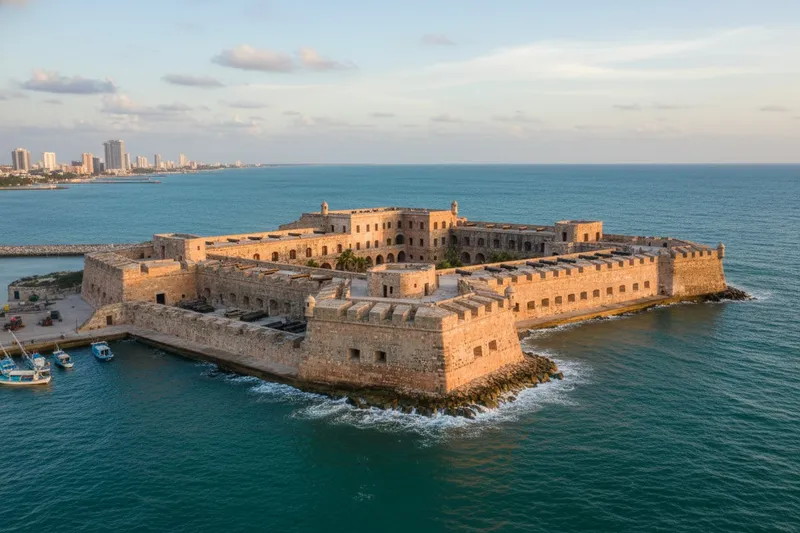
The fortress on the island visible from the Malecón is Fort San Juan de Ulúa — construction began in 1535, making it the oldest standing colonial structure in continental America. It served as military defense, then as a notoriously brutal prison for political dissidents.
The tour (65 MXN) covers fortifications, drawbridges, dungeons, and cannon positions. The view of the working port from the ramparts — container ships moving, pelicans circling, the city skyline behind — is one of the great urban views in Mexico.
Access by water taxi from the Malecón (15 MXN each way) or by road around the port.
Carnival
Veracruz’s Carnival is the second largest in Latin America. Nine days before Ash Wednesday (late January or February), the Malecón becomes a parade route for elaborate floats, danzón and salsa music fills the zócalo around the clock, and the city dresses in full costume. The opening ceremony burns a giant papier-mâché effigy representing pessimism — not a bad way to start a festival.
For more Veracruz depth: Things to Do in Veracruz | Day Trips from Veracruz | What to Eat in Veracruz
Tabasco: Olmec Heads and Cacao
Tabasco is Mexico’s most overlooked state — and it contains some of the most significant pre-Columbian artifacts on the continent. The Olmec civilization, which preceded the Maya and Aztec as Mesoamerica’s first major culture, reached its peak in what is now Tabasco and southern Veracruz between 1500 and 400 BCE.
Parque La Venta and the Olmec Heads
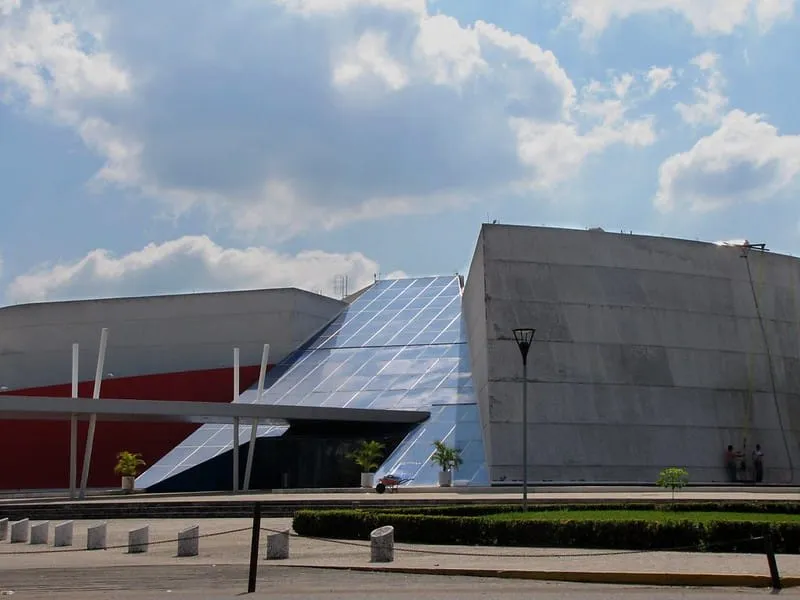
Villahermosa, Tabasco’s capital, contains Parque La Venta — an outdoor archaeological park where five of the world’s seventeen known giant Olmec heads are displayed among tropical vegetation. These basalt monuments weigh up to 40 tons each; each depicts a distinct face, carved from boulders that were transported without wheels from quarries 150 km away.
The park context is unusual: this is the only place in the world where Olmec heads are displayed outdoors, in a natural park setting within a city. Walking among them through tropical garden paths, stumbling on an 8-foot stone face in the vegetation, is genuinely affecting. The Olmec heads are among the most enigmatic sculptures in the pre-Columbian world — their identity (rulers? athletes?) remains debated.
Park entry: around 55 MXN. Allow 1.5–2 hours. The adjacent Tabasco anthropology museum holds additional Olmec and Maya artifacts.
Ruta del Cacao
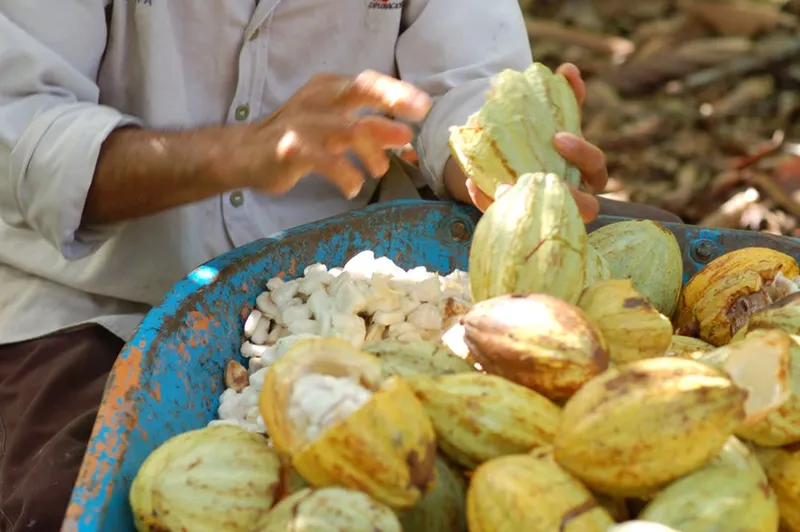
Tabasco produces 70% of Mexico’s cacao and is one of the world’s historically significant chocolate-producing regions — cacao originated in this area and was used as currency by the Olmec and Maya. The Ruta del Cacao connects working cacao plantations, traditional chocolate producers, and the Hacienda La Luz museum.
Tours of working cacao farms (around 400–600 MXN including transport) take you through the process from pod to finished chocolate. The raw cacao fruit tastes nothing like chocolate — it’s sweet, tropical, slightly acidic. The processed product starts to reveal itself.
Villahermosa Practicalities
Villahermosa is a functional city rather than a tourist destination. Stay 1–2 nights to cover the Olmec heads and cacao sites, then move on. The airport (VSA) has direct flights from Mexico City (1.5 hours). ADO buses connect to Veracruz (4 hours), Palenque (2.5 hours), and Cancún (10 hours overnight).
For more: Villahermosa and Tabasco guide
El Tajín: The Gulf’s Greatest Ruins
Two hundred km north of Veracruz city, near the town of Papantla, El Tajín is the most important pre-Columbian site on Mexico’s Gulf Coast. The Totonac culture built and expanded this complex between 600 and 1200 CE, and at its peak the city housed 25,000 people.
Pyramid of the Niches
El Tajín’s signature structure is unlike any other pyramid in Mexico. Seven stepped levels are covered with 365 square niches — one for each day of the solar calendar. The shadow patterns that the niches create at different times of day were likely calendrical instruments. The pyramid isn’t tall (18 meters) but it’s intricate and photogenic, and the site as a whole is large enough to feel significant without being overwhelming.
The ruins extend over 1.2 km² with multiple pyramid complexes, ball courts, and carved relief panels. Budget 2–3 hours.
For planning details: Papantla guide
Voladores de Papantla
El Tajín’s daily spectacle is the Voladores ceremony. Four men climb a 30-meter wooden pole, attach thick ropes to their ankles, and launch backward into space to spiral down in 13 complete revolutions each (13 × 4 = 52, representing the 52-year Aztec calendar cycle). A fifth man stands atop the pole throughout, playing a small flute while spinning.
This ceremony is still performed by Totonac communities as a spiritual ritual — it’s not purely theatrical. It happens multiple times daily at El Tajín; a small donation to the performers is the right thing. It is one of the most visually spectacular indigenous ceremonies still practiced regularly in Mexico.
Entry: around 85 MXN. Papantla is 12 km from the ruins; the town’s zócalo (famous for its giant mural of Totonac history) and vanilla markets are worth an hour before or after.
Xalapa: The Overlooked Capital
Xalapa (capital of Veracruz state, 90 minutes from the port city) is a highland university town at 1,400m — cool, cloudy much of the year, and home to one of Mexico’s finest museums.
Museum of Anthropology
The Museo de Antropología de Xalapa holds five giant Olmec heads — the largest collection outside of the La Venta park in Villahermosa. The museum is also exceptional for its Totonac and Huastec galleries, and the building itself is beautifully designed with outdoor sculpture gardens.
Entry: around 90 MXN. Allow 2–3 hours. This is the best archaeology museum in Mexico outside of the National Museum in Mexico City for Gulf Coast cultures.
Coffee and University Culture
The highlands around Xalapa produce excellent shade-grown coffee. The city has a strong café culture (multiple quality coffee shops near the university), a modern theater scene, and more cultural events per capita than most Mexican cities. Xalapa is a 2-hour bus ride from Veracruz city and warrants an overnight.
From here, it also makes sense to continue to Papantla or back to Veracruz city.
Tlacotalpan: The UNESCO River Town
Located 2 hours south of Veracruz city at the junction of two rivers, Tlacotalpan has been a UNESCO World Heritage Site since 1998. The town has 13,000 people, continuous colonial arcades along every street, and facades painted in combinations of ochre, coral, turquoise, and mint that look almost too colorful to be real.
Tlacotalpan is a living community. In the mornings, fishermen work the river. At noon, families eat at riverside restaurants. In the evenings, people walk the arcaded streets.
The annual Fiesta de la Candelaria (early February) is an exceptional event: religious processions, music, the bull-running ceremony — but on a floating platform in the river, not on land. The combination of Carnival atmosphere and river location is unlike anything else in Mexico.
Outside festival season, Tlacotalpan is quiet and under-visited. Day trip from Veracruz city or stay overnight in one of the posadas.
Base yourself in Veracruz city if you want the easiest logistics.
Huasteca Potosina: Waterfalls Near the Gulf
The Huasteca Potosina sits just inside San Luis Potosí state but is geographically contiguous with the Gulf Coast experience. The region contains some of the most spectacular waterfall landscapes in Mexico — comparable in color and intensity to the famous spots in Southeast Asia but far less crowded.
Main sites:
Tamul Falls — Mexico’s largest waterfall by volume. 105 meters high, where the Gallinas River drops into the Santa María River canyon. Access is by dugout canoe (2-hour paddle upstream through dramatic canyon walls) — the journey is as impressive as the falls. December–May is best for clarity; the rainy season makes the water powerful but brown.
Micos Cascades — A series of natural water chutes and pools in the jungle. Families and younger travelers use these as natural water slides. The setting in the green jungle is beautiful. Open year-round; best for swimming May–November.
Tamasopo — Cold spring-fed turquoise pools in a canyon setting. Excellent swimming. Less visited than Micos.
Xilitla and Las Pozas — 30 minutes from Tamasopo, the surrealist sculpture garden created by British eccentric Edward James in the 1960s and 70s towers improbably from the jungle. Unfinished concrete staircases that lead nowhere, giant flower columns, rooms without walls. Genuinely bizarre and worth going out of your way for.
Base: Ciudad Valles (3.5 hours from Veracruz city by ADO bus) is the main hub. Tours to all sites from Ciudad Valles are available at 400–800 MXN per person. Rent a car for maximum flexibility.
Gulf Coast Food Guide
The Gulf Coast defines Mexican seafood cuisine.
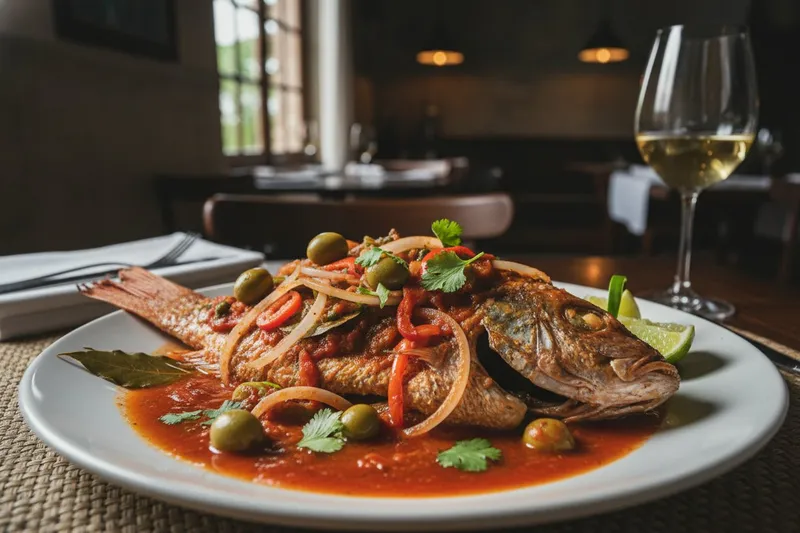
Huachinango a la Veracruzana: Whole red snapper baked in a sauce of tomatoes, olives, capers, jalapeño, and bay leaf — the flavors combine Atlantic Ocean ingredients (the fish) with Mediterranean imports (olives, capers) that arrived through the port. It’s the signature dish of Veracruz and shows up on every serious restaurant menu.
Chilpachole de Jaiba: A rich, dark crab chowder thickened with masa and flavored with chipotle and epazote. Found at market comedores and seafood restaurants throughout the Veracruz coast.
Ceviche Veracruzano: Different from Pacific-style ceviche. Gulf shrimp and fish marinated in lime with tomatoes, olives, cilantro, and jalapeño, often served in a glass with tostadas.
Arroz a la Tumbada: Soupy saffron-tinted rice cooked with whatever the fishing boats brought in that day — shrimp, octopus, clams, crab. Traditionally served in clay pots from wood-fired stoves.
Garnachas: The Gulf Coast street snack. Thick oval masa rounds topped with black beans, shredded beef or pork, salsa, and queso fresco. Find them at market stalls and evening food carts. Budget 20–25 MXN each.
Pozol (Tabasco): A cold fermented drink made from corn and cacao — the ancient Mayan energy drink. Creamy, slightly sour, filling. Villahermosa street vendors sell it on hot afternoons. Unlike anything else you’ll try in Mexico.
Safety on the Gulf Coast
Veracruz state: Level 2 overall. Veracruz city, Xalapa, El Tajín, and Tlacotalpan are safe tourist zones. Coatzacoalcos and the southern part of the state near the Tabasco border warrant more caution; use toll roads and avoid night driving in rural areas. Don’t venture into northern Veracruz state near Tuxpan at night.
Tabasco state: Level 2. Villahermosa tourist zones are safe. The Ruta del Cacao tours are organized and safe. Avoid driving rural roads at night.
Huasteca Potosina: Generally safe. The waterfall tours are well-established. Ciudad Valles is a normal mid-sized city.
See: Mexico Travel Advisory 2026 | Mexico Travel Tips | Safest Cities in Mexico
Budget Guide
The Gulf Coast is significantly cheaper than the Yucatán or Pacific Coast.
| Category | Budget | Mid-Range | Splurge |
|---|---|---|---|
| Accommodation (per night) | 300–550 MXN | 800–1,500 MXN | 2,000–3,500 MXN |
| Meals | 80–150 MXN | 200–350 MXN | 400+ MXN |
| El Tajín day trip (bus + entry) | 350–450 MXN | — | Private car 1,200 MXN |
| Huasteca tour from Valles | 400–700 MXN | — | Private guide 1,500 MXN |
| Villahermosa Olmec park | 55 MXN | — | — |
Daily budget: Budget traveler 600–900 MXN/day (36–55 USD). Mid-range 1,500–2,500 MXN/day.
Getting to the Gulf Coast
Veracruz city (VER): Direct flights from Mexico City (1 hour), Monterrey, Guadalajara on budget carriers. ADO buses from Mexico City TAPO terminal (5 hours, 400–600 MXN). By car from Mexico City: 4–5 hours via MEX-150D.
Villahermosa (VSA): Direct flights from Mexico City (1.5 hours). ADO buses from Veracruz (4 hours), Mérida (6 hours), Cancún (10 hours).
El Tajín: No direct bus. Take ADO to Papantla from Veracruz (3 hours) or Mexico City. From Papantla, collectivos or taxis run to the ruins (12 km).
Huasteca Potosina: ADO buses from Mexico City to Ciudad Valles (4 hours). From Veracruz: bus to Tampico then connect to Valles (3 hours total).
7 to 10 Day Gulf Coast Mexico Itinerary
Days 1 to 3: Veracruz city Use Veracruz as your intro to the region. Walk the Malecón, do the La Parroquia lechero ritual, visit San Juan de Ulúa, and eat as much seafood as possible. Add one day trip to Tlacotalpan or nearby beaches.
Days 4 to 5: El Tajín and Papantla Move north for archaeology and Totonac culture. Visit the Pyramid of the Niches, watch the Voladores, then spend a night in Papantla or continue to Xalapa.
Days 6 to 7: Xalapa Slow down in the highlands. Visit the anthropology museum, drink local coffee, and use the city as a cooler-weather break from the coast.
Days 8 to 10: Tabasco or Huasteca Potosina Choose Tabasco if you want Olmec history and cacao plantations. Choose Huasteca Potosina if you want waterfalls, canyons, and more active outdoor days.
This structure works especially well for first-time visitors who want a Mexico trip with strong food, lower prices, and much less resort energy.
Best Time to Visit the Gulf Coast
November–April: Best weather. Dry season, lower humidity, temperatures 24–30°C. Good for waterfalls (water clarity better in dry season), ruins, and city exploration.
February: Carnival in Veracruz (dates vary, 9 days before Ash Wednesday) and Fiesta de la Candelaria in Tlacotalpan.
May–June: Pre-rainy season, increasingly hot and humid. Still manageable.
July–October: Rainy season. Afternoon downpours. Waterfalls (Tamul) are powerful but colored by sediment. Hurricane risk for the Veracruz coast in August–October.
For more: Mexico Food Guide