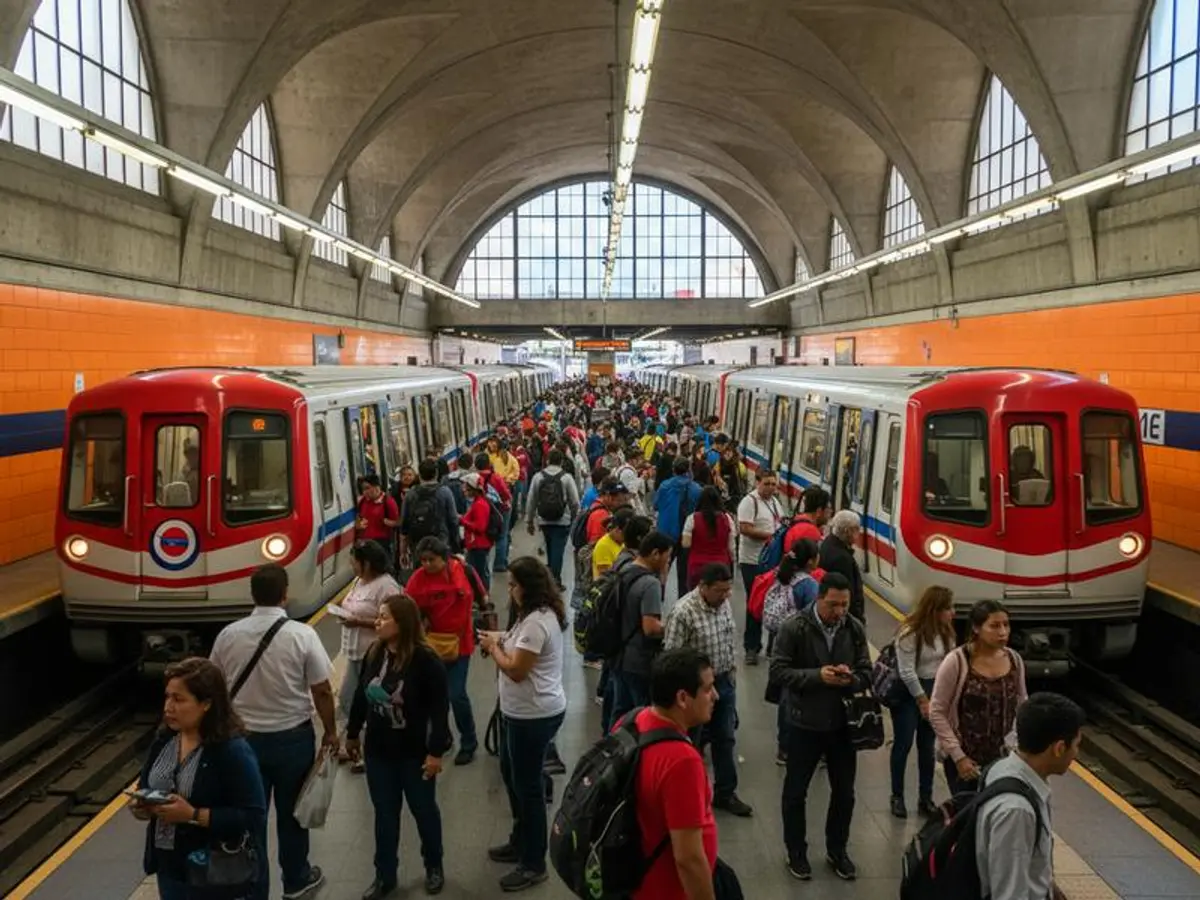
Is Mexico City Safe for Tourists in 2026? Safest Areas, Areas to Avoid, and Airport Tips
Yes, Mexico City is safe for tourists in 2026 if you stay in the right neighborhoods and use normal big-city judgment. For most first trips, that means Roma Norte, Condesa, Polanco, Coyoacán, or San Ángel, where the usual risks are phone theft, pickpocketing, and bad taxi choices, not random violence.
The U.S. government still classifies Mexico City under Level 2, exercise increased caution, but that does not mean the main visitor neighborhoods function like a no-go zone. In real trip-planning terms, CDMX safety is mostly about choosing the right base, arriving from the airport the smart way, and not drifting into unfamiliar areas late at night.
The mistake travelers make is treating CDMX like one uniform safety zone. It is not. The difference between Polanco and Tepito is huge, and the difference between an official airport ride and a random street-side taxi matters just as much.
The fastest honest answer: Mexico City is a safe first trip if you book Roma Norte or Polanco, use Uber or an official airport taxi, and skip late-night wandering in areas you do not know.
This guide gives you the answer fast, then shows the safest areas to stay, what neighborhoods need more caution, how to arrive safely from the airport, and what mistakes make Mexico City feel less safe than it actually is.
Mexico City Safety in 30 Seconds
| Question | Short answer |
|---|---|
| Is Mexico City safe for tourists right now? | Yes, if you stay in the main visitor neighborhoods |
| Safest first-time base | Roma Norte for most travelers, Polanco for the easiest stay |
| Best areas to stay | Roma Norte, Condesa, Polanco, Coyoacán, San Ángel |
| Best area if you land late | Polanco for the easiest late arrival, Roma Norte for best value + walkability |
| Best area for solo women | Polanco, Roma Norte, or Condesa |
| Areas that need more caution | Juárez, Centro Histórico, Santa María la Ribera after dark |
| Areas tourists should skip | Tepito, Guerrero, outer Iztapalapa, wandering Doctores late at night |
| Main tourist risks | Pickpocketing, phone snatching, taxi scams, late-night bad decisions |
| U.S. advisory level | Level 2, exercise increased caution, not avoid travel |
| Safest airport transfer | Official airport taxi stand or Uber from the designated pickup area |
| Safe to use the Metro? | Yes by day, with extra awareness in crowds |
The bottom line: If you book a hotel in Roma Norte, Condesa, Polanco, or Coyoacán, use Uber or official taxis at the airport, and avoid drifting into unfamiliar areas late at night, Mexico City is a very manageable trip.
The Short Answer: Is Mexico City Safe?
For tourists who stick to the main visitor neighborhoods, yes, Mexico City is safe in 2026.
Roma Norte, Condesa, Polanco, Coyoacán, San Ángel, and Roma Sur are the safest parts of the city for most international visitors. Violent crime against tourists in these areas is uncommon. What travelers are more likely to deal with is the same stuff that affects visitors in other large cities: pickpocketing in crowds, phones left out too casually, and overpriced or unofficial taxis.
The practical safety rule: choose the right neighborhood, use app-based or official transport, and avoid treating late-night wandering in unfamiliar areas as part of the adventure.
If you want the simplest version of CDMX, book Polanco. If you want the best balance of safety, price, food, and walkability, book Roma Norte. If you want greener streets and a calmer feel, book Condesa.
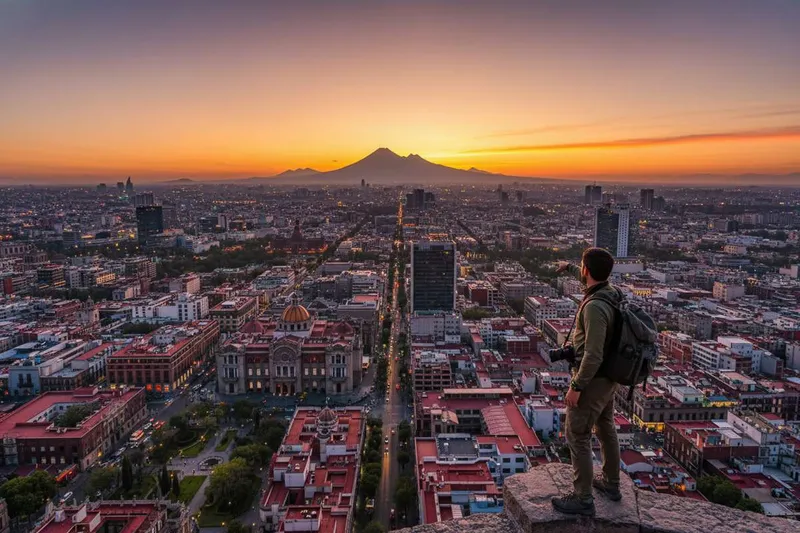
For the full Mexico safety overview: Is Mexico Safe? Honest Guide by a Mexican.
Mexico City Neighborhood Safety Table
| Neighborhood | Safety Level | Tourist Recommendation |
|---|---|---|
| Polanco | 🟢 Very Safe | Fine day and night, upscale |
| Roma Norte | 🟢 Very Safe | Fine day and night, main tourist hub |
| Condesa / Hipódromo | 🟢 Very Safe | Fine day and night |
| Roma Sur | 🟢 Safe | Fine day and night |
| Coyoacán | 🟢 Safe | Day and evening — day trip area |
| San Ángel | 🟢 Safe | Day and evening |
| Juárez | 🟡 Caution | Safe by day, extra awareness at night |
| Centro Histórico | 🟡 Caution | Safe daytime, awareness in crowds |
| Santa María la Ribera | 🟡 Caution | Fine, less touristy |
| Doctores | 🟡 Caution | Not recommended for night wandering |
| Tepito | 🔴 Avoid | High crime — skip entirely |
| Guerrero | 🔴 Avoid | Not for tourists |
| Iztapalapa (outer) | 🔴 Avoid | Stay on the main tourist routes only |
For a deeper breakdown of where to stay and what each neighborhood is like: Mexico City Neighborhoods Guide.
Best Areas to Stay If Safety Is Your Main Priority
If safety is your number one filter, these are the best fits for most travelers:
- Polanco: best for upscale hotels, families, and travelers who want the easiest version of CDMX
- Roma Norte: best for first-timers who want walkable cafes, restaurants, and nightlife without giving up comfort
- Condesa: best for relaxed parks, good hotels, and a polished residential feel
- Coyoacán: best for slower-paced stays, museums, and travelers who do not need nightlife on the doorstep
- San Ángel: best for a quiet, elegant base with fewer tourist crowds
If you want the easiest first trip, start by comparing the best hotels in Mexico City with our full Mexico City travel guide. If nightlife matters, cross-check Mexico City nightlife before you book. If you are landing late, pair that with Mexico City airport transportation so a cheap hotel choice does not turn into a bad arrival.
Best Mexico City Area by Trip Style if Safety Matters Most
| Trip style | Best area if safety matters most | Why it works |
|---|---|---|
| First-time trip | Roma Norte | Walkable, busy, easy for cafes, food, and short Uber rides |
| Upscale / easiest stay | Polanco | Strong hotel stock, polished streets, lower petty-crime pressure |
| Couples / slower pace | Condesa | Safe-feeling at night, parks, restaurants, easier evening walks |
| Families | Polanco or Coyoacán | Better sidewalks, calmer evenings, more practical hotel fit |
| Quiet cultural stay | San Ángel or Coyoacán | Lower tourist chaos, easier day-and-evening rhythm |
| Solo traveler who wants bars nearby | Roma Norte | Better nightlife access without forcing a late-night cross-city ride |
| Solo traveler who wants LGBTQ+ nightlife nearby | Juárez | Works well if you stay alert at night and keep rides short |
| Late-night airport arrival | Polanco or Roma Norte | Easier, more direct late-night ride and less friction on arrival |
What the U.S. Level 2 Advisory Actually Means
For Mexico City, Level 2 means exercise increased caution because of crime, not cancel your trip.
What that usually means on the ground:
- Tourist neighborhoods are still workable if you stay alert and do not treat the city like a resort bubble
- Petty crime is the real issue, especially phones, wallets, and bad taxi choices
- Late-night judgment matters more than daytime sightseeing, especially after bars or if you book far from Roma, Condesa, Polanco, or Coyoacán
If you want the broader country-by-country context, read our Mexico Travel Advisory 2026 guide before you compare Mexico City with other destinations.
What the Statistics Actually Say
Mexico City is enormous. Comparing its overall crime statistics to other cities is almost meaningless without neighborhood-level data.
Here’s what the data shows at the neighborhood level: crime rates in Roma Norte, Condesa, and Polanco are significantly lower than CDMX’s overall statistics suggest. These colonias (neighborhoods) have heavy tourist and expat presence, private security on blocks, and consistent police patrols. They are not representative of the city-wide average.
The crimes that do occur in tourist neighborhoods are overwhelmingly non-violent property crimes: phone theft, pickpocketing, bag snatching. Violent crime — muggings at gunpoint, kidnapping — does happen in CDMX but is concentrated in low-income outer colonias and in specific hotspots that tourists don’t typically visit.
CDMX is the economic and cultural capital of a country of 130 million people. It functions. Its restaurants, museums, transport systems, and public spaces work. The millions of Mexicans who live in Roma and Condesa are not living in fear — and you don’t need to either.
Petty Theft: The Real Risks in Tourist Areas
This is worth being specific about because it’s the risk that actually affects tourists.
Pickpocketing on the Metro
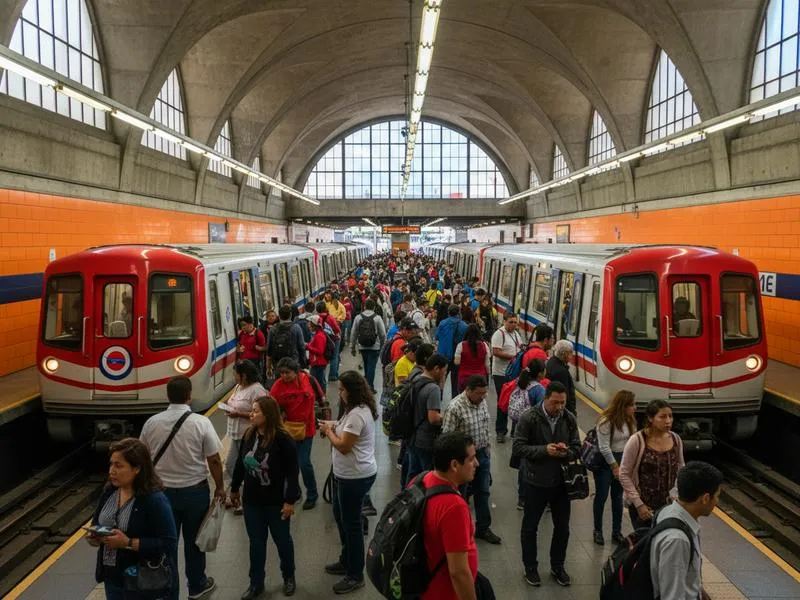
The Mexico City Metro is one of the world’s largest — 12 lines, 195 stations, over 4 million passengers daily. Lines 1, 2, and 3 serve the main tourist areas (Zócalo, Bellas Artes, Insurgentes, Polanco, Auditorio).
The risk is pickpocketing in crowded carriages during rush hours (7:30-9:30am, 6:30-8:30pm). Keep your phone in a front pocket or bag clasp, not in a back pocket. Don’t handle your wallet or phone in the press of a crowded train.
Outside rush hours, the Metro is fine for most journeys.
Scooter Bag Snatching in Roma
This is a known pattern: a scooter-mounted thief grabs a bag, phone, or laptop from an outdoor cafe table, or from a pedestrian walking alone while looking at their phone. It happens in Roma Norte specifically, in the area around Álvaro Obregón and Orizaba.
The prevention is simple: don’t put your phone face-up on a cafe table on the street side. Keep your bag on your lap or between your feet. This isn’t a reason to avoid Roma — it’s a reason to be aware of where your stuff is.
Phone Snatch on the Street
Walking while staring at your phone in an area you don’t know is the single most common precursor to phone theft in CDMX. Use your phone for navigation, then pocket it. Look up directions before you leave, not while walking.
Common Tourist Mistakes That Make Mexico City Feel Less Safe
Most bad stories start with one of these avoidable mistakes:
- Booking a cheap stay in the wrong area because the nightly rate looks good on a map
- Taking a random taxi at the airport or outside bars instead of Uber, DiDi, or an official stand
- Using the Metro at the worst possible time with valuables easy to grab
- Walking while distracted at night instead of ordering a short ride
- Assuming every part of the city works like Roma or Polanco
If you avoid those five mistakes, you eliminate most of the real tourist risk in CDMX.
Getting from MEX Airport to Roma/Condesa Safely
The airport arrival situation in Mexico City trips up first-timers — this is important.
What to do:
- Inside the arrivals hall, go to the official airport taxi counter (Transportación Terrestre) — there’s a fixed-rate voucher system by zone
- Alternatively, walk to the designated Uber pick-up area inside the airport (signs indicate it) and request your ride from the app
- Uber from MEX to Roma or Condesa costs approximately 200-300 MXN and takes 30-45 minutes depending on traffic
What NOT to do:
- Don’t take a taxi from drivers who approach you at the arrivals exit — these are unsanctioned taxis associated with significant overcharging and, in rare cases, express kidnapping (paseo millonario — where you’re driven around ATMs and forced to withdraw cash)
- Don’t share your ride destination with random people in the arrivals area
The official airport taxi and Uber are both safe. The difference between them and an unsolicited taxi is not a small overcharge — it’s a qualitatively different safety situation.
For transport options across the city: Getting Around Mexico City: Metro, Uber, and Ecobici. If you are arriving late, check Mexico City airport transportation and book one of the best hotels in Mexico City in Roma, Condesa, or Polanco for your first nights rather than experimenting with a cheaper outer-neighborhood stay.
Metro Safety: Which Lines, What Hours
Lines 1, 2, 3 are the main tourist-area lines and the most frequently patrolled. They serve:
- Line 1: Observatorio to Pantitlán, stopping at Insurgentes (Roma access), Balderas, Salto del Agua (Centro)
- Line 2: Cuatro Caminos to Tasqueña, stopping at Bellas Artes, Zócalo, Pino Suárez
- Line 3: Universidad to Indios Verdes, stopping at Polanco, Auditorio, Colegio Militar
Safety by time:
- Daytime (7am-9pm): Fine for tourist areas
- Evening (9-11pm): Still ok, be aware
- After midnight: Use Uber. Late-night Metro is not recommended for solo travelers unfamiliar with the city
Practical tip: Women-only carriages (painted pink) exist on most lines during rush hours. Use them if you prefer — they’re available and enforced.
The Metrobús (BRT system on Insurgentes) is similarly safe and connects Polanco/Reforma/Roma/Coyoacán on Line 1.
For a large concert or festival, decide how you will leave before you enter. Corona Capital visitors can use the complete Corona Capital 2026 guide for venue-specific transport and exit planning, then compare the best areas to stay for Corona Capital by late-night return route.
Earthquakes: What Every CDMX Visitor Should Know
Mexico City sits in a tectonically active zone and experiences earthquakes regularly. The major 1985 and 2017 earthquakes shaped how the city prepares.
Before you arrive: Download the Alerta Sísmica CDMX app. It provides 60-90 seconds of warning before major shaking arrives (sensors detect earthquakes at the coast before the waves reach the city). You’ll also hear outdoor loudspeakers in some areas.
If an alarm goes off:
- Inside: Move away from windows; stand in a doorframe in older buildings; in modern reinforced buildings (most tourist hotels), sheltering in place is recommended
- Outside: Move away from buildings, power lines, and anything that could fall
- Do not use elevators during or immediately after
The reality: Most visitors to CDMX experience no earthquake at all. CDMX averages small tremors frequently, but most are imperceptible. Major events are rare. The app gives you preparation without panic.
Altitude: Your First Night in Mexico City
At 2,240 meters (7,350 feet), Mexico City has the highest altitude of any major capital in North America. Most visitors feel something on day one: mild headache, slight breathlessness on stairs, fatigue.
Managing altitude adjustment:
- Drink extra water from the moment you land
- Skip alcohol on your first evening — it hits harder at altitude
- Don’t schedule intense physical activity (museum sprints, walking tours, hiking) on day one
- Sleep is often slightly disrupted on the first night — normal
By day two, most visitors feel completely normal. Severe altitude sickness is uncommon at 2,240m; it’s more common above 3,000m. If you have heart or respiratory conditions, consult your doctor before traveling.
Food and Water Safety in Mexico City
Water: Do not drink tap water in Mexico City. Period. Even locals don’t drink it — the pipes in much of the city are old and the water picks up contaminants during distribution.
What’s safe:
- Bottled water (Ciel, Epura, Bonafont)
- Filtered water from Waterdrop or LifeStraw-style bottles
- Ice at established restaurants and hotels (most use filtered water for ice)
- Hot drinks — coffee, tea, hot chocolate — are fine as the water is boiled
Ice at street stalls: This is the gray area. Most popular street stalls in Roma and Condesa use filtered water. Busy high-volume stalls are lower risk. If you’re unsure, drink your aguas frescas without ice (sin hielo).
Street food: Mexico City’s street food is genuinely excellent and generally safe. Busy taco stands with visible high turnover — the ones where office workers line up at 1pm — are safe. The lonchería (lunch spot) inside a market with a 10-person queue is safe. Apply the same rule you’d apply anywhere: if nobody’s eating there, there’s a reason.
Recommended reliable spots: The taco stands around Mercado de Medellín (Roma Sur), the tortas at Mercado de Jamaica, and quesillo vendors at Mercado de Coyoacán are all high-volume, established operations.
Private Hospitals in Mexico City
CDMX has some of the best private medical facilities in Latin America.
ABC Medical Center (American-British Cowdray Hospital): The most internationally recognized private hospital in Mexico. English-speaking staff, international billing capabilities, US-equivalent care. Located in Santa Fe (west of Polanco). Multiple locations.
Médica Sur: Highly regarded private hospital in Tlalpan, southern CDMX. Strong reputation for complex procedures.
Hospital Ángeles Polanco / Ángeles Lomas: Both are high-quality private hospitals. Ángeles Polanco is conveniently located for tourists staying in Polanco or Roma.
For emergencies: Call 911. Mexico’s emergency system covers police, ambulance, and fire. Request an ambulance and specify which hospital if you have insurance preferences.
Travel insurance note: A serious medical event requiring evacuation to the US can cost 40,000-80,000 USD without insurance. Travel medical insurance with emergency evacuation is worth having for any extended Mexico City stay.
Is Mexico City Safe for Families, Solo Travelers, and Remote Workers?
Families: Yes, especially in Polanco, Condesa, Coyoacán, and San Ángel. These areas have better sidewalks, calmer evenings, and easier access to parks, museums, and reliable hotels.
Solo travelers: Yes, with the same neighborhood rule. Roma Norte and Condesa are the easiest bases if you want cafes, coworking, and nightlife without complicated logistics.
Remote workers and longer stays: Also yes, but rent and hotel choice matter. Pick a place with 24-hour entry, good reviews, and easy Uber access, especially if you expect to come back late from dinners or coworking sessions.
If you are planning a longer stay, pair this guide with our breakdown of Mexico City neighborhoods so you match the area to your trip style.
Safety for Women Traveling Solo
Mexico City’s safety for solo female travelers varies significantly by neighborhood.
Roma Norte and Condesa: Among the better areas for solo female travel in Latin America. The large expat and progressive Mexican community, density of cafes and restaurants, and general visibility of women traveling alone creates a relatively comfortable environment.
Polanco: Upscale, conservative, low crime. Fine for solo women at any hour.
Centro Histórico: Safe during the day with awareness. The evening is a different picture — catcalling is more prevalent, and walking alone in poorly lit side streets is not recommended after 9pm.
Catcalling: It exists throughout Mexico City, more aggressively in Centro than in Roma or Polanco. Ignoring it firmly and continuing walking is the standard approach. It’s unpleasant, not dangerous.
Cultural events: Lucha libre matches (Arena Mexico, Arena Coliseo) are safe — family events that draw crowds of all ages. Palacio de Bellas Artes performances, concerts at Auditorio Nacional, and museum openings are all safe, well-attended events.
Using Uber: Use Uber or DiDi instead of street taxis after dark, especially when alone. The apps provide driver tracking and route sharing.
For comprehensive guidance: Solo Female Travel in Mexico: The Honest Guide.
Nightlife Safety in Roma and Condesa
The bar scene in Roma Norte and Condesa — Alicia, Cantina El Centenario, Salón Ríos, the mezcal bars on Orizaba — is generally safe. These are popular, well-monitored establishments.
Practical nightlife safety:
- Go out as a group when possible
- Use Uber or DiDi home — never hail a street taxi at 2am outside a bar
- Don’t leave drinks unattended; drink spiking happens in party environments
- The Doctores neighborhood directly south of Roma can feel sketchy late at night — Uber over those few blocks
For LGBTQ+ travelers: CDMX has one of Latin America’s most active LGBTQ+ scenes, centered in Zona Rosa (on the Condesa/Juárez border). El Vicio, La Purísima, and Kinky Bar are established venues. The area is safe and open.
Travel Insurance: Worth Having
For guided experiences in Mexico City:
Browse Mexico City tours on Viator →
2026 Updates: What Travelers Need to Know Right Now
If you’re landing here because you’ve seen broader Mexico headlines, here’s the practical context: Mexico travel advisories are issued state by state, and the main tourist neighborhoods in CDMX have not seen the kind of tourism disruption that changed travel decisions in places like Mazatlán or parts of Jalisco earlier in 2026. For most visitors, the day-to-day safety advice in Mexico City is unchanged.
What does change the on-the-ground experience is politics and public events. Demonstrations, marches, and temporary street closures are common in the capital, especially around the Zócalo, Reforma, and government buildings. They are usually inconvenient rather than dangerous, but they can slow airport transfers and reroute taxis.
2026 Updates: Political Context
Mexico City is governed by Claudia Sheinbaum’s successor at the city level (Sheinbaum moved to the federal presidency in October 2024). The city government has continued the same general security approach — strong police presence in tourist neighborhoods, investment in CDMX Segura crime prevention programs.
Political demonstrations: As Mexico’s capital and the seat of federal government, CDMX sees regular political demonstrations — on Paseo de la Reforma, at the Zócalo, and in the Centro. In 2026 (a federal midterm election year), expect more demonstration activity in the first half of the year. These are not violent toward tourists — they’re Mexican democratic politics operating in public. The main impact is temporary street closures.
Security situation: CDMX’s security in tourist areas has remained stable. No significant advisory changes for Roma, Condesa, Polanco, or Coyoacán in the past year.
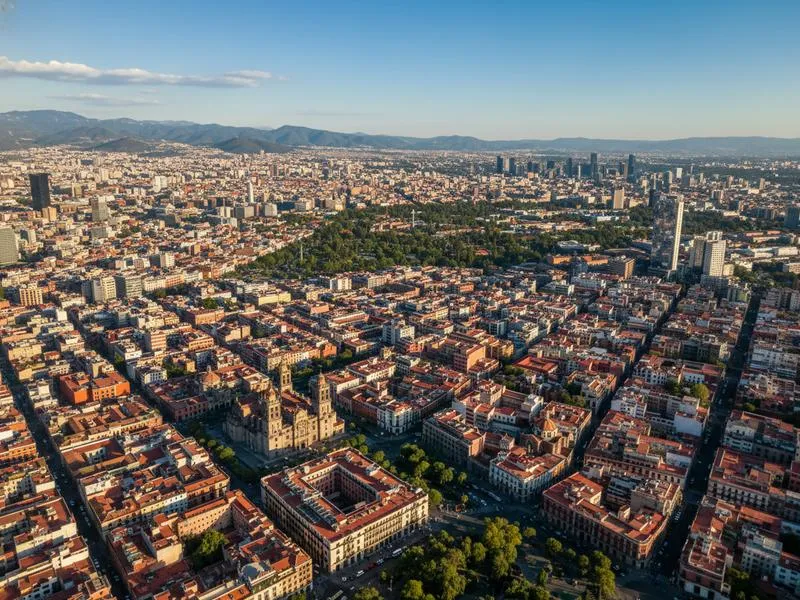
For the current U.S. advisory: Mexico Travel Advisory 2026: State-by-State Guide.
Areas Tourists Should Avoid or Handle Carefully
This does not mean every block in these areas is automatically dangerous. It means they are poor choices for a first-time visitor choosing a hotel or wandering without context.
- Tepito: high-crime reputation, not a casual tourist area
- Guerrero: some worthwhile cultural spots nearby, but not an area to book blindly
- Outer Iztapalapa: too far from the tourist core and not worth the tradeoff for most visitors
- Doctores late at night: close to Roma, but the feel changes quickly after dark
- Centro Histórico after very late hours: fine in the day, less comfortable once the crowds thin out
A good rule is simple: if you are asking yourself whether a cheap hotel is “too far out,” it probably is.
Mexico City Safety: Quick Practical Tips
Money:
- Use ATMs inside bank branches or established shopping centres (Perisur, Antara, Palacio de Hierro)
- Carry mixed cash — some restaurants and markets are cash-only
- Notify your bank before arrival to prevent card blocks
Transport recap:
- Airport → hotel: Official airport taxi voucher (inside terminal) or Uber pick-up area
- Within tourist areas: Uber, DiDi, or Metrobús Line 1 (Insurgentes)
- Metro: Safe daytime, Lines 1/2/3 for tourist areas
- Never: unsanctioned taxis, late-night Metro solo
Emergency contacts:
- Emergency: 911
- Tourist Assistance Hotline: 078
- LOCATEL (city info): 55 5658 1111
Communications:
- Telcel has best CDMX coverage; grab a SIM at the airport Telcel counter
- Many restaurants in Roma/Condesa have free WiFi
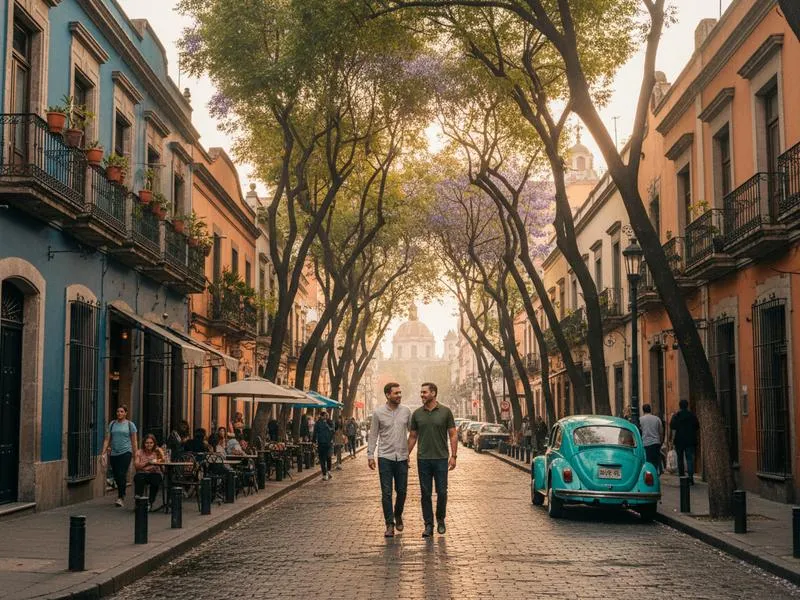
The Bottom Line: Is Mexico City Safe?
Yes, Mexico City is safe for most travelers who stay in the right neighborhoods and move through the city with normal awareness.
Stay in Roma Norte, Condesa, Polanco, Coyoacán, or San Ángel. Use Uber, DiDi, or official taxis. Keep your phone put away in crowds. Do not book a random bargain hotel far from the neighborhoods where visitors actually spend time.
Do that, and you get the version of CDMX people fall in love with: world-class museums, one of the best food scenes on the continent, beautiful walkable neighborhoods, and a city that feels energizing rather than intimidating.
Plan your full trip: Mexico City Travel Guide | Mexico City Neighborhoods Guide | Mexico City Nightlife | Mexico City Airport Transportation | Best Hotels in Mexico City