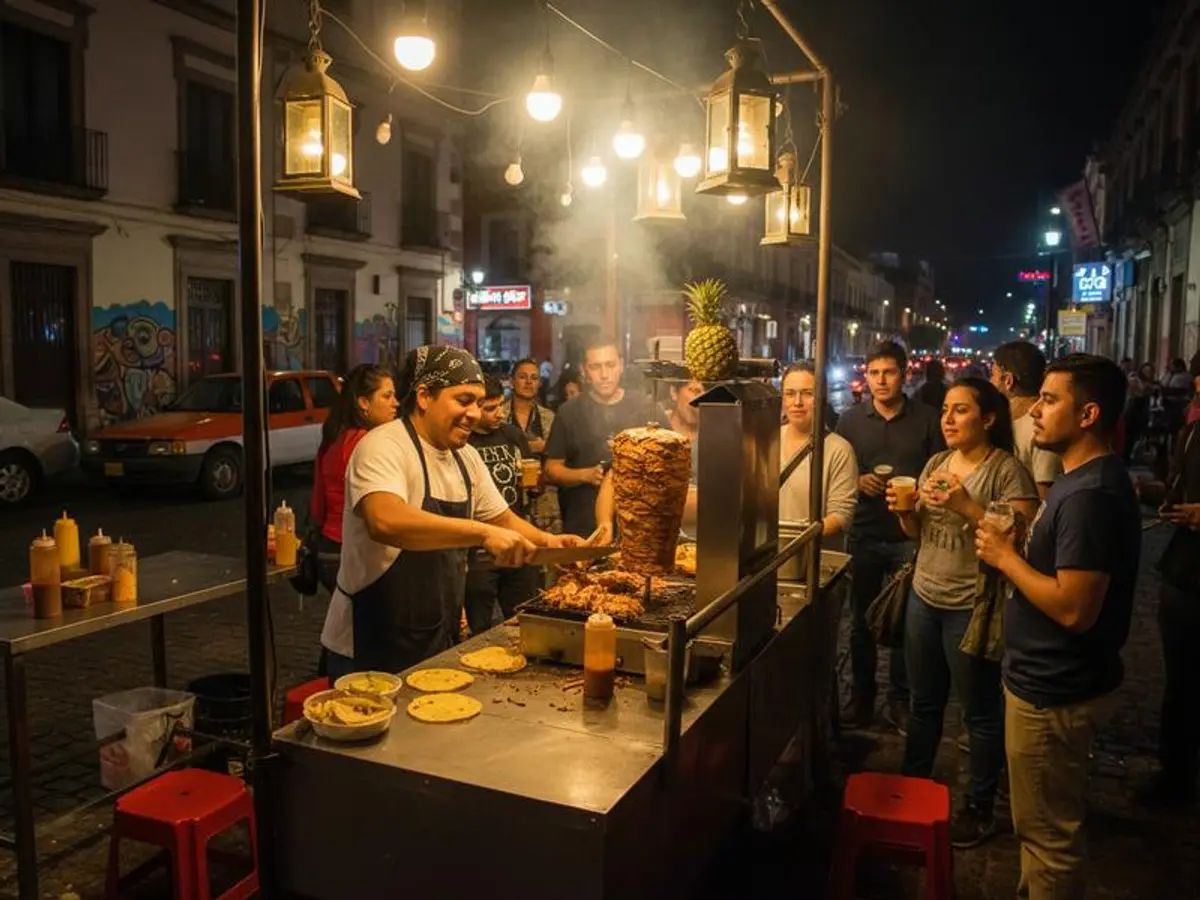
Mexico Backpacker Budget 2026: $17-$23 a Day
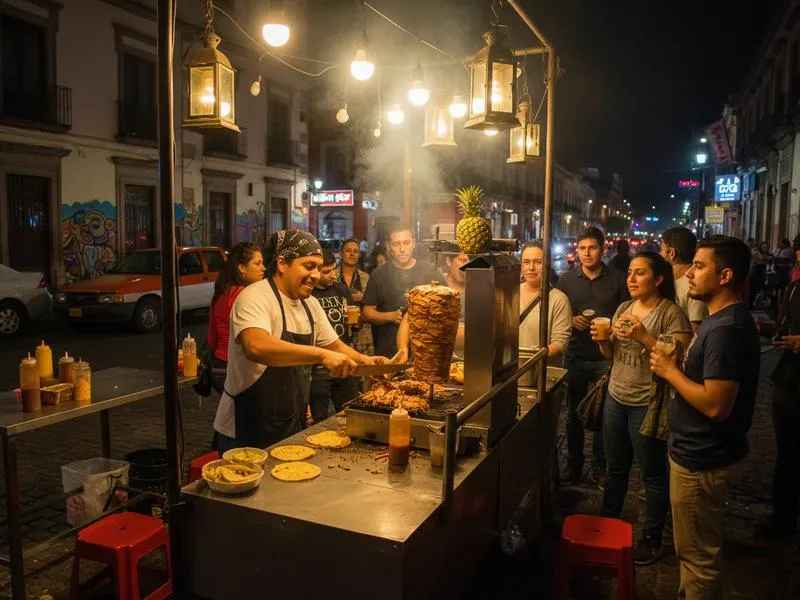
A realistic Mexico backpacker budget in 2026 is about 17 to 23 USD a day if you build the trip around inland cities like San Cristóbal, Oaxaca, Guanajuato, and Puebla. Add more comfort, longer buses, or more beach time and the number moves closer to 25 to 35 USD a day.
The biggest mistake is using Cancún, Tulum, or Los Cabos as your baseline. Those places are splurge stops, not normal backpacker pricing. If you build your route around cheaper inland cities and only add one beach stop at the end, Mexico is still one of the best-value countries in the region.
If you only need the quick answer, here is the clearest version.
Mexico Backpacker Budget in 30 Seconds
| Question | Short answer |
|---|---|
| How much does backpacking Mexico cost per day? | Roughly 17 to 23 USD/day on a tight budget and 25 to 35 USD/day if you want a little more breathing room. |
| How much for a month? | About 500 to 700 USD/month in cheaper inland cities, more like 800 USD+ if you add beach destinations or lots of paid tours. |
| Cheapest backpacker cities? | San Cristóbal de las Casas, Oaxaca City, Guanajuato, Puebla, and Mérida. |
| What blows the budget fastest? | Tourist restaurants, frequent ATM fees, taxis instead of colectivos, and spending too long in Cancún Hotel Zone or Tulum. |
| Best Mexico route on a budget? | For a true backpacker budget, go CDMX, Puebla, Oaxaca, San Cristóbal, and Guanajuato or Mérida before adding any beach stop. |
| Can you do Mexico for under 600 USD/month? | Yes, if you stay mostly inland. Add Bacalar, Tulum, or Cancún and the number climbs fast. |
The Realistic Number: 500-700 USD/Month Is Doable
Let’s start with the honest answer. Can you do Mexico on 500-600 USD per month? Yes — if you’re in the right cities. Can you do it everywhere? No.
A working monthly budget breaks down like this:
| Category | Tight Budget | Comfortable Budget |
|---|---|---|
| Accommodation | 3,000–4,500 MXN | 4,500–6,000 MXN |
| Food | 2,400–3,600 MXN | 4,000–6,000 MXN |
| Transport | 800–1,500 MXN | 1,500–2,500 MXN |
| Activities/Entry | 500–1,000 MXN | 1,000–2,000 MXN |
| Misc/Toiletries | 300–600 MXN | 600–1,000 MXN |
| Total (MXN) | ~7,000–11,200 | ~11,600–17,500 |
| Total (USD) | ~360–580 USD | ~600–900 USD |
The 600 USD/month target is still realistic, but only if you build the route around inland backpacker cities and keep the beach portion short. At the tighter end of that range — eating mostly street food, staying in dorms, and taking colectivos or second-class buses — you are looking at roughly 500 to 600 USD/month in cities like San Cristóbal, Guanajuato, Puebla, and Oaxaca.
The variable that matters most is still which city you are in. San Cristóbal de las Casas can cost nearly half what Tulum costs for a similar bed, meal, and transport day.
Accommodation Breakdown
Hostel Dorms: 150-250 MXN per Night
Hostel dorm beds in Mexico’s backpacker cities consistently run 150-250 MXN (8-13 USD) per night. What you get varies:
- 150-180 MXN: Basic dorm, shared bathroom, possibly no AC. Standard in San Cristóbal, Guanajuato.
- 200-250 MXN: Clean dorm with lockers, hot shower, common kitchen. Most cities.
- 300+ MXN: “Boutique hostel” with pool or rooftop. Oaxaca, Mérida, CDMX.
The sweet spot is 180-220 MXN. In this range you get reliable wifi, hot water, and clean sheets — which is all you need.
Monthly cost: A 200 MXN/night dorm bed = 6,000 MXN/month. This alone tells you the 600 USD budget requires strategic planning.
Casa de Huéspedes: 300-500 MXN for a Private Room
This is the most underutilized accommodation type. Casas de huéspedes (guest houses) are family-run rooms rented out of private homes — think bed-and-breakfast without the breakfast, at hostel prices.
A private room in a casa de huéspedes runs 300-500 MXN/night in most mid-size cities. For a couple, this beats splitting a hostel dorm entirely. The owners are locals, the water heater works, and you’ll often get tips on where to eat that no travel blog covers.
Find them by walking two blocks off the main square in any colonial city and looking for handwritten signs saying “Se Renta Cuarto” or “Hospedaje.” They don’t usually appear on Hostelworld or Booking.com.
Long-Stay Discounts
If you’re staying in one city for a week or more, negotiate directly. A 350 MXN/night room often becomes 2,500 MXN for the week (saving 450 MXN) if you ask. Hostel dorms frequently offer weekly rates. Language school programs sometimes include housing.
Food Breakdown
Food is where backpackers save the most — or waste the most. The difference between eating well for 150 MXN/day vs. 400 MXN/day is entirely about where you sit down.
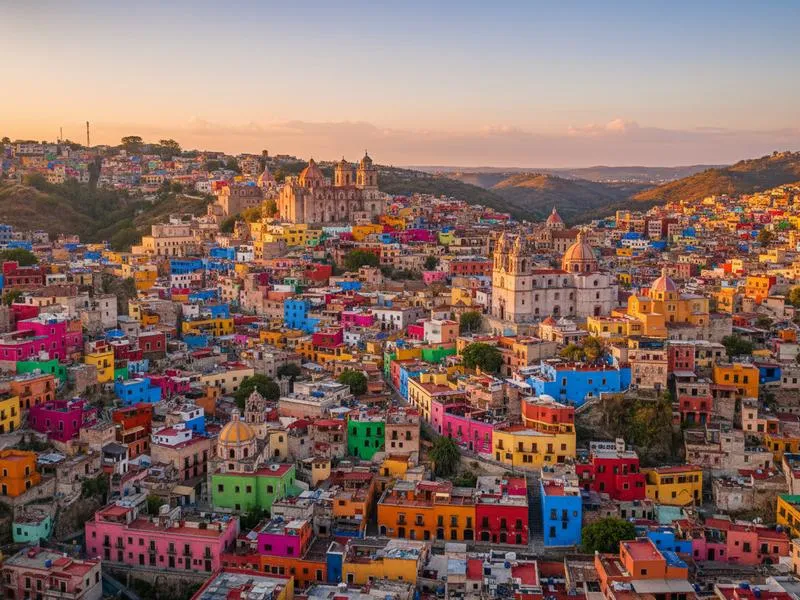
Street Tacos: 15-25 MXN Each
Street tacos remain the single best value food in Mexico. A taco al pastor, de suadero, de carnitas, or de barbacoa at a proper taquero runs 15-25 MXN in 2026. Three tacos, a salsa verde, and a Jamaica agua fresca = 65-80 MXN. That’s breakfast or dinner, handled.
The rule of thumb: if a taco stall has a laminated English menu with photos, prices doubled. Look for places with local workers at 7pm on a weekday. Those are the ones.
Comida Corrida: The 60-80 MXN Secret Weapon
The comida corrida is Mexico’s greatest contribution to budget eating. Between noon and 3pm, fondas (small family restaurants) serve a fixed 3-course meal: soup, main plate with rice and beans, sometimes dessert, and agua fresca or a small drink. Cost: 60-80 MXN in most cities. Up to 100 MXN in pricier areas.
For 65 MXN you eat a full meal that would cost 250 MXN at any restaurant a foreigner finds on Google. The trick: comidas corridas are lunch-only, they’re not advertised online, and the best ones fill up by 1:30pm. Walk into any fonda that smells good between 12pm and 2pm, point at what others are eating, and say “el menú del día.” Done.
Monthly food budget built on comida corrida + street tacos: 2,500-3,500 MXN/month. That’s 130-180 USD.
OXXO Breakfast: 40-60 MXN
OXXO stores are everywhere in Mexico and serve as an unofficial backpacker supply chain. A breakfast from OXXO: a tuna pastry or empanada (18-25 MXN), a bag of Mafer peanuts (14 MXN), and a black coffee (20-25 MXN). Total: 50-60 MXN. Not glamorous, but it works for early mornings when the taquero isn’t open yet.
Better OXXO breakfast strategy: buy eggs, tortillas, and beans from a supermarket and cook in your hostel kitchen. 40 MXN feeds you, better food, and you learn which OXXO hours overlap with which hostel kitchen rules.
Supermarkets for Self-Catering
Walmart, Bodega Aurrerá (Mexico’s budget Walmart), Chedraui, and local tianguis (street markets) all sell basic groceries cheaply. A week’s worth of eggs, tortillas, beans, avocados, tomatoes, and chilies = 300-400 MXN. If your hostel has a kitchen, self-catering 2-3 meals per week cuts monthly food costs by 20-25%.
Transport Breakdown
Colectivos and Combis: 10-25 MXN
Colectivos are shared vans or minibuses that follow fixed routes. They cover everything from the airport to neighboring towns and cost almost nothing. A colectivo from Oaxaca to Mitla: 30 MXN. A combi across San Cristóbal: 10 MXN. A colectivo from Puerto Escondido to the surf beaches: 15 MXN.
They don’t have apps or timetables. You flag them down on the street or find them at designated stations. Ask locals which colectivo goes where — they know exactly which color van covers which route.
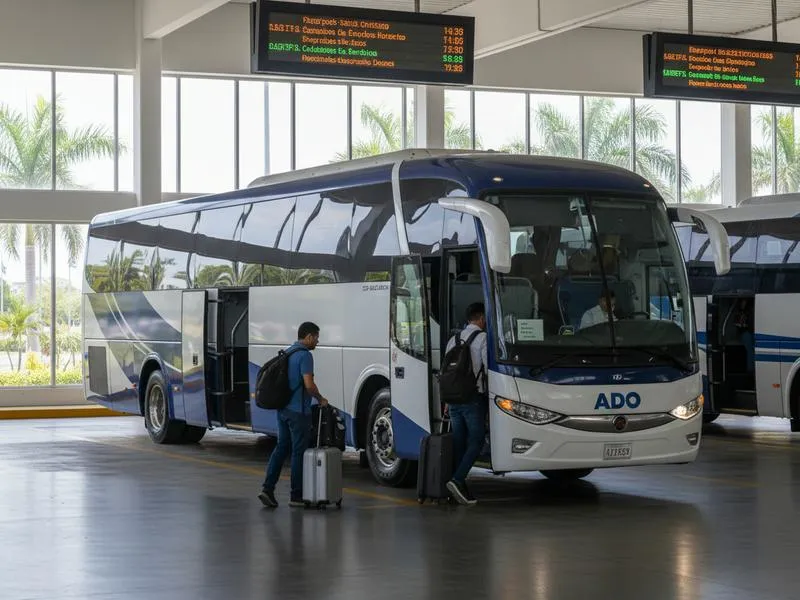
ADO Buses: 2nd Class vs. 1st Class
ADO runs the main intercity bus network. The difference:
- ADO 2nd class (AU/OCC/AEXA brands): Older coaches, more stops, no onboard wifi, seats still recline. Roughly 30-40% cheaper.
- ADO 1st class (ADO): Newer coaches, onboard entertainment, USB ports, faster routes.
- ADO GL/Platino: Fully flat seats, snacks, premium prices.
For backpackers, 2nd class is the move for routes under 6 hours. The Oaxaca→San Cristóbal route on OCC costs around 300-350 MXN vs. 500-600 MXN on ADO GL. Same destination, same safety.
Hitchhiking Reality
Hitchhiking exists in Mexico, primarily in southern states (Chiapas, Oaxaca) and Baja California. It’s more common than most guidebooks admit, especially on rural roads where buses don’t run frequently. Trucks, farm vehicles, and locals regularly pick up travelers.
The realistic assessment: it works, it’s slow, and it’s not zero-risk. If you’re solo, conservative, and careful about time of day and route, it can supplement your transport budget significantly. For the Chiapas highlands or the Oaxacan valleys, it’s a genuine option. For the road from Acapulco to Puerto Escondido, skip it.
Free Sights Guide
INAH Sunday Free Entry
The Instituto Nacional de Antropología e Historia (INAH) manages most of Mexico’s major archaeological sites. Mexican nationals get free entry every Sunday. The policy varies for foreigners — some sites allow everyone in free, others charge non-Mexicans regardless.
Sites where foreigners often get in free on Sundays (call ahead, this changes):
- Monte Albán (outside Oaxaca)
- Mitla (Oaxaca Valley)
- Palenque (Chiapas)
- Uxmal (Yucatán)
Sites that charge foreigners on Sundays:
- Chichen Itza (charged separately by state government, not INAH)
- Teotihuacan (sometimes)
Even when you pay, most smaller INAH sites cost 85-100 MXN (4-5 USD). That’s not the budget killer people assume.
Free Colonial Architecture
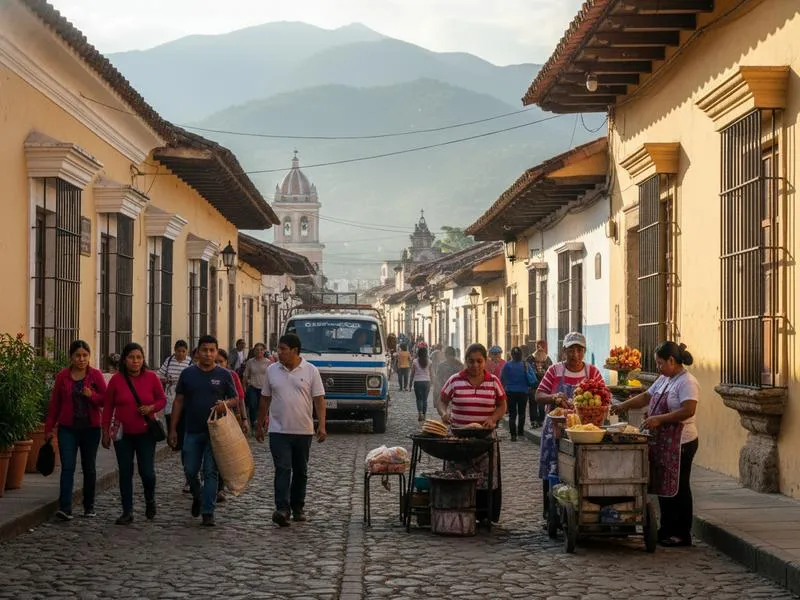
Mexico’s colonial cities are essentially open-air museums. Walking Guanajuato’s callejones, exploring the churches of Oaxaca, strolling Campeche’s walled city, or wandering San Cristóbal’s indigenous neighborhood of Chamula costs nothing. The sightseeing that most travelers pay for in European cities is free here.
Cenotes Without Tours
Many cenotes near smaller towns don’t run guided tours — you show up, pay a small entry fee (50-120 MXN), and swim. The ones near Valladolid (Cenote Zací, 60 MXN), the cenotes near Homún village (70 MXN each), and countless swimming holes in Chiapas exist outside the tour circuit entirely.
Best Cities for Backpackers
Ranked by achievable daily budget:
| City | Daily Budget (USD) | Why |
|---|---|---|
| San Cristóbal de las Casas | 25-35 USD | Cheapest city in Mexico for tourists |
| Oaxaca City | 30-45 USD | Incredible food value, colonial beauty |
| Guanajuato | 28-40 USD | Cheap hostels, free architecture |
| Puebla | 28-42 USD | Underrated, close to CDMX |
| Mérida | 30-45 USD | Safe, great food scene, good hostels |
| Mexico City | 35-55 USD | More to spend on, but scale keeps costs manageable |
| Puerto Escondido | 35-55 USD | Budget surf town, but no longer ultra-cheap |
If you want the shortest answer possible, San Cristóbal, Oaxaca, Guanajuato, Puebla, and Mérida are the best places to keep a Mexico backpacker budget under control. They give you cheap dorms, walkable centers, and excellent low-cost food without forcing you into resort pricing.
Best Backpacker Cities in Mexico by Trip Style
| Trip style | Best city | Why it works | Rough daily budget |
|---|---|---|---|
| Cheapest overall | San Cristóbal de las Casas | Lowest dorm prices, cheap combis, easy low-cost food | 25-35 USD |
| Best food value | Oaxaca City | Strong comida corrida culture plus cheap markets | 30-45 USD |
| Best colonial-city value | Guanajuato | Walkable center, low hostel prices, lots to do free | 28-40 USD |
| Best balance of cost and safety | Mérida | Easy logistics, good hostels, reliable food options | 30-45 USD |
| Best near-CDMX alternative | Puebla | Lower prices than the capital with plenty to eat and see | 28-42 USD |
| Best beach town if you really want one | Puerto Escondido | Still workable if you stay simple and avoid constant tours | 35-55 USD |
Avoid for budget travel: Cancún Hotel Zone (everything is overpriced by design), Tulum (Instagram prices), Los Cabos (resort prices only), Playa del Carmen (expensive once you leave the bus station).
If you’re deciding where to base first, start with our deeper guides to Oaxaca City, San Cristóbal de las Casas, Guanajuato City, Puebla, and Mérida. They make it easier to tell whether the cheapest city is actually the best fit for your route.
Best Backpacking Mexico Route by Budget Level
Before the day-by-day route, here is the decision that matters most.
| Route style | Works for | Rough 30-day total | Reality check |
|---|---|---|---|
| Inland backpacker route | Travelers trying to stay near 600 USD/month | 11,000-12,000 MXN | Best fit for Oaxaca, Puebla, Guanajuato, San Cristóbal, and Mérida. |
| Inland route + one beach stop | Travelers okay with 700 to 800 USD/month | 13,000-15,000 MXN | Bacalar or Puerto Escondido can still work if you keep tours limited. |
| Riviera Maya heavy route | Travelers who want Cancún, Playa, or Tulum early | 16,000 MXN+ | This stops behaving like a backpacker-budget trip very quickly. |
If your goal is the lowest realistic Mexico backpacker budget, build the route inland first and treat beaches as a short reward at the end.
Sample 30-Day Route with Costs
This route is the version that still keeps the trip recognizably backpacker-friendly while showing where the budget starts to drift. All costs are per person, in MXN, approximate 2026 prices.
Days 1-5: Mexico City (CDMX)
- Hostel dorm: 220 MXN/night × 5 = 1,100 MXN
- Food (street tacos + comida corrida): 200 MXN/day × 5 = 1,000 MXN
- Metro + colectivos: 20 MXN/day × 5 = 100 MXN
- Entry fees (Teotihuacan: 100 MXN, anthropology museum: free Sun): 100 MXN
- 5-day subtotal: ~2,300 MXN (~120 USD)
Days 6-10: Oaxaca City
- Bus from CDMX: 350 MXN (ADO 2nd class)
- Hostel dorm: 190 MXN/night × 5 = 950 MXN
- Food: 180 MXN/day × 5 = 900 MXN
- Transport (colectivos to Monte Albán, Mitla): 150 MXN
- Entry fees: 170 MXN
- 5-day subtotal: ~2,520 MXN (~130 USD)
Days 11-16: San Cristóbal de las Casas
- Bus from Oaxaca (OCC): 330 MXN
- Hostel dorm: 160 MXN/night × 6 = 960 MXN
- Food: 150 MXN/day × 6 = 900 MXN
- Day trips (Sumidero Canyon colectivo, Chamula entry): 200 MXN
- 6-day subtotal: ~2,390 MXN (~125 USD)
Days 17-22: Mérida
- Bus from San Cristóbal (OCC/ADO): 550 MXN
- Hostel dorm or casa de huéspedes: 200 MXN/night × 6 = 1,200 MXN
- Food: 190 MXN/day × 6 = 1,140 MXN
- Colectivo to Chichen Itza (day trip): 120 MXN round trip + entry 600 MXN
- 6-day subtotal: ~3,610 MXN (~190 USD)
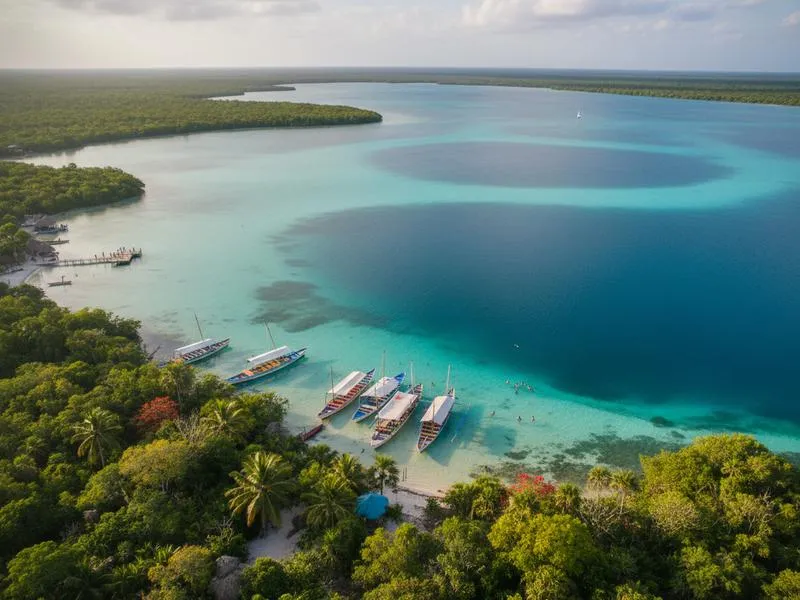
Days 23-30: Bacalar
- Colectivo from Chetumal (transfer in Cancún or Playa): 300 MXN
- Budget hostel/camping: 180 MXN/night × 8 = 1,440 MXN
- Food: 170 MXN/day × 8 = 1,360 MXN
- Lagoon boat tour: 250 MXN
- 8-day subtotal: ~3,350 MXN (~175 USD)
30-Day Total: ~14,170 MXN ≈ 740 USD
That total is the honest answer for an inland route plus a beach finish. In other words, it is still a good budget trip, but it is not the cleanest version of a sub-600-USD month.
If you want the true low-budget version, make three changes: skip Chichén Itzá, replace Bacalar with Puebla or Guanajuato, and slow down enough to earn a weekly hostel discount. That pulls the trip much closer to 11,500 to 12,500 MXN, which is the range where a 600 USD backpacking month in Mexico becomes realistic again.
Emergency Budget Tips
Couchsurfing Still Works
Despite the platform’s decline, Couchsurfing remains active in Mexico’s backpacker cities. CDMX, Oaxaca, Guadalajara, and Mérida have active host communities. The community meetups (often weekly) are free entry and excellent for meeting locals. Even if you only use Couchsurfing for the meetups and hostels for sleep, you cut social costs to zero.
Language Schools as Housing
Spanish language schools in Oaxaca, San Cristóbal, Guanajuato, and Morelia often include accommodation in homestays as part of their course packages. A week of Spanish classes + homestay + three daily meals often runs less than hostel + food alone for the same period. You also learn Spanish faster than you would traveling solo. Check Instituto Cultural Oaxaca, Centro de Idiomas del Sureste (Mérida), and Don Quijote for current pricing.
WWOOF Mexico (Farming Exchange)
World Wide Opportunities on Organic Farms operates in Mexico. WWOOF hosts offer free accommodation and food in exchange for 4-6 hours of farm or garden work per day. Farms cluster in Oaxaca, Morelos, Veracruz, and Baja California. It’s not glamorous, but a two-week WWOOF stint drops your monthly average significantly. Register on WWOOF.net (small membership fee).
House-Sitting
TrustedHousesitters and HouseCarers have listings in San Miguel de Allende, Puerto Vallarta, Mérida, and CDMX. Sit someone’s house (and pets) while they’re away — accommodation is free for the duration. Requires building a profile with references, but for longer trips it’s a legitimate strategy.
What Kills a Backpacker Budget
ATM Fees: Euronet machines, airport ATMs, and standalone convenience store ATMs charge 60-100 MXN per withdrawal plus your home bank’s foreign transaction fee. On a tight budget, that’s a meal. Use Santander, BBVA, or Banorte bank ATMs. Withdraw 2,000-3,000 MXN at once rather than 500 MXN every day. Revolut and Wise cards are exempt from most fees.
Tourist Restaurants: Any restaurant where the menu is in English, has laminated photos of the food, and the waiter greets you in English charges 3-5x local prices. A plate of enchiladas in a market fonda: 80 MXN. The same plate at a tourist-facing restaurant two blocks from the main square: 200-280 MXN. The food is often worse.
Cancún Hotel Zone: Even a single night in the Hotel Zone anchors your budget expectations in the wrong place. A club cover on Blvd. Kukulcán: 500 MXN. A beer: 120 MXN. A “budget” breakfast: 250 MXN. Cancún is not a budget destination by design — the entire infrastructure prices out people who aren’t willing to spend money. If you must go, stay in downtown Cancún (Ciudad Cancún), not the hotel zone.
Booking.com Convenience Premium: Booking.com charges hotels a commission, which they pass to you. Walk-in rates at casas de huéspedes and smaller hotels are often 20-30% less than what you’d book online. For cities you’re confident you’ll find a bed in, show up and negotiate in person.
Tour Markup: Tours sold at hostel reception desks markup genuine prices by 50-200%. A cenote tour your hostel sells for 600 MXN? Show up at the colectivo station to Valladolid (30 MXN), walk to the cenote (free entry with a small donation or 70 MXN), and eat at the market on the way back. You’ve done the same thing for 150 MXN.
Backpacking Mexico Budget Mistakes That Cost the Most
If you blow through your budget in Mexico, it is usually because of four things: too many one-night stops, too much time in beach zones, too many tourist-booked tours, and too much cash lost to small ATM withdrawals. Backpackers who keep costs low usually move slower, stay inland longer, and treat beaches as a short splurge rather than the core of the route.
A simple fix is to think in budget tiers before you book anything:
| Budget tier | What it looks like |
|---|---|
| 17-23 USD/day | Dorms, street food, colectivos, very few paid tours, mostly inland cities |
| 25-35 USD/day | Better hostels, more bus comfort, a few paid activities each week |
| 40+ USD/day | Frequent beach time, private rooms, nightlife, tours, and tourist restaurants |
That framing helps more than any generic “Mexico is cheap” advice because it shows exactly when the country stops behaving like a budget destination.
Travel Insurance on a Budget
At these prices, travel insurance matters more than when you’re staying in 300 USD/night hotels. A basic backpacker policy usually costs around 35 to 50 USD per month and should cover emergency medical treatment, hospital stays, and evacuation. That is boring until you need it.
For context: a broken arm treated at a private hospital in Oaxaca can cost 8,000 to 15,000 MXN. One month of insurance is usually far cheaper than one bad clinic visit. If you are moving around the country for weeks at a time, it is one of the few budget line items that is worth protecting.
Keep Going
This guide works best alongside a few more specific pages. For the broader countrywide baseline, see our Mexico travel cost guide. If you want the less-austere version of the same trip, read Mexico on $50 a day. For city picks that are easiest on a backpacker budget, go to cheapest destinations in Mexico, Oaxaca City, San Cristóbal de las Casas, and Guanajuato City. When you are ready to plan the full route, our Mexico travel tips and Mexico solo travel guide help with transport, SIM cards, and safety.
The short version is simple: backpacking Mexico can still be cheap, but only if you stop comparing every destination to Tulum. Choose the inland route first, keep beach stops short, and the 600 USD/month target stays realistic.