Best Things to Do in Mexico City for First-Timers
The best things to do in Mexico City for first-timers start with Templo Mayor, Chapultepec, Casa Azul, Teotihuacan, Roma Norte food crawls, and the experiences worth booking before you arrive.
Mexico City (CDMX) has 180+ museums, one of the world’s most dynamic food scenes, Aztec ruins buried beneath Spanish colonial buildings, and neighborhoods so distinct they feel like separate cities. The problem isn’t finding things to do — it’s knowing what’s genuinely worth your time.
This guide ranks 45 experiences by actual value — not by tourist website consensus. For logistics, transport, and budget planning, see our Mexico City Travel Guide 2026.
The Non-Negotiables: Do These First
1. Templo Mayor — The Aztec Heart Beneath the Zócalo
Entry: 85 MXN ($4.25) | Hours: Tue–Sun 9 AM–5 PM | Time: 1.5–2 hours
The Templo Mayor is the excavated main temple of Tenochtitlan, the Aztec capital — discovered in 1978 when workers were laying electrical cable near the Zócalo. What they found: a previously unknown ritual center, now one of Mexico City’s most important archaeological sites.
The open-air ruin shows eight different construction phases as Aztec rulers expanded the temple over 200 years. The adjacent museum houses thousands of artifacts including the famous Coyolxauhqui Stone (moon goddess), the Stone of Tizoc, and the Eagle Warriors chambers.
Go at 9 AM when it opens — the site is largely tourist-free for the first hour.
Pro tip: Book tickets at the museum entrance, not outside from touts.
2. Museo Nacional de Antropología — The World-Class Museum
Entry: 85 MXN | Hours: Tue–Sun 9 AM–7 PM | Time: 3–5 hours (minimum)
One of the world’s great anthropological museums. The MNA houses the most complete collection of pre-Hispanic Mexican civilizations anywhere — Aztec, Maya, Olmec, Zapotec, Mixtec, Toltec, Teotihuacan, and more, all under one roof in Chapultepec Park.
The highlights:
- Aztec Sun Stone (commonly called the “Aztec Calendar”) — not actually a calendar. A ritual stone marking cosmological cycles.
- Contents of Pakal’s tomb — the Mayan king of Palenque buried in a jade mosaic death mask
- Olmec Heads (replicas of the originals in Veracruz) — massive stone faces with African features
- Sala Mexica — the entire Aztec civilization room, alone worth multiple visits
Honest time estimate: 3 hours is the minimum to see the main halls. 5 hours still leaves things unseen. Go on a weekday morning.
3. Palacio de Bellas Artes — Architecture + Murals
Entry: Lobby free | Upper floors 85 MXN | Hours: Tue–Sun 10 AM–6 PM | Time: 1–2 hours
Mexico City’s defining landmark: Art Nouveau exterior, Art Deco interior. The building took 30 years to build (1904–1934) and sank into the soft lakebed soil during construction, requiring constant engineering adjustments.
Inside: murals by Diego Rivera, David Alfaro Siqueiros, and Rufino Tamayo on the upper floors. The Rivera mural “Man at the Crossroads” (1934) is particularly significant — the original was commissioned for Rockefeller Center in New York, destroyed when Rivera refused to remove Lenin’s portrait, and later recreated here.
Check the schedule for Ballet Folklórico de México performances — one of Mexico’s premier cultural shows.
4. Coyoacán + Casa Azul (Frida Kahlo Museum)
Casa Azul entry: 270 MXN | Hours: Tue–Sun 10 AM–6 PM | Time: 2–3 hours for the neighborhood
Coyoacán is a colonial-era village that became part of Mexico City as the city grew outward. It retains the feel of a separate town — cobblestone streets, plazas with muralists and street performers, traditional market.
The Casa Azul (Blue House) is where Frida Kahlo was born, lived, and died. The house is preserved as she left it — a fascinating intimate portrait of Mexican artistic life in the mid-20th century. It’s consistently CDMX’s most visited museum, which means:
Book tickets 2–4 weeks ahead at museofridakahlo.org.mx. Walk-in tickets sell out by 9 AM every day.
While in Coyoacán: The Mercado de Coyoacán has excellent traditional food (tlayudas, seafood tostadas, aguas frescas). The Plaza Hidalgo on weekends fills with artisans, musicians, and families.
5. Chapultepec Park — Urban Forest + Multiple Museums
Park entry: Free | Museum entries: 85 MXN each | Time: Full day
At 686 hectares, Chapultepec is larger than Hyde Park, Central Park, and Golden Gate Park combined. Within it:
- Museo Nacional de Antropología (see above)
- Chapultepec Castle — former imperial residence perched on a hill with panoramic city views; houses the National History Museum
- Museo Tamayo — world-class modern and contemporary art
- Chapultepec Zoo — free; pandas, gorillas, snow leopards
- Lago de Chapultepec — rowboats for rent
Most efficient: Museum + castle in Section 1 (accessible end). Section 2 and 3 are wilder, less visited.
Historical Sites Worth Your Time
6. Palacio Nacional — Diego Rivera’s Epic Murals
Entry: Free | Hours: Daily 9 AM–5 PM
On the east side of the Zócalo, the National Palace has housed Mexican governments since Aztec times. The main attraction: Diego Rivera’s enormous mural cycle depicting Mexican history from pre-Hispanic times to the 20th century, spanning three floors of the main staircase and a long corridor. One of the largest and most important mural works in the world.
Go on a weekday — weekends bring large school groups.
7. Metropolitan Cathedral — Living Architectural History
Entry: Free | Hours: Daily 7 AM–8 PM
The largest cathedral in the Americas took 240 years to build (1573–1813) and incorporates Gothic, Baroque, Renaissance, and Neoclassical elements. The towers lean visibly — the soft lakebed soil causes the entire cathedral to sink unevenly. Engineers have spent decades trying to stabilize it.
The Altar of the Kings (Altar de los Reyes) inside is considered one of Mexico’s finest examples of Churrigueresque baroque.
8. Tlatelolco: Plaza de las Tres Culturas
Entry: Free | Hours: Always open
Three civilizations visible simultaneously: an Aztec pyramid (Templo de Santiago Tlatelolco), a 16th-century Spanish colonial church (Iglesia de Santiago), and a 1960s apartment block. This was the site of the last Aztec battle before the Spanish conquest — and the site of the 1968 student massacre, when government forces killed hundreds of student protesters days before the Mexico City Olympics. A memorial marks both events.
Understated but powerful. Skip if your time is limited; essential if you care about Mexican history.
9. Templo de San Hipólito
Entry: Free
Built on August 13, 1521 — the day Spain completed its conquest of Tenochtitlan — this small church near the Alameda is the city’s oldest colonial structure. Easy to pass by without knowing its significance.
Food: Where to Actually Eat
Mexico City’s food scene is genuinely extraordinary — multiple restaurants on the World’s 50 Best list alongside 50-peso taco stands that are better than most restaurant tacos anywhere else.
10. Mercado de San Juan — Upscale Market
Near the Centro Histórico, Mercado de San Juan is where CDMX’s restaurants buy imported ingredients. For visitors: wagyu tacos, jamón ibérico, exotic seafood, fine cheese, and unusual prepared foods. Not the cheapest but fascinating and delicious. Open daily.
11. Mercado Roma — Modern Food Hall
In the Roma Norte neighborhood: a curated food hall with craft beer, artisanal food, and a rooftop. More Instagram than authentic but excellent for variety. Entry free, food 100–300 MXN per person.
12. Morning Tamales at a Market
The best 30-peso breakfast in CDMX: arrive at any neighborhood market (Mercado de Medellín in Roma, Mercado Coyoacán, Mercado Moctezuma) between 7–9 AM and eat fresh tamales from vendors who set up outside. Tamal de chipilín, rajas, or mole — each wrapped in corn husks, served with atole. The Mexico City institution.
13. Tacos al Pastor at El Huequito / El Borrego Viudo
The definitive Mexico City taco: pork marinated in guajillo chiles and achiote, cooked on a vertical spit (trompo), sliced thin with a piece of pineapple. El Huequito (Centro Histórico) has been doing this since 1959. El Borrego Viudo near Observatorio is a local institution. Cost: 20–35 MXN per taco.
14. Tortas de Tlayuda at Guzina Oaxaqueña
Roma Norte has become home to some of the best Oaxacan food outside Oaxaca. Guzina Oaxaqueña (and several nearby competitors) serves tlayudas, black mole, and mezcal at reasonable prices. Essential if you can’t make it to Oaxaca.
15. Contramar — Worth the Wait
The best mariscos (seafood) restaurant in the city. Tuna tostadas are legendary. The mixed grilled fish (red on one side, green on the other — salsa roja and salsa verde) is the signature dish. No dinner reservations — arrive before 1 PM for lunch or expect a 45-minute wait. Price: 300–600 MXN per person.
16. Pujol — If Budget Allows
Enrique Olvera’s flagship: consistently in the world’s top 50 restaurants. “Mole madre” — mole elements aged 1,000+ days alongside a fresh mole — is the dish. Book 4–6 weeks ahead at pujol.com.mx. ~$200 USD per person. Worth it for food lovers.
Neighborhoods to Walk
17. Roma Norte — The Neighborhood
Art Nouveau buildings, natural wine bars, excellent independent restaurants, gallery-filled side streets. Best on a weekday afternoon when the lunch spots are running. Pedestrian-friendly, excellent coffee (Café Toscano, Blend Station). Roma Norte is consistently one of Latin America’s best urban neighborhoods for wandering.
18. Condesa — Tree-Lined Calm
Adjacent to Roma, Condesa has wider boulevards (designed in the 1930s), art deco architecture, and two parks (Parque México and Parque España). More residential and family-oriented than Roma. The roundabout streets with their terraced restaurants are photographed constantly.
19. San Ángel — Saturday Bazaar
San Ángel’s Bazar del Sábado (Saturday only, 10 AM–5 PM) is one of CDMX’s best craft and art markets — operating since 1960 in a 17th-century colonial mansion. Quality is genuine: painters, sculptors, jewelry makers, textile artists. Cobblestone streets and Jacaranda-lined plazas outside the market. Saturday only. Worth planning your visit around.
20. Polanco — Window Shopping + Free Museum
Polanco is CDMX’s most affluent neighborhood. Worth visiting for: Museo Soumaya (free — 66,000 pieces, best Rodin collection outside Paris), the Lincoln Park, and window-shopping along Masaryk Avenue. Best explored before or after the MNA.
Art and Culture Beyond the Big Museums
21. Museo Soumaya — Completely Free
Carlos Slim’s private collection in a striking silver building in Polanco: 66,000 pieces spanning 3,000 years of history. European masters, Mexican modernists, 380 Rodin sculptures. Free admission, no reservation needed. The exterior alone is worth seeing — a sinuous aluminum-clad building designed by Fernando Romero.
22. Museo del Estanquillo — Carlos Monsiváis Collection
Small but extraordinary: Mexican cultural journalist Carlos Monsiváis collected folk art, political cartoons, pulp magazines, and popular culture artifacts for 50 years. This quirky museum displays his obsessions. Entry: 20 MXN. Near the Zócalo.
23. Museo de Arte Popular — Best Folk Art Collection
Six floors of traditional Mexican folk art: alebrijes, Oaxacan textiles, talavera pottery, lacquerwork, embroidery. Entry: 55 MXN. Near the Alameda Central.
24. Palacio de Minería — Hidden Gem (Not Hidden)
One of the finest neoclassical buildings in the Americas, the old Mining School. Free to enter. The courtyard alone is exceptional — done in 1813 by Manuel Tolsá, who also designed the Caballito equestrian statue outside.
25. Galerías: México Arte Contemporáneo (MUAC)
CDMX’s leading contemporary art museum, at UNAM’s Espacio Escultórico. Excellent rotating exhibitions of Mexican and Latin American contemporary art. Entry: 60 MXN. Worth visiting if you’re heading to the south of the city.
Experiences Unique to Mexico City
26. Xochimilco Trajineras — Floating Gardens
Entry: 350–600 MXN per boat per hour (full boat, not per person)
The ancient Aztec canal system, still functional in the south of the city. Rent a colorful trajinera (flat-bottomed boat) and drift through canals lined with chinampas (artificial agricultural islands). Other boats sell food, drinks, and mariachi music. The “La Llorona” boat tour at night visits the famed Island of the Dolls (Isla de las Muñecas).
How to do it: Take Metro Line 2 to Tasqueña, then light rail (Tren Ligero) to Xochimilco (40 min total from Roma, 15 MXN). Negotiate your boat at the main embarcadero.
Best on a Sunday when it’s busiest and most festive. Go with a group to split the boat cost.
27. Lucha Libre at Arena México
Tickets: 100–500 MXN | Schedule: Fridays 8:30 PM
The Arena México in the Centro Histórico hosts weekly lucha libre matches — Mexico’s colorful, acrobatic professional wrestling. Masked wrestlers, dramatic narratives, audience participation, and atmosphere that doesn’t exist anywhere else in the world. No wrestling knowledge required; the spectacle is the point.
Book through the arena website or buy at the door. Arrive early for better unreserved seats.
28. Ballet Folklórico de México
Tickets: 500–1,500 MXN | Palacio de Bellas Artes
One of Mexico’s premier cultural performances: traditional dances from every region of Mexico performed in elaborate costumes in the art deco grandeur of Bellas Artes. Performances Sunday morning (late-Sept to June) and Wednesday evenings. Book at bellas-artes.mx.
29. Aerial Tram (Cablebus) — City Views, Local Prices
The Cablebus cable car runs from Cuautepec to Indios Verdes (Line 1) and Constitución to El Rosario (Line 2) — built to serve low-income neighborhoods, not tourists, but the views over the city are spectacular. Fare: 7 MXN each way (same as metro). An actual local experience.
Free and Budget Things to Do
| Activity | Cost | Notes |
|---|---|---|
| Zócalo + Palacio Nacional murals | Free | 9 AM–5 PM weekdays |
| Metropolitan Cathedral | Free | Daily 7 AM–8 PM |
| Palacio de Bellas Artes lobby | Free | Free ground floor; 85 MXN upper floors |
| Museo Soumaya | Free | Daily 10:30 AM–7 PM |
| Chapultepec Park | Free | Park entry free; museums separate |
| Chapultepec Zoo | Free | Pandas, gorillas, snow leopards |
| Tlatelolco plaza | Free | Three-civilization site |
| Roma Norte walk | Free | Best neighborhood for wandering |
| Saturday San Ángel bazaar | Free | Saturdays only |
| Mercado de Coyoacán | Free to enter | Eat from ~50 MXN |
| Cablebus | 7 MXN | City views |
Day Trips Worth Adding
30. Teotihuacan — The Essential Day Trip
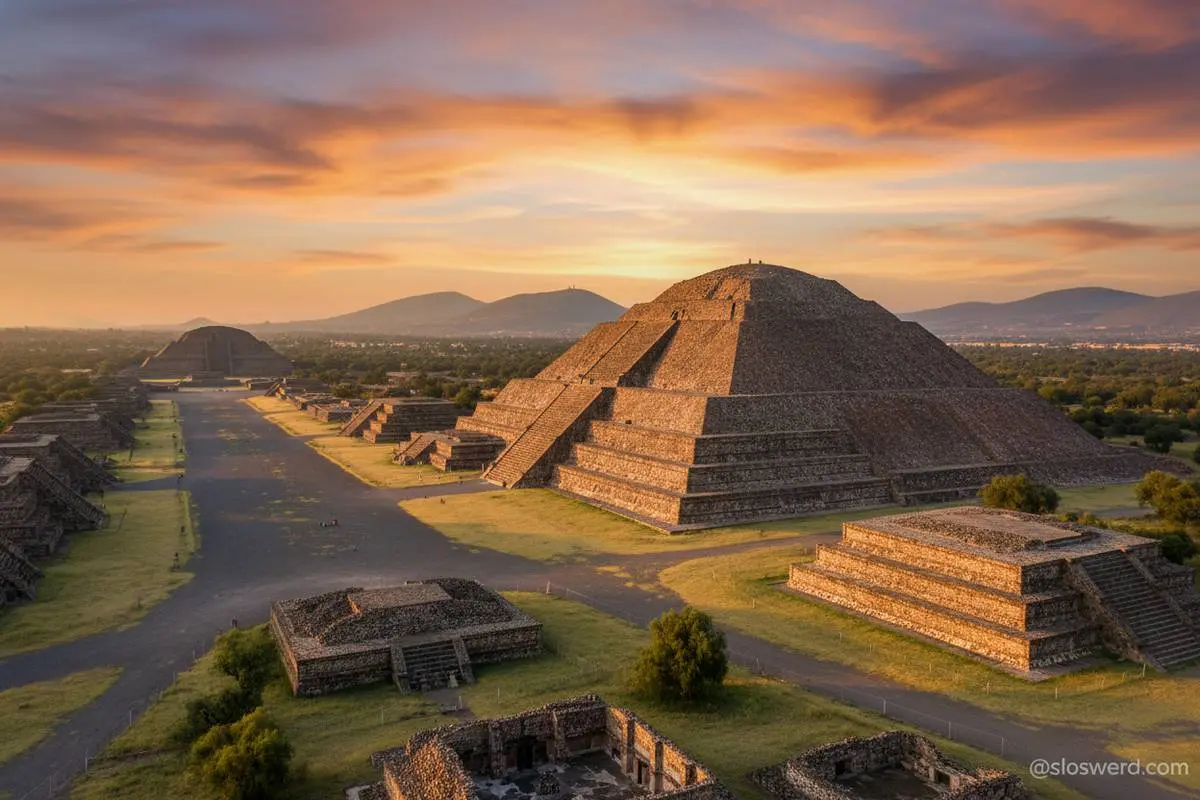
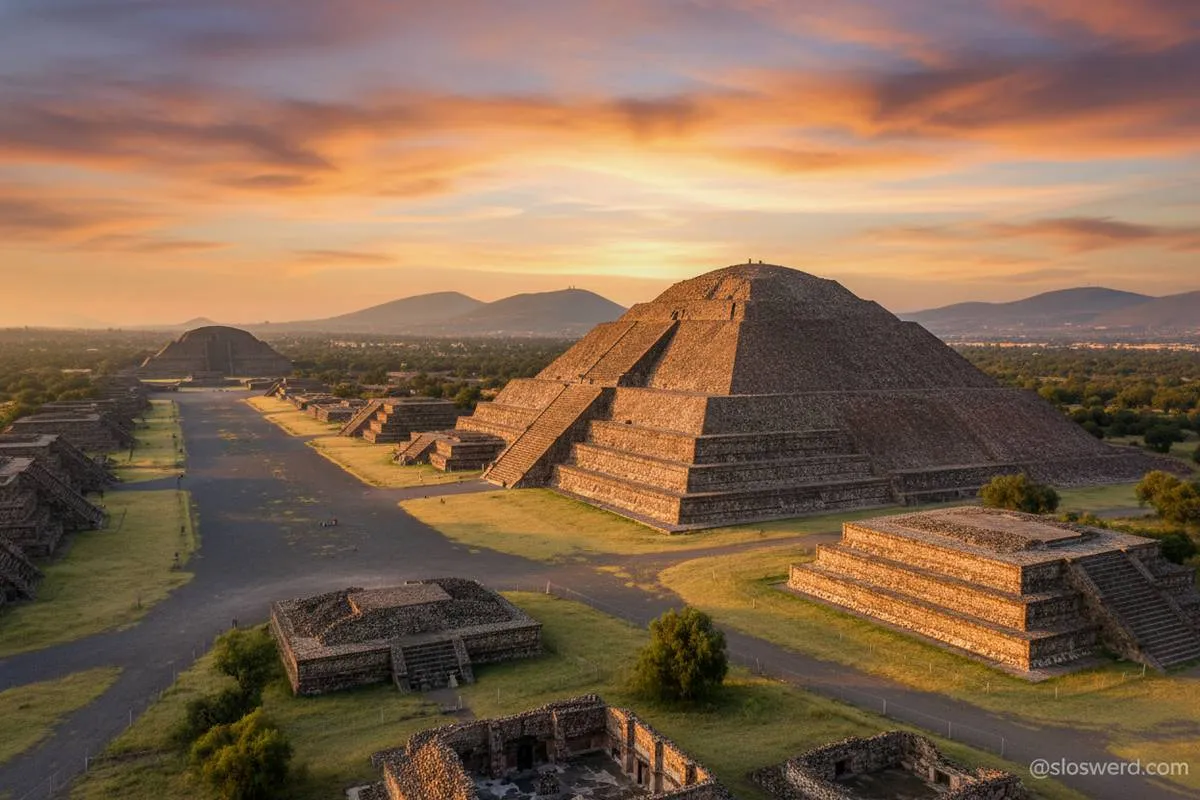
50km northeast, 1 hour by bus (100 MXN round trip from Terminal Norte). The Pyramid of the Sun is the third-largest pyramid in the world. Arrive at 9 AM opening, climb by 9:30, finish by 12:30 before heat. One of the world’s great archaeological sites and Mexico’s most visited.
Full logistics: Teotihuacan guide | Day trips from Mexico City.
31. Puebla — Best Food Day Trip
2 hours east by ADO bus (200 MXN). Colonial UNESCO city + Cholula pyramid (world’s largest by volume) + mole poblano birthplace. Better as a day trip than Teotihuacan for food lovers.
32. Tepoztlán — Mountain Town Hike
1.5 hours south by bus (120 MXN). Dramatic cliffs, pyramid hike (El Tepozteco), weekend craft market. Good for hikers.
Nightlife and Evening Options
Visiting for a major concert weekend? Corona Capital runs November 20–22, 2026 at Autódromo Hermanos Rodríguez. Use our Corona Capital 2026 guide for the lineup, tickets, and Metro route, then follow the three-day Corona Capital itinerary to fit daytime sightseeing around each festival day.
33. Rooftop Bars with Volcano Views
On clear winter days, Popocatépetl and Iztaccíhuatl volcanoes are visible from rooftop bars in Polanco and Roma. The best viewing windows: early morning (before smog builds) and after rain. Terraza del Hotel Condesa, Azul Histórico (rooftop in the Centro), and Departamento (Polanco) all have views.
34. Live Music in Garibaldi Plaza
The Garibaldi Plaza in the Centro Histórico is where mariachi musicians congregate — 300+ musicians in elaborate charro suits, competing for hire. The scene is most active 9 PM–midnight Thursday through Sunday. Hire a group for a song (150–300 MXN), or just sit in a cantina and let the ambient mariachi come to you. Mesón de la Guitarra cantina is the classic choice.
35. Bar Hopping in Roma Norte
Roma Norte’s concentration of good bars, natural wine shops, and cocktail bars makes it the best neighborhood for an evening out. Particularly along Álvaro Obregón and the surrounding blocks. Prices: 80–200 MXN per cocktail. Most bars don’t get busy until 10 PM. For a full breakdown by neighborhood — including Polanco clubs, Centro cantinas, and the LGBTQ+ Zona Rosa scene — see the Mexico City nightlife guide.
Practical Tips for Maximizing Your Time
Timing: Most museums are closed Mondays. The Zócalo, Palacio Nacional, and street sites are open daily. The MNA (Anthropology Museum) is the one exception — closed Mondays but open all other days 9 AM–7 PM.
Transport: The metro (6 MXN per ride) connects most major sites. Uber or DiDi for anything not on the metro. Never hail an unmarked street taxi in CDMX.
Altitude: At 2,240m (7,350 ft), expect to feel slightly short of breath on arrival. Stay hydrated, go easy on alcohol day 1, and expect physical activity to feel slightly more tiring than at sea level.
Best sequence for 3 days:
- Day 1: Zócalo area (Templo Mayor at 9 AM → Palacio Nacional murals → Metropolitan Cathedral → Bellas Artes exterior → Alameda)
- Day 2: Chapultepec (Anthropology Museum → Castle → Polanco + Museo Soumaya)
- Day 3: Coyoacán (Casa Azul booked ahead → Mercado → plazas → Xochimilco)
More Mexico City Guides
- Mexico City Travel Guide 2026 — full planning guide with neighborhoods, transport, budget
- Day Trips from Mexico City — Teotihuacan, Puebla, Tepoztlán, Grutas de Tolantongo
- Mexico City Food Guide — markets, street food by neighborhood, fine dining breakdown
- What to Eat in Mexico City → — 30 essential dishes and exactly where to find them
- Mexico City Neighborhoods Guide — Roma, Condesa, Polanco, Centro, Coyoacán compared
- Best Time to Visit Mexico City — weather, festivals, jacaranda season, month-by-month
- Is Mexico Safe? — honest safety guide for CDMX and beyond
- Mexico City to Oaxaca Transport Guide — flight vs overnight bus vs driving, real 2026 prices
- 10 Days in Mexico Itinerary — CDMX + Oaxaca or Yucatán