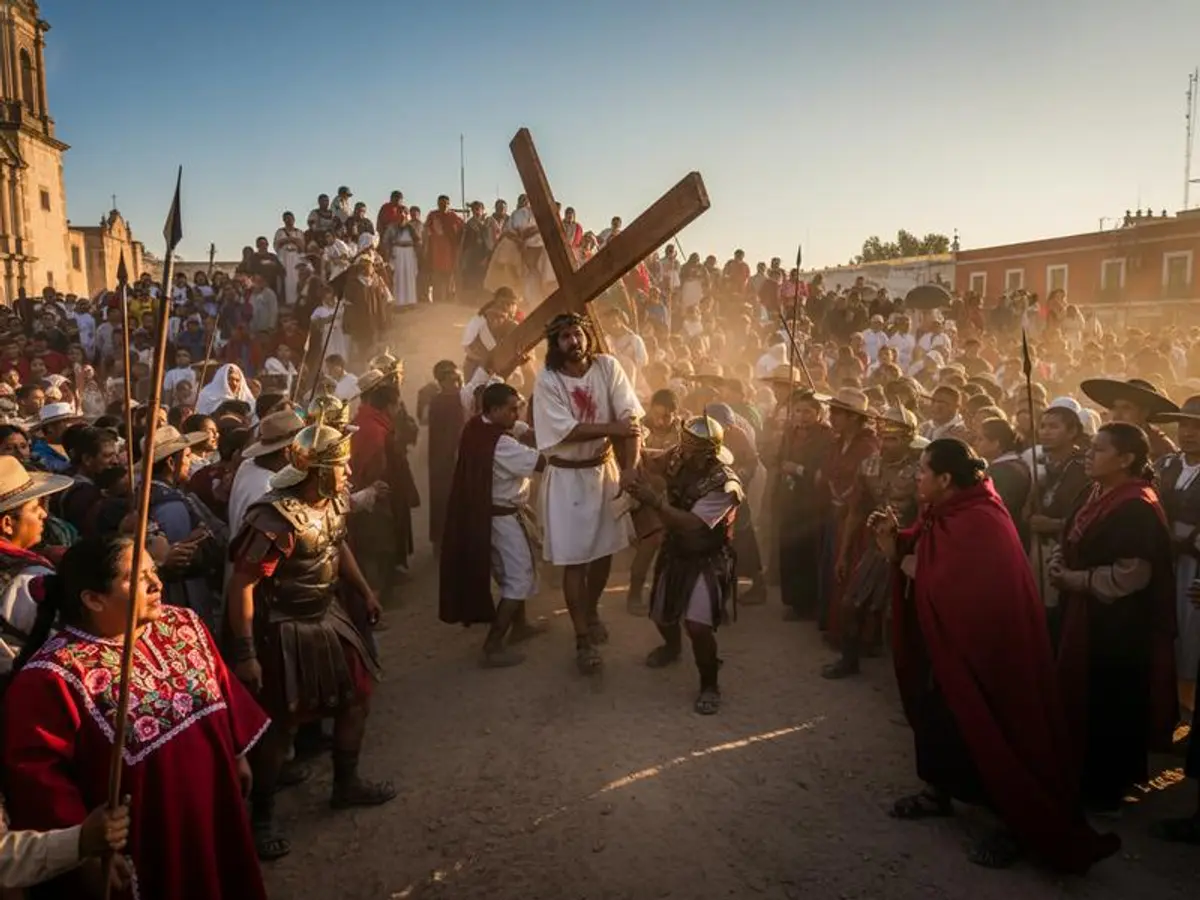
Best Festivals in Mexico 2026: Month-by-Month Calendar
If you only want the short answer, the best festivals in Mexico for most travelers in 2026 are Guelaguetza in Oaxaca (July) for culture, Day of the Dead in Oaxaca or Pátzcuaro (October 31 to November 2) for atmosphere, Festival Cervantino in Guanajuato (October) for arts, and Mazatlán Carnival (February) for scale and fun. If you can only build one first trip around a festival, choose Guelaguetza for the strongest Mexico-specific culture or Day of the Dead for the most memorable once-a-year atmosphere, and book hotels at least 6 months early.
Mexico’s festival calendar is one of the densest in the world. There is something meaningful somewhere almost every month, from neighborhood religious traditions and food rituals to giant citywide celebrations that completely reshape hotel prices and crowd levels.
This guide covers the best festivals in Mexico in 2026, organized month by month, with exact dates, attendance context, logistics, and accommodation warnings. Use it to decide which festival is actually worth building a trip around, which one fits your travel style, and which dates to avoid if you want quieter travel.
If you already know the event you care about most, jump to our deeper guides for Day of the Dead in Mexico, Semana Santa in Mexico, Cinco de Mayo in Mexico, Oaxaca travel planning, or Guanajuato City.
For the bigger question of timing your trip, see our Best Time to Visit Mexico guide.
Mexico Festivals in 30 Seconds
| Best for… | Festival | 2026 timing | Plan around it if… |
|---|---|---|---|
| Strongest culture-first trip | Guelaguetza, Oaxaca | July 20 and 27 | You want indigenous dance, food, textiles, and regional identity in one trip |
| Most atmospheric tradition | Day of the Dead, Oaxaca or Pátzcuaro | Oct 31 to Nov 2 | You can handle crowds and want the most memorable once-a-year setting |
| Biggest beach-party energy | Mazatlán Carnival | Feb 14 to 17 | You want parades, concerts, nightlife, and beach time together |
| Best arts city break | Festival Cervantino, Guanajuato | Oct 8 to 25 | You want performances, cooler weather, and a walkable colonial city |
| Biggest patriotic night | El Grito | Sept 15 to 16 | You want fireworks, plazas, and nationwide Independence Day energy |
Which Mexico Festivals Should You Actually Plan a Trip Around?
| If you care most about… | Best pick | Skip it if… | Why it wins |
|---|---|---|---|
| Mexico’s strongest culture-first trip | Guelaguetza | You hate booking far ahead or you want a beach trip | Oaxaca’s regional dances, textiles, food, and indigenous identity all land at once |
| The most emotional, atmospheric once-a-year trip | Day of the Dead | You just want a casual party weekend | The candlelit cemeteries, altars, and citywide atmosphere are unmatched |
| A huge beach-city party | Mazatlán Carnival | You want sleep, easy prices, or quiet streets | It combines parades, concerts, and real beach time better than most Mexico festivals |
| An arts-heavy city break | Festival Cervantino | You want a simple budget trip | Guanajuato is beautiful in October, and the performances give the city a real reason to plan around |
| Patriotic energy without beach crowds | El Grito in Mexico City, Oaxaca, or Dolores Hidalgo | You dislike dense public plazas at night | It is the single biggest nationwide celebration on the calendar |
| A visual local spectacle with lighter international crowds | Huamantla Night of the Flower Carpets | You only want major big-city events | The alfombras are stunning, and the logistics are easier than Oaxaca’s biggest festival weeks |
Mexico Festivals Calendar 2026 at a Glance
| Month | Festival worth planning around | Best base | Book this far ahead |
|---|---|---|---|
| February | Carnival | Veracruz or Mazatlán | 4-6 months |
| March-April | Semana Santa | Taxco, Oaxaca, or CDMX | 4-6 months |
| May | Cinco de Mayo | Puebla | 1-2 months |
| July | Guelaguetza | Oaxaca City | 6+ months |
| August | Huamantla Night of the Flower Carpets | Huamantla or Puebla | 2-3 months |
| September | El Grito | Mexico City, Oaxaca, or Dolores Hidalgo | 2-3 months |
| October | Festival Cervantino | Guanajuato City | 6+ months |
| October-November | Day of the Dead | Oaxaca or Pátzcuaro | 6+ months |
| November | Corona Capital | Mexico City | 2-3 months |
| December | Noche de Rábanos | Oaxaca City | 2-3 months |
Best Festival Month in Mexico by Trip Goal
| If your main goal is… | Best month | Best festival | Best base |
|---|---|---|---|
| Mexico’s strongest culture-first trip | July | Guelaguetza | Oaxaca City |
| The most atmospheric once-a-year trip | Late October to early November | Day of the Dead | Oaxaca or Pátzcuaro |
| A huge beach-party trip | February | Carnival | Mazatlán or Veracruz |
| A patriotic city break | September | El Grito | Mexico City, Oaxaca, or Dolores Hidalgo |
| A cooler-weather arts trip | October | Festival Cervantino | Guanajuato City |
| A more local visual spectacle | August | Huamantla Night of the Flower Carpets | Huamantla or Puebla |
30-Second Answer: Best Mexico Festivals by Travel Style
| If you want… | Go to… | When | Why it stands out |
|---|---|---|---|
| Mexico’s most iconic cultural festival | Guelaguetza, Oaxaca | July 20 and 27, 2026 | Indigenous dance, textiles, music, and real regional identity |
| The most famous traditional celebration | Day of the Dead, Oaxaca or Pátzcuaro | Oct 31 to Nov 2 | Candlelit cemeteries, altars, markets, and once-a-year atmosphere |
| A huge party by the beach | Mazatlán Carnival | Feb 14 to 17 | Big parades, concerts, and easy beach-city logistics |
| The country’s biggest patriotic celebration | El Grito, Mexico City | Sept 15 to 16 | Massive Zócalo crowds, fireworks, and a true national event |
| Mexico’s top arts festival | Festival Cervantino, Guanajuato | Oct 8 to 25 | Theater, music, dance, and a perfect historic city setting |
| A less-touristy visual spectacle | Huamantla Night of the Flower Carpets | Aug 14 to 15 | Stunning alfombras and a more local feel |
Best Mexico Festivals for First-Time Visitors
- Choose Guelaguetza if you want the strongest Mexico-specific cultural experience and do not mind booking far ahead.
- Choose Day of the Dead if atmosphere matters more than convenience and you are comfortable with crowds, premium hotel prices, and treating cemetery traditions respectfully.
- Choose Mazatlán Carnival if you want a festival plus beach trip with easier logistics and late-night energy.
- Choose Festival Cervantino in Guanajuato if you prefer arts, walkable cities, and cooler October weather.
- Choose El Grito in a smaller city like Oaxaca, Guanajuato, or Dolores Hidalgo if you want patriotic energy without Mexico City’s overwhelming scale.
- Skip Day of the Dead and Carnival if you mainly want lower prices and relaxed logistics. They are worth it, but they are not low-friction trips.
January: Quiet Month, Real Traditions
Día de Reyes (January 6)
January is not Mexico’s biggest festival month for international travelers, but it matters if you want to see everyday tradition instead of headline events. On Día de Reyes, families share rosca de reyes and children receive gifts from the Three Kings. It is one of the clearest examples of how Mexico’s holiday season extends well beyond Christmas.
For travelers, January works best as a lower-crowd month with cultural texture rather than a trip built around one blockbuster event. See our Mexico in January guide if you want the weather and price side too.
Día de la Candelaria (February 2 preparations start in late January)
The lead-in to Candlemas matters because it connects directly to Día de Reyes. Anyone who finds the baby figurine in the rosca is expected to host tamales on February 2. That tradition gives late January and early February a real food-calendar rhythm across the country.
February: Carnival Season
Carnival — Mazatlán (February 14–17, 2026)
Mazatlán’s Carnival is the third largest in the world after Rio and New Orleans. Over 600,000 people attend across four days. The city transforms: parades run along the Malecón (the world’s longest seaside promenade), massive stages are set up along the waterfront, and the official Carnival King and Queen are crowned in an elaborate ceremony.
If you are deciding between Mexico’s two biggest Carnival cities, Mazatlán is easier for first-time international travelers, while Veracruz feels more Caribbean and more locally rooted in music.
What makes Mazatlán’s Carnival work: it’s compact. The parade route is walkable, the beach is right there, and the city actually functions well under the pressure. Hotels book out 6+ months in advance. The event is free to attend — you pay for accommodation, not entry.
Dates: February 14-17, 2026 Book accommodation: 4-6 months in advance Best spot: Along the Malecón near the main parade route
Carnival — Veracruz
Veracruz holds the second largest Carnival in Mexico, older than Mazatlán’s by nearly a century. The style is different — more Caribbean influence, the son jarocho music tradition is present throughout, and the crowd is more local than international. Less Instagram-famous than Mazatlán, more authentic in character.
Día de la Candelaria (February 2)
Not a public holiday but a cultural obligation. In Mexico, the Christmas season runs from December 16 to February 2. On January 6 (Three Kings Day), a ring-shaped sweet bread called Rosca de Reyes is eaten. Hidden inside are small plastic figures of baby Jesus. Whoever finds a figure in their slice is obligated to host a tamale party on February 2.
This creates a country-wide tamale surge on Candlemas. It’s not a festival to visit — it’s a tradition to participate in if you’re staying with Mexican hosts.
March: Equinox and Semana Santa Begins
Chichen Itza Equinox (March 21)
On the spring equinox, the afternoon sun creates a shadow pattern on the north staircase of El Castillo pyramid at Chichen Itza that resembles a serpent descending. The Maya built this intentionally. Up to 50,000 people show up on the exact equinox day.
Practical advice: The effect is visible for about a week before and after March 21 — it’s not a single day phenomenon. Go on March 14-17 or March 23-26 for a fraction of the crowd with nearly the same experience. The equinox day itself is genuinely overwhelming.
Spring Break (Mid-March to Mid-April)
Not a Mexican festival but a major travel reality. Cancun, Los Cabos, and Puerto Vallarta see massive price spikes and crowd surges from US and Canadian students. If you’re not in that demographic, avoid these beach destinations mid-March to mid-April. Inland cities (Oaxaca, San Miguel de Allende, Guanajuato) are barely affected.
Semana Santa Begins (Late March)
Holy Week starts Palm Sunday, March 29, and runs through Easter Sunday, April 5, 2026. This is Mexico’s biggest domestic travel week — the entire country takes vacation. See April section for full details.
April: Holy Week and Mexico’s Largest Fair
Semana Santa and Easter (March 29 – April 5, 2026)
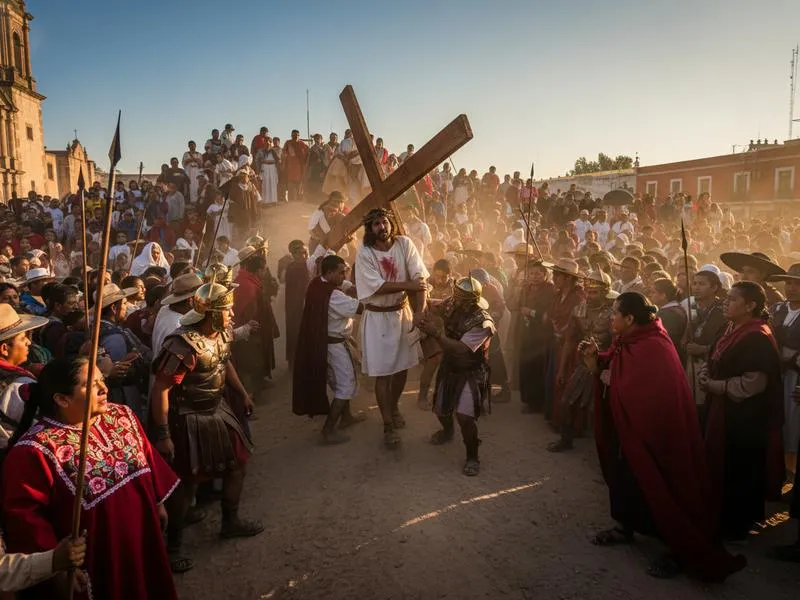
Mexico takes Semana Santa seriously. Every city has processions, ceremonies, and cultural events. But some cities stand out:
Taxco, Guerrero — The silver city hosts the most dramatic Holy Week in Mexico. Penitentes (hooded penitents carrying heavy wooden crosses and wearing crowns of thorns) walk barefoot through cobblestone streets at night. The processions begin on Wednesday night and continue through Good Friday. Taxco is small — crowds fill every street. Book accommodation 4-6 months in advance and expect cobblestones and altitude.
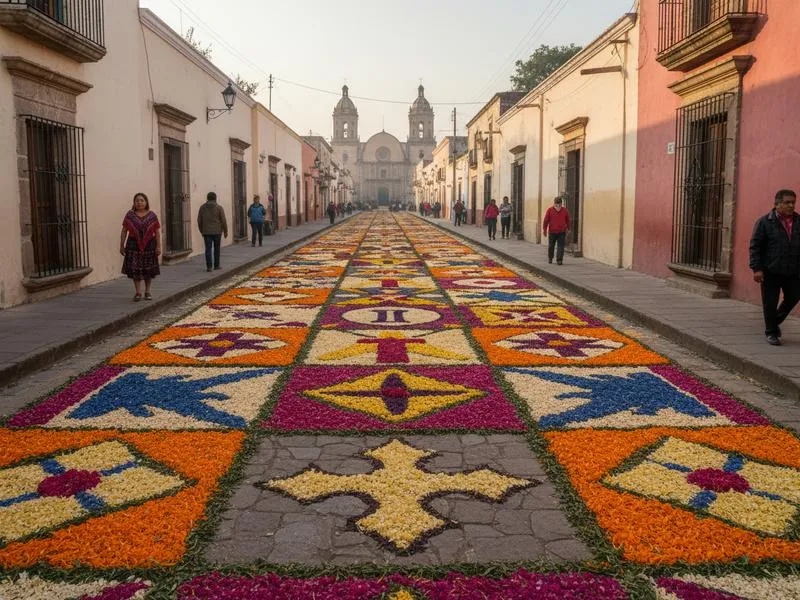
Oaxaca — Known for its alfombras (elaborate carpets of flowers and colored sawdust laid on streets for processions to walk over) and the Procesión del Silencio (silent procession) on Holy Wednesday. Oaxaca’s Semana Santa is spiritual and visually extraordinary without the extreme penitent traditions of Taxco.
Iztapalapa, Mexico City — The most attended Passion Play in the world. A cast of 4,000 actors reenacts the Stations of the Cross across an entire neighborhood, with up to 500,000 spectators following the procession. It’s overwhelming in scale and completely free.
See our Semana Santa in Mexico guide for full destination breakdowns.
Good Friday Ley Seca Warning: Many states observe a “ley seca” (dry law) restricting alcohol sales on Good Friday. Check local regulations if this matters to your plans.
Feria de San Marcos — Aguascalientes (April 22 onwards)
Mexico’s largest fair begins on April 22 and runs for three weeks. Aguascalientes is a central-northern city that most international travelers skip — during Feria de San Marcos, it fills with millions of domestic visitors. Rodeos (charrería), cockfights, bullfights, live music, carnival rides, regional food, and enormous amounts of cerveza. This is Mexican popular culture at scale.
May: Cinco de Mayo and Mother’s Day
Cinco de Mayo — Puebla (May 5)
Let’s clear this up: Cinco de Mayo celebrates the Battle of Puebla on May 5, 1862, when Mexican forces defeated a better-equipped French army. It’s a Puebla-specific commemoration, not a national holiday. Most Mexicans outside Puebla treat it as a regular workday.
In Puebla, the main event is a military parade and reenactment battle at the Forts of Loreto and Guadalupe — historically interesting if you’re in the city. In the United States, Cinco de Mayo has been transformed into something different entirely.
See our Cinco de Mayo in Mexico guide for what the day actually looks like in Puebla.
Mother’s Day — May 10
Not May’s second Sunday like in most countries — Mexico’s Mother’s Day is fixed on May 10 every year. It is the most celebrated single day in the Mexican calendar for family gatherings. Restaurants are fully booked weeks in advance. Serenatas (musical serenades) run through the night of May 9. If you’re traveling in Mexico on May 10, make restaurant reservations early.
Día del Trabajo — May 1
May 1 is a national holiday. Banks, government offices, and some businesses close. Major labor union marches happen in Mexico City’s Zócalo and other capitals.
June: Gay Pride and Festival Season Opening
Gay Pride Mexico City (June — usually third week)
Mexico City’s Gay Pride march is one of the largest in Latin America, regularly drawing over 250,000 participants along Paseo de la Reforma. The route runs from Parque La Bombilla to the Zócalo. The city is broadly welcoming — CDMX legalized same-sex marriage in 2010 and the annual parade has grown significantly since then.
Associated events (parties, exhibitions, performances) run the full week before the march.
Guelaguetza Preparation Begins
Oaxaca begins its buildup toward Guelaguetza in June with smaller community events, rehearsals, and the selection of the Diosa Centeotl (the festival’s ceremonial queen). June is actually a good time to visit Oaxaca if you want to see the preparation without the festival crowds.
July: Guelaguetza — The Most Important Cultural Event
Guelaguetza — Oaxaca (July 20 and July 27, 2026)
Guelaguetza is the pinnacle of Mexico’s indigenous festival calendar. Eight different cultural regions of Oaxaca — each with distinct languages, textiles, music, and dance traditions — send delegations to perform at the outdoor Guelaguetza Auditorium on the hill of Monte Albán. Performers wear full traditional dress. The word “guelaguetza” in Zapotec means “reciprocal exchange” or offering — after each dance, performers throw gifts (handmade crafts, food, produce) into the crowd.
Ticketed Monday Gala: Held at the Guelaguetza Auditorium, seating capacity around 11,000. Tickets sold through the Oaxaca state government website, usually going on sale in May. Prime seats sell out within days. Prices range from 200 to 3,000 MXN depending on section.
Free Sunday Community Events: The weekend before each Monday gala includes free community-level performances in the city’s neighborhoods. Same dances, smaller stages, no tickets. Equally authentic.
Accommodation in Oaxaca for Guelaguetza week books out 6+ months in advance. Book in March for July dates. For the full city context, use our Oaxaca travel guide alongside this festival calendar.
Día de la Cueva — Guanajuato (July 31)
A local Guanajuato tradition held outside the city in a natural rock setting. Far smaller than Guelaguetza but genuinely authentic — this is for travelers who want something local and non-touristy. Music, food vendors, and the distinctive character of Guanajuato state without the festival crowds.
August: Flower Carpets and Chiles en Nogada Season
Fiestas de la Asunción — Huamantla, Tlaxcala (August 14–15)
Huamantla is a small Tlaxcala city that creates one of Mexico’s most visually spectacular festivals: “La Noche que Nadie Duerme” (The Night That Nobody Sleeps) on August 14-15. Residents spend the night constructing elaborate carpets of flowers, colored sawdust, and natural materials across kilometers of streets. A religious procession walks over them at dawn, destroying them as it passes.
Similar to Oaxaca’s Semana Santa alfombras but entirely different cultural context. This is an off-the-tourist-trail event that rewards the effort to get there.
Chiles en Nogada Season (Late July–September)
Not a festival but a seasonal dish so culturally significant it deserves calendar status. Chiles en Nogada is a Puebla specialty: a large poblano chile stuffed with a mixture of fruits, meats, and spices, covered in a walnut cream sauce and decorated with pomegranate seeds and parsley — representing the green, white, and red of the Mexican flag.
The dish depends on Puebla’s seasonal walnuts, pomegranates, orchard fruit, and poblano chiles, so restaurant dates follow the harvest rather than one fixed nationwide calendar. In 2026, official Puebla promotions began in late July, and the dependable planning window generally runs through September. August and early September are the safest dates, but confirm the restaurant before building a trip around one meal. Use our current chiles en nogada season guide to compare dates and choose where to eat it.
September: El Grito — Independence Night
Fiestas Patrias — El Grito (September 15–16)
At 11pm on September 15, the President of Mexico appears on the balcony of the National Palace overlooking the Zócalo in Mexico City and delivers the Grito de Independencia — a rallying cry that echoes Miguel Hidalgo’s 1810 call to revolution. Simultaneously, every governor, every mayor, and every municipal president in every city and village does the same thing. The country shouts “¡Viva México!” in unison.
Mexico City’s Zócalo draws between 4 and 8 million people for the evening of September 15. The surrounding Centro Histórico fills to capacity by 9pm. Arrive by 9pm if you want a spot near the Zócalo. The square itself is free. Fireworks follow the Grito at midnight.
If you want the patriotic atmosphere without CDMX-scale crowd pressure, choose Oaxaca, Guanajuato, or Dolores Hidalgo instead. If you do want the capital, pair this section with our Mexico City travel guide.
September 16 is the actual Independence Day holiday — military parades in major cities, national flag ceremonies, and the start of the September patriotic calendar that ends on October 12 (Columbus Day / Día de la Raza).
Every city is worth experiencing on September 15. Small cities — Dolores Hidalgo (where the original Grito happened), San Miguel de Allende, Oaxaca — have intimate celebrations where you can actually be close to the ceremony.
October: Festival Cervantino and Monarch Butterflies
Festival Internacional Cervantino — Guanajuato (October 8–25, 2026)
The most prestigious arts and culture festival in Latin America. Named after Miguel de Cervantes (author of Don Quixote) and rooted in Guanajuato’s tradition of theatrical street performances, the Cervantino brings companies from 30+ countries for three weeks of theater, dance, music, opera, and film.
For most travelers, this is the easiest big Mexican festival to combine with a walkable colonial-city trip because Guanajuato City is compact, dramatic, and built for street-level wandering.
Guanajuato’s geography — narrow alleyways, plazas, and open-air callejones — makes it a perfect festival city. Many performances happen in streets and squares for free. The ticketed main-stage events (international orchestras, headline theater companies) sell out. Book accommodation 6+ months in advance; the city is small and fills completely.
October 8-25, 2026
Monarch Butterfly Arrivals (Late October)
Beginning in late October, millions of monarch butterflies arrive at the Monarch Butterfly Biosphere Reserve in Michoacán and Estado de México after migrating from Canada and the United States. Peak concentration is November through March. The late October arrival is the first sign — visible clouds of orange from the forest near Angangueo and El Rosario. See our Mexico in October guide for specific viewing details.
Day of the Dead Preparations Begin
The last week of October, markets across Mexico fill with marigold flowers (cempasúchil), sugar skulls, copal incense, and altar supplies. In Oaxaca, Pátzcuaro, and Mixquic, preparation begins weeks earlier. This buildup is itself worth experiencing.
November: Day of the Dead
Day of the Dead — October 31 to November 2
The most internationally recognized Mexican tradition. This is not Halloween. It is a separate Indigenous-origin celebration — rooted in Aztec and other Mesoamerican traditions — that was partially merged with Catholic All Saints’ Day and All Souls’ Day after the Spanish conquest but retained its core character.
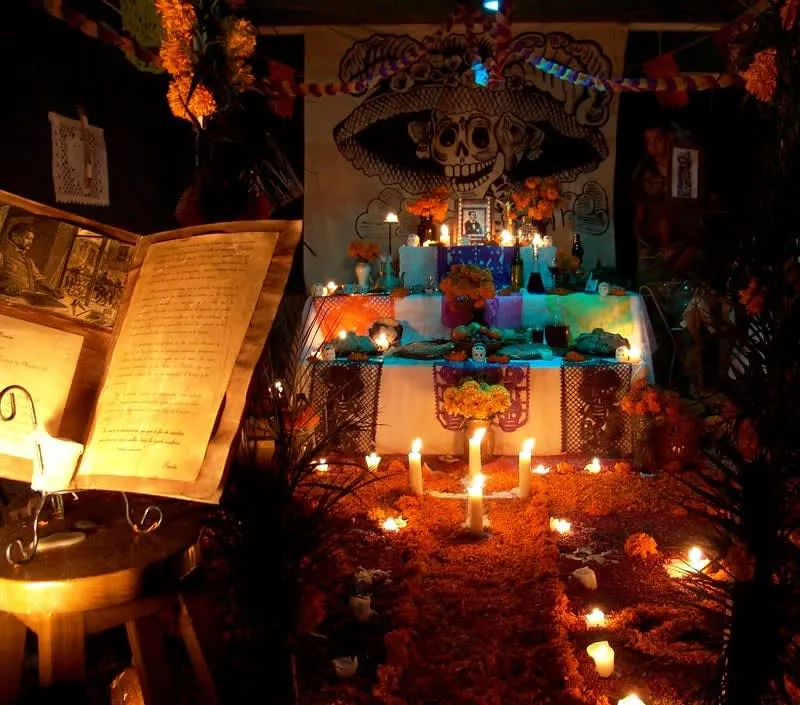
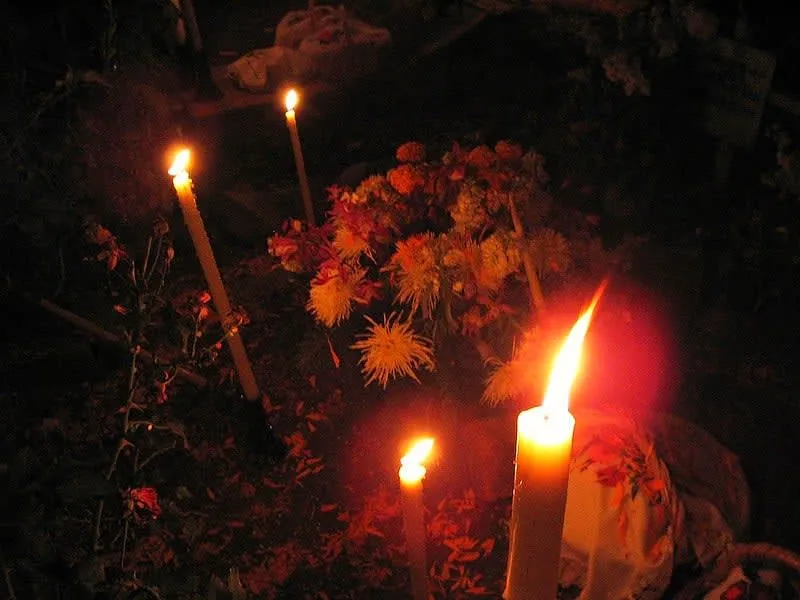
Families build ofrendas (altars) with photos of the deceased, their favorite foods and drinks, marigold flowers, copal smoke, and candles. The belief is that on these nights the barrier between the living and the dead is thin, and spirits return to visit. The tone is celebratory, not mournful.
Best destinations:
- Oaxaca — The most elaborate ofrenda and market tradition in the country. Cemeteries are lit with candles and filled with families overnight. The Xoxo cemetery night vigil (November 1-2) is extraordinary. Book accommodation 6+ months in advance.
- Pátzcuaro, Michoacán — Small lakeside city with a strong Purépecha indigenous tradition. The candlelit cemetery on Janitzio Island is one of Mexico’s most photographed scenes. Extremely crowded — arrive a day early.
- Mixquic, Mexico City — A semi-rural neighborhood in southeastern CDMX with a deeply traditional community cemetery vigil. More accessible than Oaxaca, less touristy than the major destinations.
- Mexico City Centro — The city’s main Zócalo ofrenda installation and the Paseo de la Reforma parade (a new tradition started in 2016) draw enormous crowds but are visually impressive.
See our full Day of the Dead guide for complete planning details.
Corona Capital — Mexico City (November 20–22, 2026)
One of Latin America’s biggest international music festivals returns for three days at Curva 4 of Autódromo Hermanos Rodríguez. Gorillaz headlines Friday, Twenty One Pilots leads Saturday, and The Strokes closes Sunday, with more than 60 artists across the weekend. This is a city festival rather than a camping event, so book a hotel with a realistic late-night return plan.
Use our complete Corona Capital 2026 guide for the daily lineup, venue logistics, transport, and packing advice. Before paying, compare the current phase in our Corona Capital ticket guide and choose a base with the festival accommodation guide.
Festival Internacional de Cine de Morelia (FICM)
The 24th Morelia International Film Festival runs October 16–25, 2026 in Morelia, Michoacán. Mexico’s leading film festival focuses on Mexican and Latin American cinema, with screenings and industry events in the city’s UNESCO-listed historic center. The complete 2026 program is expected in mid-September, so travelers can book the trip framework before choosing individual screenings.
Start with our Morelia Film Festival 2026 guide for confirmed dates, venues, transport, and the latest ticket status. If you are building the festival into a short city break, use the three-day FICM itinerary to balance screenings with Morelia’s markets, cathedral, and food scene.
If Day of the Dead lodging in Pátzcuaro is already gone, Morelia can work as a calmer regional base before or after a visit to Pátzcuaro.
December: Posadas and Radish Carving
Las Posadas (December 16–24)
Las Posadas are neighborhood processions that reenact Mary and Joseph’s search for lodging in Bethlehem. Beginning December 16 and running nightly through December 24, groups of neighbors walk between designated houses carrying candles and singing traditional posada songs. At the final house, the group is “let in” and a party follows — piñata, ponche (hot fruit punch), tamales, buñuelos.
Posadas are not a public spectacle but a neighborhood tradition. If you’re staying in a Mexican neighborhood (not a tourist hotel) in December, you may be invited to participate. Accept.
Noche de Rábanos — Oaxaca (December 23)
One of Mexico’s strangest and most specific traditions: a competition held in Oaxaca’s main square on December 23 in which participants carve elaborate scenes — religious, historical, fantastical — entirely from giant radishes (rábanos). The tradition began in 1897 when colonial-era Oaxacan vendors began carving radishes to attract customers at the Christmas market. Today it’s a serious competition with prizes, long lines, and professional carvers.
The line to view the display often runs for hours. Worth it for the sheer specificity.
Christmas Eve and New Year’s Eve
Christmas Eve (Noche Buena, December 24) is the primary family celebration — midnight mass followed by a large family dinner. Most restaurants close or have prix-fixe only. Travel on December 24 is heavy.
New Year’s Eve varies dramatically by city. Mexico City’s Zócalo has a free public countdown. Cabo San Lucas and Cancun have beach parties. San Miguel de Allende has fireworks over the Parroquia. Research your specific destination.
Festival Planning: Accommodation Guide
| Festival | Location | Lead Time Needed |
|---|---|---|
| Guelaguetza | Oaxaca | 6+ months |
| Day of the Dead | Oaxaca/Pátzcuaro | 6+ months |
| Festival Cervantino | Guanajuato | 6+ months |
| Semana Santa | Taxco/Oaxaca | 4-6 months |
| Carnival | Mazatlán | 4-6 months |
| El Grito | CDMX | 2-3 months |
| Corona Capital | CDMX | 1-2 months |
| Chichen Itza Equinox | Mérida area | 3-4 months (equinox week) |
Common First-Timer Mistakes
- Booking too late for Oaxaca, Pátzcuaro, Guanajuato, or Taxco. The best festival destinations can sell out months ahead.
- Treating Cinco de Mayo like a national party. It is mainly a Puebla event, not a countrywide celebration on the level of Independence Day.
- Assuming Day of the Dead works like Halloween. It does not. Respect cemeteries, families, and community traditions.
- Planning beach trips during Semana Santa without realizing it is Mexico’s biggest domestic travel week. Prices jump and roads get crowded.
- Choosing Mexico City’s Zócalo for El Grito without crowd tolerance. It is exciting, but smaller cities often deliver a better traveler experience.
- Showing up to religious events dressed or behaving like it is a concert. Semana Santa, cemetery vigils, and posadas are living traditions first.
Book Festival Tours
If you want to experience a major festival with a local guide who can explain the cultural context, navigate crowds, and arrange access to spaces that aren’t obvious from the outside, a festival tour is genuinely worthwhile. This is especially true for Guelaguetza (where the guide context transforms the experience) and Day of the Dead (where access to community cemetery events requires local connections).
Browse Mexico festival tours on Viator →
Related Guides
- Day of the Dead Guide — complete planning for Oaxaca, Pátzcuaro, and CDMX
- Semana Santa in Mexico — Taxco, Oaxaca, and Iztapalapa
- Cinco de Mayo in Mexico — what it actually looks like in Puebla
- Best Time to Visit Mexico — month-by-month weather and events
- Mexico in October — Cervantino, monarch butterflies, and Day of the Dead build-up
- Mexico in April — Semana Santa timing and Holy Week travel reality
- Best Time to Visit Oaxaca — when festival season makes Oaxaca worth the premium
- Oaxaca Travel Guide — where to stay and how to move around during Guelaguetza season
- Guanajuato City Guide — where Cervantino works best for first-time visitors
- Mexico in January — low-season timing with real cultural context
- Things to Do in Pátzcuaro — what to know before planning Day of the Dead in Michoacán